Nova Scotia Lobster Regulations Explained
Lobster regulations in Nova Scotia explained: licences, seasons, trap limits, minimum carapace size, berried and v-notched females, gear rules and enforcement.
By NovaShell Editorial Team · · 12 min read
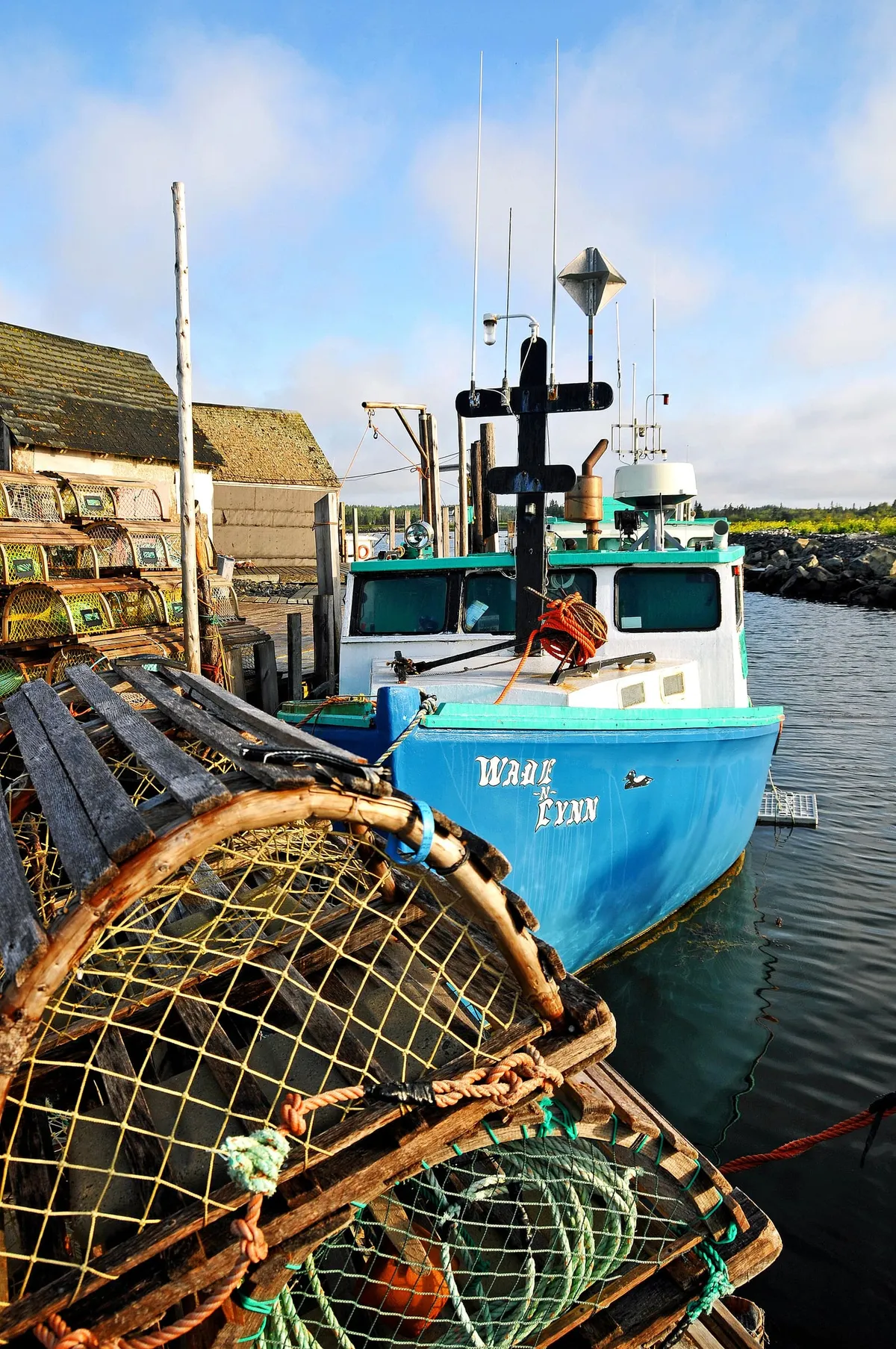
Lobster regulations in Nova Scotia are federal. Fisheries and Oceans Canada (DFO) makes and enforces them under the Fisheries Act, the Fishery (General) Regulations and the Atlantic Fishery Regulations, 1985, then fine-tunes them every year through licence conditions and variation orders. In practice that means only licensed commercial and communal harvesters may fish, each Lobster Fishing Area (LFA) has its own season and trap limit, and lobsters under the minimum carapace size (82.5 mm in most of the province) must go back. Egg-bearing females must always be released, and every trap needs escape vents and a biodegradable panel. There is no recreational lobster fishery in Nova Scotia.
This pillar guide walks through each rule, where it comes from and how it differs between areas. For the map of areas, see lobster fishing areas in Nova Scotia explained, and for dates, the Nova Scotia lobster season guide. Our complete guide to Nova Scotia lobster puts it all in context.
Who makes the lobster rules in Nova Scotia?
There is no single “lobster law.” DFO’s inshore lobster management plan says compliance is achieved through the Fisheries Act, the Fishery (General) Regulations, the Atlantic Fishery Regulations and the Aboriginal Communal Fishing Licences Regulations. Each layer does a different job:
| Layer | What it does for lobster |
|---|---|
| Fisheries Act | The parent law under which all the lobster regulations are made. |
| Fishery (General) Regulations (1993) | Licensing basics, licence conditions, gear marking, and the power to vary close times and size limits by order. |
| Atlantic Fishery Regulations, 1985 | Part VI covers lobster. Schedule XIII maps the LFAs, and Schedule XIV sets each area’s close time and minimum size. It also sets national rules on berried females, trap dimensions and escape panels. |
| Aboriginal Communal Fishing Licences Regulations (1993) | The licences for First Nations’ communal fishing, including food, social and ceremonial fishing. |
| Licence conditions | Area-specific rules attached to each licence, such as trap limits, size windows and v-notching. |
| Variation orders and yearly notices | Each year’s actual season dates and any size changes. |
That last layer matters more than people expect. Under section 6 of the Fishery (General) Regulations, a regional director-general can vary a close time, quota, size limit or gear requirement for an area by order. Section 22 lets the Minister attach conditions to a licence on species, sizes, gear and more. So the numbers in the Atlantic Fishery Regulations are a baseline, and DFO’s notices for the year are the rules actually in force.
Lobster fishing licences: commercial, communal and FSC
Limited entry
Lobster has been a limited-entry fishery for more than half a century. In 1967, DFO introduced limited-entry licensing for parts of PEI and New Brunswick, and in 1968 it extended the policy to the rest of the Maritimes. Before that, anyone could get a lobster licence. A 1976 “moonlighter” policy created three categories:
- Category A for harvesters fully dependent on the fishery. These licences carry an area’s full trap limit.
- Category B for those with a historical attachment but other income. Today they get 30% of the Category A trap limit, can’t be transferred, and expire when the holder dies.
- Category C for those with little or no dependence. These expired after two years.
DFO counted 2,973 inshore lobster licences in LFAs 27–38 at the end of 2021: 2,784 Category A, 51 Category B and 138 communal commercial.
Partnerships and stacking
Two Category A licence holders can form a partnership and fish from one vessel with 150% of a single trap limit, but both must be on board. “Flexible” partnerships, which needed only one holder aboard, were allowed from 2008 and removed in 2017 to protect the owner-operator principle. An independent core harvester can also acquire a second licence and stack it on the first, again at 150% of the trap limit.
Owner-operator and fleet separation
Lobster is an owner-operator fishery, and since 2020 that has been written into regulation. DFO’s inshore fisheries regulations came into force in two parts, on December 9, 2020 and April 1, 2021. Under them:
- “Licence holders, named operators, or authorized substitute operators must personally fish the licence.”
- Licences may only be issued to an eligible individual, their estate or company (with 100% ownership of voting shares), or a community-based fishing organization.
- Licence holders may not transfer the use or control of their licence to someone else.
First Nations: communal, FSC and moderate livelihood fishing
Indigenous fishing for lobster comes under three overlapping frameworks.
- Food, social and ceremonial (FSC) fishing. In R. v. Sparrow (1990), the Supreme Court of Canada held that after conservation and other valid legislative objectives, Aboriginal rights to fish for FSC purposes take priority over all other uses of the fishery. FSC licences are issued under the Aboriginal Communal Fishing Licences Regulations, and the catch is used communally for food and for social and ceremonial purposes.
- Communal commercial licences. Starting in 1999, through the Marshall Response Initiative, DFO increased First Nations’ access to the commercial fishery. Communal commercial licences are equivalent to Category A licences and follow the same area rules.
- Treaty rights and moderate livelihood. On September 17, 1999, the Supreme Court ruled in the Marshall case that the 1760–61 Peace and Friendship Treaties protect a Mi’kmaw right to fish and trade for a “moderate livelihood.” In a clarification on November 17, 1999, often called Marshall II, the Court said the right can be regulated for conservation or other important public objectives. It has never defined “moderate livelihood.”
Since 2021, DFO has authorized community-developed moderate livelihood plans through agreements with individual First Nations. Under these, harvesters fish during the commercial seasons. In November 2023, for example, DFO authorized 5,250 traps for members of the Wasoqopa’q (Acadia), Annapolis Valley, Bear River and Glooscap First Nations in LFAs 33, 34 and 35. A December 1, 2023 addendum raised that to 6,300 traps. DFO said the access was offset by banked licences and unfished traps, so overall effort did not increase.
Seasons, trap limits and sizes by LFA
Every LFA has its own package of rules. This table combines DFO’s 2026 notice for LFAs 27–32, its 2026 Gulf plan for LFAs 26A and 26B, and the measures listed in its inshore management plan for LFAs 33–35. Check the current year’s notice before relying on any figure.
| LFA | Season (2026 or standing rule) | Trap limit (Category A) | Minimum size | Other measures |
|---|---|---|---|---|
| 26A-1 (Gulf NS) | April 27 – June 27 | 280 | 76 mm | Females 115–129 mm released |
| 26A-2 | April 27 – June 27 | 255 (275 for some communal licences) | 78 mm | Females 115–129 mm released; 152 mm max hoop |
| 26A-3 | April 20 – June 20 | 250 | 81 mm | Females 115–129 mm released |
| 26B South | April 30 – June 30 | 250 | 82.5 mm | — |
| 26B North | May 2 – July 2 | 250 | 84 mm | 152 mm max hoop |
| 27 | May 8 – July 8 | 275 | 82.5 mm | — |
| 28 | April 30 – June 30 | 250 | 84 mm | 153 mm max entrance hoop |
| 29 | April 20 – June 20 | 250 | 84 mm | 153 mm max entrance hoop |
| 30 | May 9 – July 10 | 250 | 82.5 mm | Females over 135 mm released |
| 31A | April 19 – June 20 | 250 | 82.5 mm | Females 114–124 mm released |
| 31B | April 9 – June 10 | 250 | 82.5 mm | Mandatory v-notching |
| 32 | April 9 – June 10 | 250 | 82.5 mm | Mandatory v-notching |
| 33 | Last Monday in November – May 31 | 250 | 82.5 mm | — |
| 34 | Last Monday in November – May 31 | 375, then 400 from April 1 | 82.5 mm | — |
| 35 | October 14 – December 31 and last day of February – July 31 | 300 | 82.5 mm | — |
Category B licences fish 30% of the Category A limit, and partnerships or stacked licences fish 150%. In the Gulf LFAs, DFO also sets a minimum number of traps per line in some sub-areas and a minimum escape-vent size for each.
Trap limits and trap tags
A trap limit only works if traps can be counted, so every licence holder receives a yearly set of consecutively and uniquely numbered tags matching their trap limit. Fishery officers check compliance by verifying that traps carry valid tags, and “untagged gear” is on DFO’s list of compliance risks. When a trap is lost, damaged or destroyed, the licence holder must get a replacement tag through their local DFO office’s process. Each area office approves its own tag-replacement policy, so details vary by LFA.
The lobster size limit: how carapace length is measured
The Atlantic Fishery Regulations define a lobster’s length as “the distance from the rear of either eye socket to the rear end of the carapace, measured along a straight line parallel to the centre line of the carapace.” The tail and claws don’t count.
Three layers of size rules apply:
- A national floor. No one may buy, sell or possess any lobster under 72 mm anywhere the regulations apply. In Newfoundland and Labrador the floor is 82.5 mm.
- The area minimum. In each LFA, no one may possess a lobster shorter than that area’s minimum. Schedule XIV still lists some older numbers (81 mm for LFA 27, for example), but DFO’s current notices set the sizes actually in force, which is 82.5 mm for LFA 27 in 2026.
- Female windows and maximums. Some areas also protect larger females, as the table above shows.
A related rule keeps the measuring honest: in an LFA, no one may possess “any claw, tail or meat that has been separated from the thorax or carapace of a lobster.” That’s why Nova Scotia lobster is landed whole.
Berried females, v-notching and size windows
Protecting breeding females is the oldest rule in the book. DFO’s management plan says the first regulatory measures, in 1873, restricted the taking of soft-shell lobsters and egg-bearing females.
Berried lobsters. Under section 59 of the Atlantic Fishery Regulations, no one may buy, sell or possess a female lobster with eggs attached. It’s equally illegal to possess a female whose eggs have been washed or removed, in whole or in part, or one with egg cement or glue on her swimmerets. Scrubbing the eggs off doesn’t make a lobster legal.
V-notching. A v-notch is a small notch cut into a female’s tail flipper before she is released, marking her as a protected breeder. In DFO’s wording, “V-notching means there is an active program to v-notch female lobsters.” It is mandatory in LFAs 31B and 32, and possessing v-notched lobsters is restricted in all Maritimes inshore LFAs except 27 and 31A.
Windows and maximum sizes. Some areas protect larger females directly, keeping proven breeders in the water. LFA 30 releases any female over 135 mm, LFA 31A releases females from 114 to 124 mm, and Gulf LFA 26A releases females from 115 to 129 mm.
Gear rules: traps, escape vents and marking
The Atlantic Fishery Regulations set the basic gear rules for every Nova Scotia LFA:
- Traps only, from a boat. “No person shall fish for lobster except from a vessel and with a lobster trap.” A vessel fishing for lobster may not carry mobile gear, with a narrow exception in LFA 22.
- Trap size. Except in offshore LFA 41, a lobster trap may not be longer than 125 cm, wider than 90 cm or higher than 50 cm.
- Biodegradable escape panel. In LFAs 27 to 41 (and 1 to 22), every trap needs an escape panel in one exterior wall of each parlour. Once the panel is gone, it must leave an opening at least 89 mm high and 152 mm wide. It must be fastened with untreated cotton or sisal twine no thicker than 4.8 mm, or uncoated, non-stainless ferrous wire no thicker than 1.6 mm. A wooden trap can instead use two adjacent, untreated softwood laths. When a trap is lost, the fastening rots and the panel opens, which limits “ghost fishing.”
- Escape vents. DFO’s management plan says “all traps must be fitted with escape vents in the exterior wall of each parlour,” so undersized lobsters can get out before the trap is hauled. In the Gulf, DFO sets minimum escape-vent dimensions by area. In 2026 they ranged from 43 × 127 mm in LFA 26A-1 to 48 × 127 mm in LFA 26B North.
- Entrance hoops. Some areas cap the size of the trap entrance: 153 mm in LFAs 28 and 29, and 152 mm in LFAs 26A-2 and 26B North.
- Gear marking. Under section 27 of the Fishery (General) Regulations, fixed gear left in the water must be marked with the vessel registration number from the licence, or the owner’s name. The marking goes on a tag, float or buoy attached to the gear and must be legible without hauling it up.
- Lost gear. Lobster licence holders in all LFAs must report lost traps, rope and buoys to DFO.
Vessel size is regulated too. LFAs 33 and 34 have a maximum vessel length of 15.24 m (50 ft), while other Maritimes LFAs allow vessels up to 19.8 m (65 ft).
Logbooks and reporting
Logbooks are DFO’s main source of catch, effort, landings and value data. Compliance used to sit around 75%, so since the 2009 season DFO has refused to issue a lobster licence until the harvester has filed logbooks for every month of the previous season. In Maritimes Region, logbooks go to a dockside monitoring company recognized by DFO. In the Gulf LFAs 23 to 26, electronic logbooks are now mandatory and paper logbooks are no longer accepted. Licence holders who bank their licence and don’t fish must still meet reporting requirements, which may mean filing a nil report.
Is recreational lobster fishing allowed in Nova Scotia?
No. DFO’s management plan states: “There is currently no authorized recreational harvesting of lobster,” and any recreational fishery would first need more policy research. Combined with the rule that lobster may only be fished from a vessel with a lobster trap, that means you can’t set a trap off your wharf or dive for lobster without the right licence.
What you can do is go out on a lobster tour. Charter operators, core harvesters and Aboriginal groups can hold educational licences for tourist trips. They allow up to three modified, non-fishable traps, though a few grandfathered holders may use regular traps. Whatever comes up must be released.
How lobster rules are enforced
DFO’s Conservation and Protection branch enforces the fishery. Its fishery officers carry out routine vessel, vehicle, aerial and foot patrols, and inspect both harvesters and buyers. They check gear, catches, licences, logbooks and whether harvesters are releasing the lobsters they should. DFO also designates dockside and at-sea observers.
DFO’s compliance plan lists the main risks it watches for, including illegal gear or bait, untagged gear, fishing in closed areas or out of season, and fishing in an area without a licence. Its responses to non-compliance include warnings, tickets and prosecution. The Fishery (General) Regulations also set out the notice process when the Minister is considering suspending or cancelling a licence.
What the rules mean for buyers and visitors
You don’t need to know every regulation to enjoy Nova Scotia lobster, but a few rules apply to everyone, not just harvesters:
- The possession rules apply to everyone. It’s illegal for anyone to buy or possess an undersized lobster, an egg-bearing female or one with its eggs scrubbed off, so be wary of lobster offered “on the side.”
- Buy from licensed buyers, pounds, fish markets and stores. Our guide to buying live lobster in Nova Scotia explains where to shop.
- If you want to see the fishery up close, book a licensed lobster tour rather than trying to catch your own.
The rules and sustainability hub collects our deeper guides on size limits, v-notching, berried lobsters and Mi’kmaw fishing rights as they are published. When you’re ready to eat, start with how to cook lobster the Nova Scotia way or find a supper in where to eat lobster in Nova Scotia.
Frequently asked questions
What is the minimum lobster size in Nova Scotia?
In most Nova Scotia lobster fishing areas the minimum is 82.5 mm carapace length, measured from the rear of the eye socket to the rear of the body shell. It is 84 mm in LFAs 28 and 29 and in Gulf LFA 26B North, and between 76 and 81 mm in the Northumberland Strait sub-areas of LFA 26A (2026 rules).
Can you fish for lobster in Nova Scotia without a licence?
No. DFO says there is no authorized recreational lobster fishery. Lobster may only be fished from a vessel, with traps, under a commercial or communal licence. Tour boats use educational licences that allow up to three modified, non-fishable traps, and anything caught must be released.
How many traps can a lobster fisherman have in Nova Scotia?
It depends on the LFA. Most eastern Nova Scotia and South Shore areas allow 250 traps for a full-time licence, LFA 27 allows 275, LFA 35 allows 300, and LFA 34 allows 375, rising to 400 from April 1. In the Northumberland Strait, Gulf Nova Scotia licences in LFA 26A-1 were allowed 280 traps in 2026.
Is it illegal to keep a female lobster with eggs?
Yes. Under the Atlantic Fishery Regulations, no one may buy, sell or possess a female lobster with eggs attached. It is also illegal to possess a female whose eggs have been washed or removed, or one with egg cement on her swimmerets.
What does a v-notch on a lobster mean?
A v-notch is a small notch cut into a female lobster's tail flipper to mark her as a breeder before she is released. V-notching is mandatory in LFAs 31B and 32, and possessing v-notched lobsters is restricted in every Maritimes inshore LFA except 27 and 31A.
Sources
We check facts against primary sources wherever possible. Season dates and regulations can change, so confirm with Fisheries and Oceans Canada before you rely on them.
- Atlantic Fishery Regulations, 1985 (SOR/86-21) — Justice Laws Website, Government of Canada
- Fishery (General) Regulations (SOR/93-53) — Justice Laws Website, Government of Canada
- Integrated Fisheries Management Plan: Inshore lobster, Lobster Fishing Areas 27–38 (Maritimes Region) — Fisheries and Oceans Canada, 2022
- 2026 Lobster Fishing Areas 27-32 (Maritimes Region) — Fisheries and Oceans Canada, 2026
- 2026 Southern Gulf of St. Lawrence Lobster Conservation Harvesting Plan for LFAs 23, 24, 26A and 26B — Fisheries and Oceans Canada, Gulf Region, 2026
- Inshore fisheries regulations (owner-operator and fleet separation) — Fisheries and Oceans Canada
- Marshall Case — The Canadian Encyclopedia
- Canada supports moderate livelihood lobster fishing for members of the Wasoqopa'q (Acadia), Annapolis Valley, Bear River and Glooscap First Nations — Fisheries and Oceans Canada, 2023
Image credits
- Header photo: Photo: Dennis G. Jarvis via Wikimedia Commons · CC BY-SA 2.0 (cropped and resized)
regulationsDFOlicencesminimum sizetrap limitsv-notchingberried lobsterMarshall decision