How to Buy Live Lobster in Nova Scotia
Where to buy live lobster in Nova Scotia, how to pick a lively hard-shell one, what drives the price per pound, and how to store, travel with or ship it.
By NovaShell Editorial Team · · 11 min read
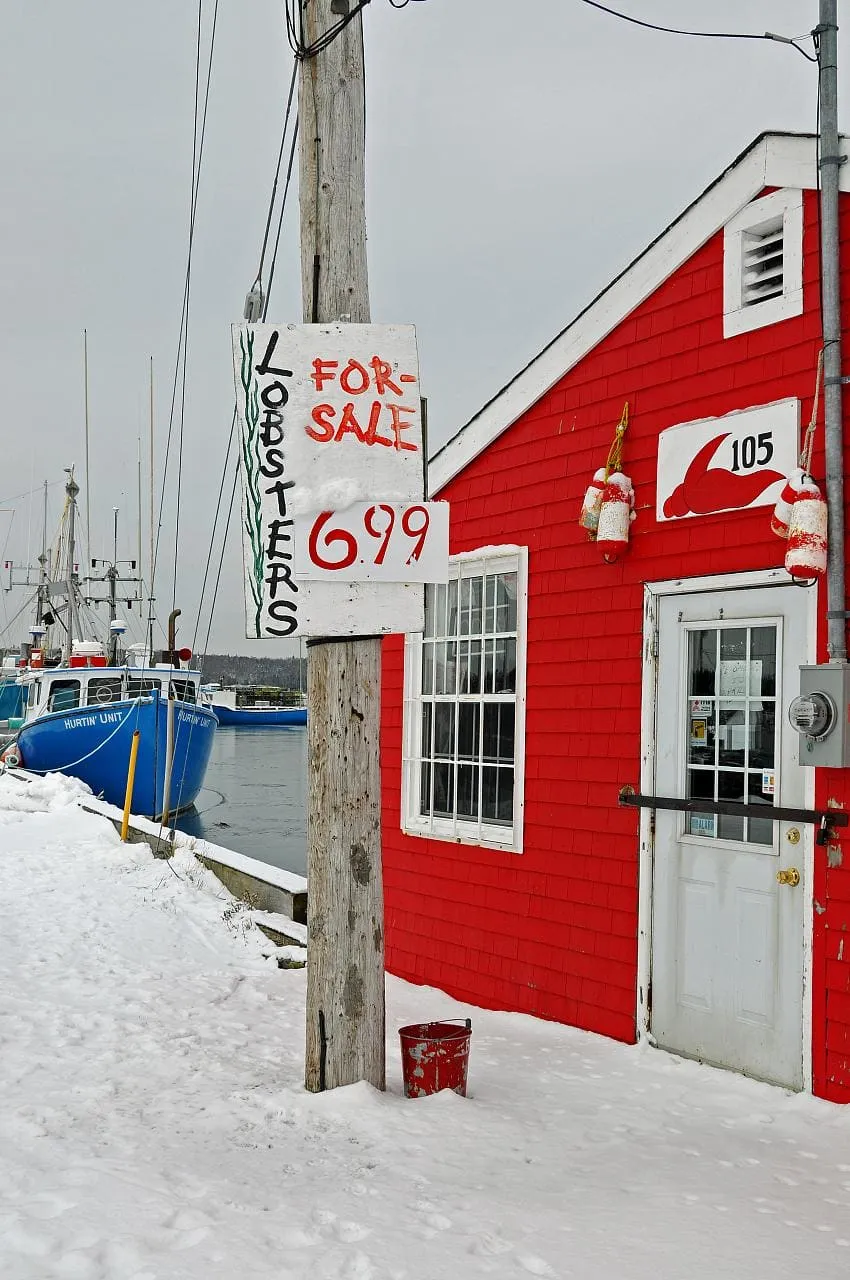
To buy live lobster in Nova Scotia, go to a fish market, a seafood retailer or a lobster pound, or buy at a wharf where harvesters sell to the public. Choose a lively, hard-shell lobster that curls its tail and lifts its claws when picked up. Buy it as close to cooking time as you can. It keeps 36 to 40 hours in a cool, damp spot such as the fridge under wet newspaper, according to the Lobster Council of Canada. Price per pound changes with the season, so ask before you order.
This guide covers where to find live lobster for sale in Nova Scotia, how to tell a good one from a tired one, what sizes mean, why prices move, and how to get lobster home, onto a plane or shipped. Once you’ve bought it, our pillar guide on how to cook lobster takes it from there. If you’d rather leave the cooking to someone else, try our where to eat lobster in Nova Scotia guide. More buying and storage articles are collected on the buying and storing topic hub.
Where to buy live lobster in Nova Scotia
You have four main options. Each suits a different kind of buyer.
| Where | Good for | What to expect |
|---|---|---|
| Wharf or harvester | Fresh-landed lobster at the source, a few at a time | Seasonal, informal, often cash; depends on who’s fishing |
| Lobster pound or seafood retailer | Reliable year-round supply, choice of sizes | Lobsters held in tanks; staff can pack for travel |
| Fish market or seafood counter | Convenience in towns and cities | Tanks of live lobster; some also sell cooked lobster and meat |
| Grocery store | A last-minute dinner | Supply and freshness vary; check the tank |
Buying lobster at the wharf
Buying from the wharf is the classic Nova Scotia experience: a hand-lettered “Lobsters for sale” sign on a fish shed, a cooler and a price per pound. Not every harvester sells to the public, though, and many sell their whole catch to a licensed buyer. The best way to find wharf sales is to visit fishing harbours in an area that’s in season and ask.
Is it legal? Nova Scotia requires anyone who buys fish from fishermen to hold a provincial fish buyer licence. The province’s licence page exempts people who “buy less than 25kg of fish or fish products per calendar day for personal consumption only.” Buying a few lobsters for your own supper fits within that. Buying lobster to resell does not. Lobster is specifically excluded from the exemption for retail resale, and the province says licensed live-lobster buyers must show they have suitable facilities to hold and handle it.
Lobster pounds and seafood retailers
A lobster pound holds live lobster in tanks or seawater enclosures so it can be sold well after the season closes. The bigger seafood retailers are the most dependable year-round source. They also tend to grade lobsters by size and can pack them for a long drive or a flight.
Clearwater, the Nova Scotia seafood company, runs retail shops on the Bedford Highway and at Halifax Stanfield International Airport. Tourism Nova Scotia’s listing says both are stocked year-round with fresh and frozen seafood, including live lobster, and staff will pack your order “whether you’re travelling near or far.”
Fish markets and seafood counters
Most larger towns have a fish market or seafood counter with a lobster tank. Taste of Nova Scotia’s Lobster Trail includes several retailers alongside its restaurants. Examples are the Clearwater Seafoods Retail Store in Bedford, Evan’s Seafood in Dartmouth, Fisherman’s Market International in Halifax, Dory Mates’ Seafood Shop in Lunenburg and Masstown Market in Masstown. Hours and stock change with the season, so call ahead, especially if you want a particular size.
Grocery stores
Supermarket tanks are fine in a pinch. Look at the tank before you order. You want clear, cold water, lobsters that aren’t piled on top of each other and plenty of movement. If the lobsters look listless, buy elsewhere.
How to choose a good live lobster
A good lobster is lively, heavy for its size and hard-shelled. Here’s what to check at the tank or the cooler:
- Liveliness. Ask the seller to lift the lobster out of the water. A healthy lobster flaps or curls its tail under its body and raises its claws. A lobster whose tail hangs limp is weak. Cook it right away or pass on it. The Lobster Council says a sluggish lobster should be cooked at once, and one that doesn’t respond at all may be dead and should be thrown out.
- Weight. Pick up two lobsters of about the same size. The heavier one is usually the fuller one.
- Shell. A hard-shell lobster feels rigid when you press the side of its body shell. A recently moulted, or soft-shell, lobster flexes. Soft-shell lobster is sweet but has less meat, more water and a more fragile shell, so it doesn’t travel as well. Our guide to American lobster facts explains moulting and why shells vary through the year.
- Both claws. A lobster missing a claw is called a “cull.” Some sellers price culls lower, which makes them a good buy if you’re picking the meat for rolls or chowder.
- Bands on. The claws should be banded so the lobsters can’t damage each other or you.
Never buy a lobster that’s already dead unless it’s sold cooked. Whole lobster has to be cooked alive or killed immediately before cooking.
Lobster sizes: how much to buy
Lobster in Nova Scotia is sold by the pound. The Lobster Council of Canada describes sizes running “from canners (1/2 pound to 1 pound) to jumbos (over 2 1/2 pounds).” Between those, sellers use their own names for size steps, such as “chicks,” “quarters,” “halves” and “selects.” The exact weight ranges vary from seller to seller, so ask for the weight in pounds.
| Size name | Weight | Good for |
|---|---|---|
| Canner | ½–1 lb (Lobster Council of Canada) | Picking meat for rolls, chowder or pasta |
| In-between sizes (“chicks,” “quarters,” “halves,” “selects”) | Ranges vary by seller; ask for the weight | Whole-lobster dinners, usually 1–2 lb |
| Jumbo | Over 2½ lb (Lobster Council of Canada) | Sharing and meat yield; longer cooking |
For a whole-lobster dinner, plan on one 1 to 1½ lb lobster per person. A 1½ lb hard-shell lobster gives about 1⅓ cups of cooked meat (Lobster Council of Canada). That helps if you’re buying for rolls, chowder or pasta.
Legal minimum size. Every lobster sold in a Nova Scotia shop has already passed the federal size check at sea, but the rule still applies to buyers. The Atlantic Fishery Regulations prohibit anyone from buying, selling or possessing lobster under 72 mm carapace length (82.5 mm in Newfoundland and Labrador). Most Nova Scotia fishing areas set a higher minimum for harvesters. The regulations also say “No person shall buy, sell or have in their possession any female lobster with eggs attached.” If a lobster has dark eggs under its tail, it shouldn’t be for sale. Our Nova Scotia lobster regulations guide explains the full rulebook, including why you can’t catch your own.
When is the best time to buy fresh lobster in Nova Scotia?
Nova Scotia’s coast is split into lobster fishing areas (LFAs) with staggered seasons, so somewhere in the province is usually fishing. The biggest fishery, LFAs 33 and 34 along the South Shore and southwest coast, runs from late November to the end of May. The Northumberland Strait and Cape Breton fish mainly in spring and early summer, and the upper Bay of Fundy has fall and spring seasons. Our guides to the Nova Scotia lobster season and the province’s lobster fishing areas have the dates and maps.
Practical tips by season:
- December: Supply from the newly opened southwest fishery meets peak holiday demand. Order Christmas and New Year’s lobsters early.
- February–March: Fewer boats go out in winter weather, so local supply tightens and prices usually peak.
- April–June: Spring seasons open across eastern Nova Scotia, Cape Breton and the Northumberland Shore, so fresh-landed lobster is available along more of the coast.
- Summer and fall: Lobster pounds and retailers keep supplying from tanks. In late summer and fall, ask whether the lobster is hard-shell.
What drives the price of lobster per pound?
Lobster prices in Nova Scotia are set by supply and by what export markets will pay. Two prices matter:
- The shore price is what buyers pay harvesters at the wharf. It’s the number you see in the news.
- The retail price is what you pay at the counter. It’s higher, because it covers holding, grading, losses and the shop’s margin. No official retail price series exists, so compare a few sellers.
The main price drivers, with recent examples:
- Landings and weather. In the southwest fishery, wharf prices “usually peak during February and March, when fishing effort and landings are the lowest,” the Atlantic Fisherman reported in April 2024. That spring, harvesters were paid a record $20 a pound in late March. Industry representatives expected a correction once other areas opened in April, the usual pattern.
- Export demand and trade. The 2025–26 southwest season opened on November 24, 2025. The shore price stayed at about $8.50 a pound for more than a month, then climbed to $12.50 over about a week in January 2026, according to The Navigator. The Lobster Council of Canada’s executive director pointed to a nervous live-lobster market, a drop in sales to China, weak demand from other markets and concerns about quality.
- Holidays. Demand ahead of Lunar New Year was one reason prices rose in January 2026, The Navigator reported.
- Size. That same month, industry reports described a shortage of large lobster that pushed up prices for bigger grades.
- Shell quality. Buyers watch quality closely. Early in the 2025–26 season, the Lobster Council of Canada listed expected poor quality from lobsters still recovering from their moult among the reasons buyers were cautious.
Prices change week to week. Use these figures as context, not a quote, and ask your seller for today’s price per pound.
How to get live lobster home safely
Live lobster is hardy if you keep it cold, damp and out of fresh water. The Lobster Council of Canada’s handling advice boils down to a few rules:
- Bring a cooler. Ask the seller to pack the lobsters with damp newspaper or seaweed. Keep the cooler in the coolest part of the car, out of the sun.
- Keep them damp, not wet. Moist paper or towels keep the gills working.
- No fresh water, no loose ice. The Council warns against exposure to “fresh water of any kind, ice or otherwise.” Melting ice is fresh water. If you use ice packs, keep them sealed and wrapped so lobsters don’t sit in meltwater.
- Don’t seal them airtight. Lobsters need air. Don’t put them in a sealed plastic bag or a closed container in the fridge.
- Cook within a day or so. The Council says live lobster keeps 36 to 40 hours out of water in a cool, damp place. Sooner is better.
How to store live lobster before cooking
At home, put the lobsters in an open container or a box in the fridge, covered with damp newspaper or a damp towel. Don’t put them in a sink or bucket of tap water, and don’t try to keep them in a cooler of melting ice. Check them before cooking. A lobster that has gone sluggish should be cooked first. One that doesn’t respond at all should be discarded.
If you can’t cook the lobsters in time, cook them anyway and refrigerate the meat. The Lobster Council says cooked lobster keeps up to three days in airtight containers in the fridge, and picked meat up to four days.
Taking lobster on a plane from Halifax
Plenty of visitors fly home with a box of lobster, and it’s allowed. Canada’s airport screening authority, CATSA, lists lobster as permitted in both carry-on and checked baggage. It tells travellers to “Contact your air carrier for instructions on specific packaging requirements.” Airlines set their own rules for coolers, boxes and dry ice. Check before you fly.
The easiest option is to buy where they pack lobster for travel. Clearwater has a shop at Halifax Stanfield International Airport, and Tourism Nova Scotia lists its hours as 9:30 a.m. to 5:30 p.m., seven days a week. Leave enough time to buy and pack before you check in.
If you’re flying to another country, check that country’s import rules for live seafood before you buy. Declare the lobster when you arrive.
Can you ship live lobster from Nova Scotia?
Yes, but leave it to a company that does it every day. Live lobster needs insulated packaging, cold packs and overnight delivery to arrive alive. Several Nova Scotia seafood companies sell online and ship to homes. Tourism Nova Scotia’s listing for Clearwater, for example, says orders can be placed at shop.clearwater.ca for delivery across Canada and the U.S. Before you order from any shipper, check:
- Which days they ship. Most avoid weekend transit.
- What happens if a lobster arrives dead. Get the guarantee in writing.
- Size and shell. Ask for hard-shell lobster for shipping.
- Delivery address. Make sure someone will be home to refrigerate the box when it arrives.
Buying lobster legally and responsibly
Lobster is a carefully managed fishery, and buyers have a part to play:
- Buy from businesses you can identify. That means licensed shops, pounds and markets, or a harvester selling a few lobsters from their own boat.
- Don’t buy lobster with eggs under the tail, or lobster that looks undersized. Federal law prohibits buying either.
- Don’t buy lobster to resell unless you hold the right provincial licence.
- Ask where it came from. A good seller can tell you the fishing area and roughly when it was landed.
- Be wary of very cheap lobster out of season from an unknown seller. If the deal seems too good, buy elsewhere.
Quick checklist for buying live lobster
- Call ahead for the size and quantity you need, especially around holidays.
- Ask for hard-shell, lively lobsters that curl their tails when lifted.
- Compare weight in hand. Heavier for its size is better.
- Bring a cooler and ask for damp packing. No loose ice.
- Store in the fridge, open to the air, under damp paper.
- Cook within about a day. Discard any lobster that doesn’t respond.
Once you’ve got them home, our guide to how to cook lobster the Nova Scotia way has the salt, the timings and the doneness checks. For the bigger picture, from fishing areas to exports, start with Nova Scotia lobster: the complete guide.
Frequently asked questions
Can you buy lobster straight off the boat in Nova Scotia?
Sometimes. Some harvesters and wharf-side sellers sell a few lobsters to the public, often with a hand-painted sign. Nova Scotia's fish buyer licence rules exempt people buying less than 25 kg of fish per day for their own use, but sellers and buyers must still follow federal size and berried-female rules.
How long will a live lobster last after I buy it?
The Lobster Council of Canada says live lobster keeps about 36 to 40 hours out of water in a cool, damp place such as an open container in the fridge under damp newspaper or towels. Keep it away from fresh water and ice, and cook it the same day if you can.
When is lobster cheapest in Nova Scotia?
Prices move with landings and export demand, not just the calendar. In southwest Nova Scotia the shore price usually peaks in February and March, when landings are lowest, and has traditionally dropped once spring seasons open elsewhere in Atlantic Canada in April and May.
Can I take live lobster on a plane from Halifax?
Yes. Canada's airport screening authority, CATSA, allows lobster in both carry-on and checked bags, but tells travellers to check with their airline about packaging. Clearwater's shop at Halifax Stanfield packs lobster for travel.
What size lobster should I buy?
For eating whole, 1 to 1½ lb lobsters are the most common choice. The Lobster Council of Canada describes sizes running from canners (½ to 1 lb) up to jumbos (over 2½ lb). A 1½ lb hard-shell lobster yields about 1⅓ cups of cooked meat.
Sources
We check facts against primary sources wherever possible. Season dates and regulations can change, so confirm with Fisheries and Oceans Canada before you rely on them.
- Handling Lobster — Lobster Council of Canada
- Fish Buyers Licence — Government of Nova Scotia (Service Nova Scotia)
- Atlantic Fishery Regulations, 1985 (SOR/86-21), section 59 — Justice Laws Website, Government of Canada
- Lobster Prices Climb in Southwestern Nova Scotia — The Navigator, 2026
- Lobster Hits $20/Pound in Southwestern Nova Scotia — The Atlantic Fisherman, 2024-04-04
- Clearwater Retail Shop — Tourism Nova Scotia
- Lobster, fish — Canadian Air Transport Security Authority (CATSA)
- Trail Stops — Nova Scotia Lobster Trail (Taste of Nova Scotia)
Image credits
- Header photo: Photo: Dennis G. Jarvis via Wikimedia Commons · CC BY-SA 2.0 (cropped and resized)
live lobsterbuying guidewharffish marketslobster pricestravelstorage