Nova Scotia Lobster: The Complete Guide
Nova Scotia lobster explained: the fishery's size and value, every fishing area and season, the key rules, how to buy and cook it, and where to taste it.
By NovaShell Editorial Team · · 12 min read
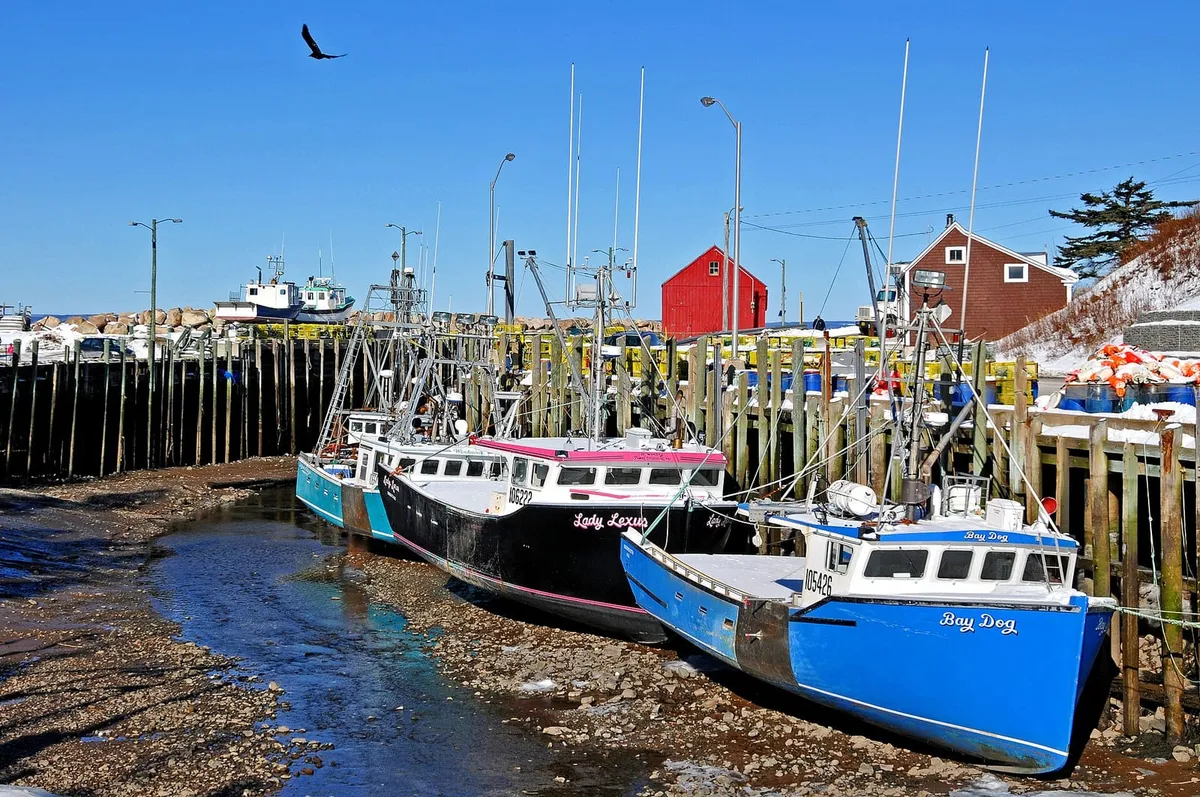
Nova Scotia lobster is the American lobster (Homarus americanus), caught in traps by small inshore boats along almost every stretch of the province’s coast, and it is the most valuable seafood Nova Scotia produces. In 2024, Nova Scotia harvesters landed lobster worth $961.9 million, almost half of Canada’s lobster landed value of $1.97 billion, according to Fisheries and Oceans Canada (DFO) landings tables. Lobster was also the province’s top seafood export that year, at $1.3 billion. This guide is the hub for everything NovaShell covers: what makes the lobster special, how the fishery works, when and where it is fished, the rules, and how to buy, cook and travel for it.
Each section points to a deeper guide. If you need dates, go to Nova Scotia lobster season dates for every fishing area. For the map, read lobster fishing areas in Nova Scotia explained, and for the rulebook, see lobster regulations in Nova Scotia.
Nova Scotia lobster at a glance
| Species | American lobster, Homarus americanus (same species as “Maine” lobster) |
| Landed value in Nova Scotia, 2024 | $961.9 million (Canada: $1.97 billion) |
| Lobster exports from Nova Scotia, 2024 | $1.3 billion ($1.03 billion live, $277 million other forms) |
| Inshore licences, LFAs 27–38 | 2,973 at the end of 2021 (this count includes New Brunswick’s Bay of Fundy areas) |
| People employed harvesting | About 7,500 a year in DFO Maritimes Region (2014–2018 average) |
| Fishing areas touching Nova Scotia | LFAs 25, 26A, 26B, 27–35 inshore, plus offshore LFA 41 |
| Most common minimum size | 82.5 mm carapace length |
| Biggest season | LFAs 33 and 34, last Monday in November to May 31 |
| Certification | Marine Stewardship Council, certified since February 25, 2021 |
Sources: DFO landings tables (2024), the Nova Scotia 2024 seafood snapshot, DFO’s inshore lobster management plan and the MSC fishery record.
What makes Nova Scotia lobster special?
Lobster is lobster, biologically. The American lobster lives in coastal waters from southern Labrador to Maryland, so the animal in a Yarmouth trap is the same species as one landed in Maine or Massachusetts. What sets Nova Scotia apart is the water, the timing and the way the fishery is run.
It grows slowly in cold water
DFO’s management plan says lobsters in the Maritimes generally take 8 to 10 years to reach the legal size of 82.5 mm carapace length. At that size a lobster weighs about 0.45 kg (1 lb) and moults once a year. A 1.4 kg (3 lb) lobster moults only every two to three years. Nobody knows the maximum age of a lobster, because they shed their shells and can’t be aged directly. DFO believes it is in the range of 50 years. The largest lobster on DFO’s record weighed 20 kg (44 lb). For more on growth, moulting and breeding, see our guide to American lobster biology.
It’s in season somewhere almost all year
Nova Scotia doesn’t have one lobster season. The coast is divided into Lobster Fishing Areas (LFAs), and each has its own dates. DFO uses seasons partly to keep traps out of the water during spawning, egg extrusion and moulting periods. The result is a calendar where the South Shore fishes through the winter, Cape Breton and the Northumberland Strait fish in spring, a small part of the Gulf fishes in late summer, and the Bay of Fundy fishes in both fall and spring.
It’s caught by owner-operators in small boats
The inshore fishery “is prosecuted almost entirely by vessels less than 13.7m (45’) length overall,” according to DFO, and lobster is an owner-operator fishery: the licence holder fishes the licence. Entry has been limited since 1968, when DFO extended limited-entry licensing from parts of PEI and New Brunswick to the rest of the Maritimes.
It’s certified
The inshore fishery is part of the Maritime Canada inshore lobster trap fishery, which the Marine Stewardship Council lists as certified since February 25, 2021, with the current certificate running to February 23, 2031. A reassessment that began in 2025 published its public certification report in July 2026.
The Nova Scotia lobster fishery in numbers
Lobster is the backbone of the Nova Scotia fishery. Here are the figures that matter, all from DFO or the provincial government unless noted.
- Landed value. In 2024, Nova Scotia’s lobster landings were worth $961.9 million. New Brunswick came next at $322.6 million and PEI at $317.6 million. DFO’s 2024 tables were last updated in January 2025, and no 2025 calendar-year table had been published when we checked.
- Exports. Nova Scotia exported $2.4 billion of seafood in 2024, 29% of Canada’s total seafood exports, and lobster made up $1.3 billion of it. The top destinations for Nova Scotia seafood of all kinds were the United States ($1.23 billion) and China ($615 million), followed by South Korea, Japan and the Netherlands.
- Licences. DFO counted 2,973 inshore lobster licences in LFAs 27–38 at the end of 2021. LFA 34 in southwest Nova Scotia had the most, 979, and LFA 33 had 680. Those totals include licences in LFAs 36 and 38 on the New Brunswick side of the Bay of Fundy.
- Jobs. Inshore lobster harvesting employed an average of exactly 7,500 people a year in DFO Maritimes Region from 2014 to 2018, counting captains and crew.
- Communities. In 2016, lobster was landed in more than 300 communities in Maritimes Region.
- County dependence. In 2016, Shelburne County had the highest commercial fishery landed value in the region, $302 million, and lobster made up about 70% of it. Yarmouth County’s fishery was worth $227 million, about 71% lobster.
What a pound of lobster earns at the wharf
The “shore price” is what buyers pay harvesters per pound, and it swings with the market. Atlantic Fisherman reported in January 2026 that the 2025-26 season in LFAs 33 and 34 opened at $8.25 to $8.50 a pound. That was about 30% below the record 2024-25 opening price of $11.50. A Lockeport buyer blamed China’s tariff on Canadian seafood, and said his shipping to China was down 75% from the year before. Retail prices are higher than shore prices and vary by store, size and week, so call ahead.
Lobster fishing in Nova Scotia: who fishes where
Every lobster trap in Nova Scotia waters sits inside a numbered LFA. DFO’s Maritimes Region manages the areas from the tip of Cape Breton around the Atlantic coast and into the Bay of Fundy, while DFO’s Gulf Region manages the Northumberland Strait and western Cape Breton.
| Part of Nova Scotia | LFAs | Managed by |
|---|---|---|
| Northumberland Strait shore (Cumberland to Antigonish counties) | 25 (fall, small Nova Scotia share) and 26A | DFO Gulf Region |
| Western Cape Breton, including Chéticamp | 26B | DFO Gulf Region |
| Northern and eastern Cape Breton, Bras d’Or Lake, Richmond County | 27, 28, 29, 30 | DFO Maritimes (Sydney office) |
| Guysborough County and the Eastern Shore | 31A, 31B, 32 | DFO Maritimes (Sydney office) |
| Halifax area west to Shelburne County (South Shore) | 33 | DFO Maritimes (Yarmouth office) |
| Southwest Nova Scotia (Yarmouth and neighbouring counties) | 34 | DFO Maritimes (Yarmouth office) |
| Upper Bay of Fundy | 35 | DFO Maritimes (Dartmouth headquarters) |
| Offshore banks beyond 50 nautical miles | 41 | DFO Maritimes |
The 50-nautical-mile line (about 90 km) divides the inshore fishery, LFAs 27–38, from the offshore fishery, LFA 41. There is also an LFA 40, but it is a closed area: since 1979 DFO has protected lobster broodstock on Browns Bank by keeping it closed to lobster fishing. Our pillar guide to lobster fishing areas in Nova Scotia explains every boundary, how to read the DFO map and how many licences fish each area.
When is lobster season in Nova Scotia?
Lobster is landed somewhere in Nova Scotia in every month of the year. Here’s the overview:
- Winter and spring, South Shore and southwest (LFAs 33 and 34): last Monday in November to May 31. The 2026-27 season is due to open on Monday, November 30, 2026, weather permitting.
- Fall and spring, Bay of Fundy (LFA 35): October 14 to December 31, then the last day of February to July 31.
- Spring, Eastern Shore and Cape Breton (LFAs 27–32): for 2026, DFO’s anticipated dates ran from April 9 (LFAs 31B and 32) to July 10 (LFA 30). 2026 was the first year of a five-year pilot that shifts these dates, but not the season length, to reduce the handling of egg-bearing or recently moulted lobster at the end of the season. LFA 28 is not part of the pilot.
- Spring, Northumberland Strait and western Cape Breton (LFAs 26A and 26B): for 2026, between April 20 and July 2, depending on the sub-area.
- LFA 25: a separate Gulf fishery in the western Northumberland Strait with its own late-summer season. Our season guide has its dates.
Dates can move. DFO can change season dates by variation order, usually because of bad weather or ice. The full table, a month-by-month calendar and a guide to reading DFO notices are in our Nova Scotia lobster season pillar, and the seasons and fishing areas hub collects every area guide as it is published.
Dumping Day
The opening of LFAs 33 and 34 is called Dumping Day, because boats head out stacked with traps and “dump” them on the grounds. It is one of the biggest days in the Canadian lobster calendar: LFAs 33 and 34 together held more than 1,600 licences in DFO’s 2021 count. The opening is set for the last Monday in November, but it is often delayed by weather, and the final call comes only days before.
Lobster regulations in Nova Scotia: the essentials
Every lobster that reaches a Nova Scotia wharf has cleared a stack of federal rules. The short version:
- Only licensed commercial harvesters may fish. DFO says there is no authorized recreational lobster fishery. Tour boats operate under educational licences that limit them to three modified, non-fishable traps, and everything caught goes back.
- Every LFA has a trap limit. In 2026, Category A licences in LFAs 28–32 could fish 250 traps, and LFA 27 could fish 275.
- Minimum sizes protect young lobsters. It’s 82.5 mm carapace length in most Maritimes LFAs, and 84 mm in LFAs 28 and 29. In the southern Gulf, the 2026 minimums ranged from 76 mm in LFA 26A-1 to 84 mm in 26B North.
- Big females are protected. Egg-bearing (“berried”) females must go back. Some areas also protect large females: LFA 30 has a 135 mm maximum for females, LFA 31A releases females from 114 to 124 mm, and Gulf LFA 26A releases females from 115 to 129 mm.
- V-notching. It’s mandatory in LFAs 31B and 32, and possessing v-notched lobsters is restricted in every Maritimes inshore LFA except 27 and 31A.
- Traps must let small lobsters out. Every trap needs escape vents in each parlour and a biodegradable panel so a lost trap stops fishing.
Indigenous communities fish under communal commercial licences and food, social and ceremonial (FSC) licences. FSC fishing has priority over other uses after conservation, following the Supreme Court’s 1990 Sparrow decision. After the 1999 Marshall decision, DFO expanded First Nations access to the commercial fishery through the Marshall Response Initiative. For licence categories, enforcement and the regulations themselves, read the Nova Scotia lobster regulations pillar, or browse the rules and sustainability hub.
Buying Nova Scotia lobster
You can buy live lobster from lobster pounds, wharf-side buyers, seafood shops and supermarket tanks across the province. Three things matter most:
- Season. Buy close to an open LFA and you’re more likely to get lobster that hasn’t spent long in storage. In winter that means the South Shore and southwest. In May and June, almost every part of the province is fishing.
- Shell. Hard-shell lobsters, which haven’t moulted recently, generally carry more meat for their weight. Soft-shell or “new shell” lobsters have more water inside the shell and are more fragile. Ask the seller which you’re getting.
- Liveliness. A good lobster curls its tail and raises its claws when you lift it. Keep lobsters cool and damp, never in fresh water, and cook them the day you buy them if you can.
Our guide to buying live lobster in Nova Scotia covers sizes, grades, where to shop and how to transport lobster home. The buying and storing hub has everything else, from storage to shipping.
Cooking Nova Scotia lobster
Most Nova Scotians cook lobster the plain way: boiled or steamed in well-salted water (seawater, if you’re near the shore), served whole with melted butter and a side of potato salad or coleslaw. The meat goes into rolls, chowder, creamed lobster and lobster cakes when there’s any left over. For timing charts by weight, doneness checks and the steaming method, start with how to cook lobster the Nova Scotia way. Then browse the recipes in the cooking and recipes hub.
Where to taste lobster in Nova Scotia
You can eat lobster anywhere in the province, but each region has its own rhythm:
- February on the South Shore. The Nova Scotia Lobster Crawl has run every February since 2018, along the South Shore from Barrington, which calls itself the Lobster Capital of Canada, to Peggy’s Cove. Events include Lucy the Lobster’s February 2 prediction, a Lobster Roll Off and a chowder competition. Tourism Nova Scotia lists the 2027 festival for February 1–28.
- Late spring and summer everywhere else. When the Cape Breton, Eastern Shore and Northumberland Strait seasons are open, wharves, takeout shacks and community lobster suppers are at their busiest.
- The Bay of Fundy. LFA 35 lands lobster in fall and again from late winter to summer, so Fundy shore restaurants can source locally for much of the year.
For a region-by-region list of lobster suppers, pounds, shacks and restaurants, see where to eat lobster in Nova Scotia. Festivals, history and road trips live in the travel, culture and history hub.
How lobster gets from the trap to the table
Most Nova Scotia lobster leaves the province. Live lobster alone accounted for $1.03 billion of Nova Scotia’s 2024 lobster exports, and other product forms for another $277 million. Between the trap and the export market, a lobster passes through a few hands:
- On the boat. Harvesters haul baited traps, measure each lobster and put back the undersized ones, berried females and any protected sizes.
- At the wharf. The catch is sold to a buyer at the shore price, and every landing goes into the harvester’s logbook. Logbooks are submitted to a DFO-recognized dockside monitoring company, and they are DFO’s main source of catch and effort data.
- After the wharf. Buyers and pounds grade and hold the lobster, then ship it live or send it to processors.
For the boats, traps and business behind it, browse the fishing and industry hub.
The big issues facing the fishery
- Markets and tariffs. The 2025-26 opening price slump showed how much the shore price depends on export markets, especially China.
- Changing seasons. DFO’s 2026 pilot shifting the dates in LFAs 27, 29, 30, 31A, 31B and 32 is a response to egg-bearing and recently moulted lobster being handled late in the season.
- Treaty rights. How Mi’kmaw treaty fishing rights, the subject of the 1999 Marshall decision, fit within DFO-set seasons is still a live issue.
- Right whales and gear. Parts of the Roseway and Grand Manan basins, which overlap LFAs 33, 34 and 38, are critical habitat for North Atlantic right whales. DFO can close areas to traps when whales are detected.
Each of these gets its own NovaShell article as the schedule rolls out. The lobster biology hub and the rules and sustainability hub are the best places to follow them.
Frequently asked questions
When is lobster season in Nova Scotia?
There is no single season. Each Lobster Fishing Area has its own dates, so lobster is landed somewhere in Nova Scotia in every month. The biggest season, in LFAs 33 and 34 on the South Shore and in southwest Nova Scotia, opens on the last Monday in November, weather permitting, and runs to May 31.
Is Nova Scotia lobster the same as Maine lobster?
Yes, it is the same species, the American lobster (Homarus americanus), which lives from southern Labrador to Maryland. What differs is the management: Canadian areas have their own seasons, trap limits and minimum sizes.
Can you catch your own lobster in Nova Scotia?
No. DFO says there is no authorized recreational lobster fishery in Nova Scotia. Lobster can only be fished commercially, by licence holders, or by Indigenous communities under communal licences.
How much is the Nova Scotia lobster fishery worth?
Nova Scotia harvesters landed lobster worth $961.9 million in 2024, almost half of Canada's lobster landed value of about $1.97 billion, according to DFO's landings tables. Lobster exports from the province were worth $1.3 billion that year.
Is Nova Scotia lobster sustainable?
The inshore fishery is certified to the Marine Stewardship Council standard as part of the Maritime Canada inshore lobster trap fishery, with a certificate valid to February 2031. It is managed with limited licences, trap limits, minimum sizes, seasons and the release of egg-bearing females.
Sources
We check facts against primary sources wherever possible. Season dates and regulations can change, so confirm with Fisheries and Oceans Canada before you rely on them.
- Atlantic Coast commercial landings, by province, 2024 (landed value) — Fisheries and Oceans Canada, 2025
- Integrated Fisheries Management Plan: Inshore lobster, Lobster Fishing Areas 27–38 (Maritimes Region) — Fisheries and Oceans Canada, 2022
- 2026 Lobster Fishing Areas 27-32 (Maritimes Region) — Fisheries and Oceans Canada, 2026
- 2026 Southern Gulf of St. Lawrence Lobster Conservation Harvesting Plan for LFAs 23, 24, 26A and 26B — Fisheries and Oceans Canada, Gulf Region, 2026
- Nova Scotia: Canada's #1 Seafood Exporter (2024 seafood snapshot) — Nova Scotia Department of Fisheries and Aquaculture, 2025
- Maritime Canada inshore lobster trap fishery: assessments — Marine Stewardship Council
- Low Landings and Shore Price in LFA 33/34 Lobster Fishery — Atlantic Fisherman, 2026-01-15
- Nova Scotia Lobster Crawl — Tourism Nova Scotia
Image credits
- Header photo: Photo: Dennis G. Jarvis via Wikimedia Commons · CC BY-SA 2.0 (cropped and resized)
Nova Scotia lobsterLFAlobster seasonDumping DayexportsMSCLobster Crawl