Lobster Sizes Explained: Canners, Markets, Chicks, Quarters and Jumbos
Lobster sizes and grades explained: canners, markets, chicks, quarters, halves, selects and jumbos, with weights, carapace sizes and the best size for each use.
By NovaShell Editorial Team · · 7 min read
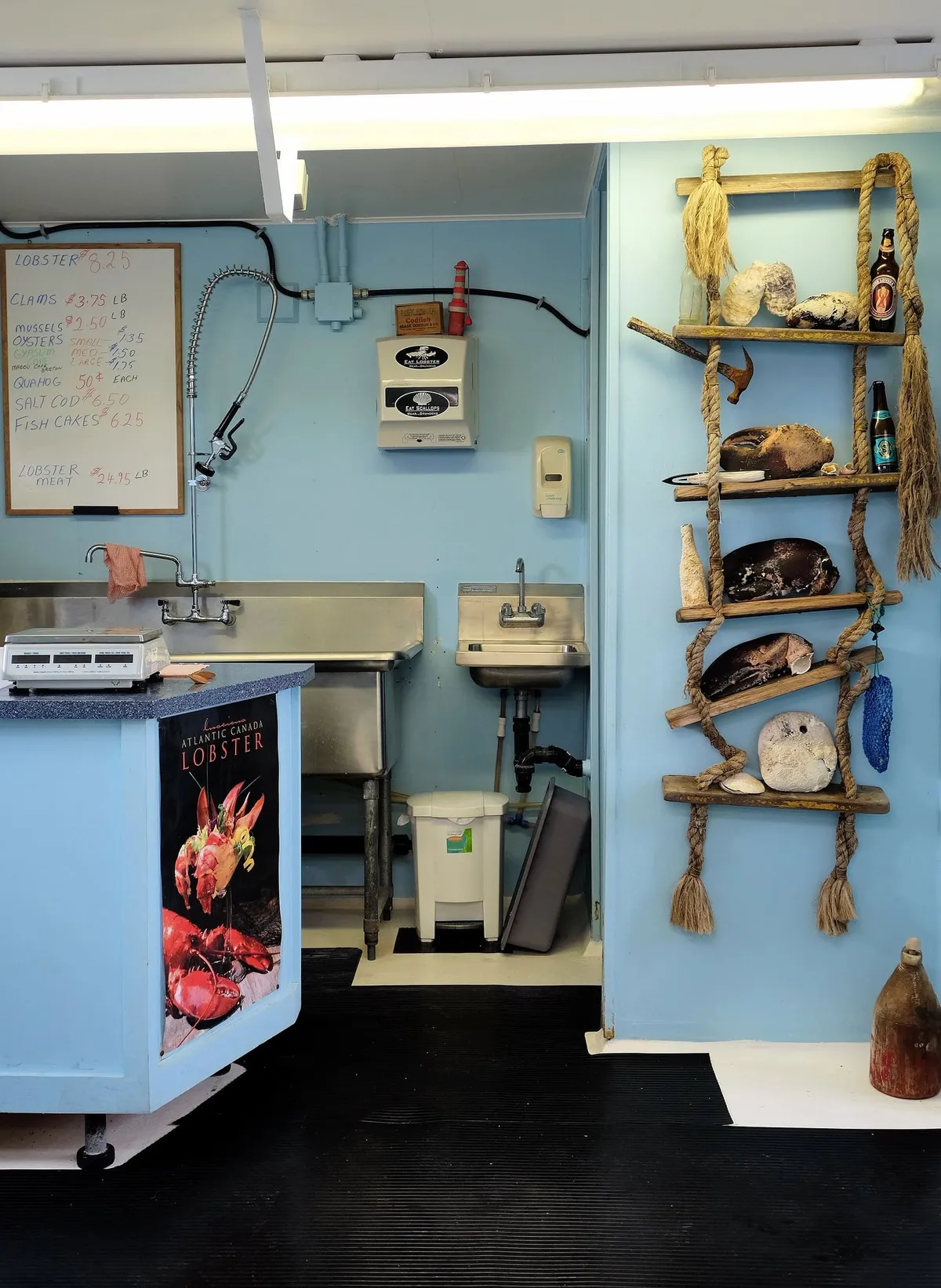
Lobster sizes run from small canners of about ½ to 1 lb, through 1 lb “chicks,” 1¼ lb “quarters” and 1½ lb “halves,” up to 2 lb-plus “selects” and jumbos over about 2½ lb. The names are trade grades, not government rules. Most of them are based on live weight, and cutoffs vary a little from buyer to buyer. The one legal size that matters is the minimum carapace length, about 82.5 mm in most of Nova Scotia. That works out to a lobster of roughly 1 lb.
This guide decodes the lobster grades you’ll see on price boards and wholesale lists, and explains how to pick the right size for supper, rolls or chowder. For the bigger buying picture, start with our pillar guide to buying live lobster in Nova Scotia.
Lobster sizes and grades at a glance
The table pulls together the Lobster Council of Canada’s size names, the trade grades used by Expana (the price-reporting firm formerly known as Urner Barry) for Canadian lobster sold to Europe, and Maine industry terms. Where they overlap, the weights agree closely.
| Grade name | Typical live weight | Source of definition |
|---|---|---|
| Canner | ½ to 1 lb (225–450 g) | Lobster Council of Canada |
| Chick / chicken / “chix” | 1 lb (450 g) | Expana; Lobster from Maine |
| 1⅛ lb chicks | 1.125 lb (510 g) | Expana |
| Quarter | 1.22 to 1.34 lb (about 555–610 g) | Expana |
| Small halves | 1.36 to 1.46 lb (about 615–660 g) | Expana |
| Half / halves | 1.48 to 1.72 lb (about 670–780 g) | Expana |
| Three-quarters | 1.74 to 1.94 lb (about 790–880 g) | Expana |
| 2 lb select | 1.96 to 2.3 lb (about 0.9–1.05 kg) | Expana |
| 2½–3 lb select | 2.5 to 3.0 lb (1.1–1.4 kg) | Expana |
| 3–4 lb select | 3.0 to 4.0 lb (1.4–1.8 kg) | Expana |
| Jumbo | Over 2½ lb (1.1 kg) | Lobster Council of Canada |
Sources: Lobster Council of Canada; Expana’s grade definitions (December 2025); Lobster from Maine terminology.
A few points to keep in mind:
- “Select” isn’t fixed. Expana’s “selects” start at about 2 lb. The Maine Lobster Marketing Collaborative defines a select as a lobster of 1.75 lb or more.
- “Jumbo” is loose. It’s a selling term, not a standard. Ask the seller for the actual weight.
- Grades assume hard shell. Expana’s specifications are for hard-shell lobster. A soft-shell lobster of the same weight holds less meat; see hard-shell vs soft-shell lobster.
Canner lobster vs market lobster
These are the two oldest lobster grades in Atlantic Canada, and they still split the fishery.
Canners got their name from the canneries that once processed small lobsters. DFO’s 1988 Underwater World profile describes districts where lobsters as small as 63.5 mm carapace length could then be landed “to supply the plants canning lobster meat.” It notes that freezing had largely replaced canning, and mentions whole canners frozen in brine for export.
Market lobsters are the bigger ones sold live. DFO’s Gulf Region lobster fishery profile (2008) describes the market as “divided into two grades or size categories: canner lobster and market lobster,” with market lobsters being those “over 3 3/16″,” about 81 mm of carapace length.
Today the canner fishery is mostly a southern Gulf of St. Lawrence affair, because minimum legal sizes there are smaller than on Nova Scotia’s Atlantic coast:
| Area | Minimum legal carapace length (2026) |
|---|---|
| LFA 26A-1 (Gulf Nova Scotia and PEI) | 76 mm |
| LFA 26A-2 | 78 mm |
| LFA 26A-3 | 81 mm |
| LFA 26B South (western Cape Breton) | 82.5 mm |
| LFA 26B North | 84 mm |
| Most Maritimes inshore LFAs, including 33, 34 and 35 | 82.5 mm |
| LFAs 28 and 29 (Cape Breton) | 84 mm |
Sources: DFO’s 2026 southern Gulf harvesting plan and Maritimes inshore management plan. Sizes are set and changed by DFO, so check the current notice. Our guide to Nova Scotia lobster regulations explains how they work.
In practice, if you buy lobster on the Northumberland Strait in late spring, you’re likely to see canners on offer. On the South Shore in winter, almost everything is market-size or larger.
How carapace size relates to weight
Legal size is a length measured on the carapace, the body shell. Claws, tail and weight don’t count. DFO’s management plan ties the two together at the bottom of the range: lobsters in the Maritimes “generally take 8-10 years to reach the legal size of 82.5 mm Carapace Length (CL). At that size they weigh approximately 0.45kg (1 pound).”
From there, weight climbs faster than length, because a lobster grows in all three dimensions at once. A few millimetres of extra carapace adds a surprising amount of weight. Each moult adds more: DFO notes that once a lobster has filled its new shell, it’s about 50 percent heavier than before the moult. That’s why a 1 lb chick and a 1½ lb half don’t look very different in the tank, even though one has half again as much lobster in it.
Other DFO reference points:
- A 1.4 kg (3 lb) lobster moults only every 2 to 3 years, compared with once a year at legal size.
- DFO’s 1988 profile used “jumbos” for lobsters of more than 125 mm carapace length.
- DFO also noted that large lobsters of 81 mm or more were “almost always sold live,” while jumbos were usually shucked and sold as frozen or canned meat.
For how old those big lobsters might be, see how long lobsters live.
Which lobster size is best for which use?
| Use | Best size | Why |
|---|---|---|
| Whole lobster dinner, one per person | Quarters to halves (1¼–1½ lb) | A full meal, cooks evenly, easy to handle |
| Kids or light appetites | Chicks (1 lb) | Smallest live grade; plenty for one small eater |
| Picked meat for rolls, chowder, cakes, mac and cheese | Canners or chicks, if priced lower per pound | You’re cutting the meat up anyway |
| Sharing, or a showpiece | Selects and jumbos (2 lb+) | Big claws and tail; one lobster feeds two |
| Lobster for shipping or holding a day or two | Hard-shell, any size | Shell condition matters more than size |
The Lobster Council of Canada’s preparing lobster guide suggests allowing 1 to 1½ lb of lobster per person, “and add a few more in for hungry enthusiasts.” One quarter or half per person fits that neatly.
Small vs large: what changes in the pot
Bigger lobsters take longer to cook, and the gap grows with size. Our lobster boiling time chart by weight runs from about 8 minutes for a 1 lb lobster to 25 minutes or more for a 3 lb lobster. With a jumbo, the risk is that the claws and tail finish at different times, so check doneness in more than one place.
For a pot full of lobsters, buy them all the same grade. Mixed sizes cook unevenly, and you’ll be fishing out the small ones while the big ones finish.
Does a bigger lobster taste tougher?
It’s a common belief, but we found no good evidence for it from a Canadian authority, so we won’t repeat it as fact. What is clear is that overcooking toughens lobster of any size. Large lobsters are simply easier to overcook at the edges while the centre catches up.
The best size for lobster rolls
You don’t need big lobsters for picked meat. Our Nova Scotia lobster roll recipe uses about 450 g (1 lb) of cooked meat for four rolls, which takes about three 1½ lb lobsters. If canners or chicks cost less per pound, they’re good value for this. Just allow more picking time, and see how to eat a whole lobster for the fastest way to get the meat out.
Price per pound: how size affects cost
Price per pound varies by grade, but the gap isn’t fixed. It moves with the season, the market and shell condition.
- Canners usually fetch less per pound than markets at the wharf. DFO’s Gulf Region profile reported average 2007 shore prices of $5.09/lb for canners and $5.99/lb for markets. Those figures are old, but they show the usual pattern.
- Each grade is priced separately in the trade. Price-reporting services quote chicks, quarters, halves and selects as separate lines, because buyers in different markets want different sizes.
- Retail prices are higher than shore prices and change week to week. We don’t publish retail ranges without a dated source, so ask your seller for the current price per pound by size.
What should you buy? If you’re serving whole lobsters, the price per pound matters less than getting the right size for each person. If you’re buying meat for a recipe, compare price per pound across grades and pick the cheapest hard-shell option.
Quick glossary of other size terms
- Cull: a lobster with one claw. Lobster from Maine defines it as “a one-clawed lobster.” If a seller prices culls lower, they’re fine for picked meat.
- Pistol: a lobster with no claws.
- Keeper: a lobster that can legally be landed, within the size limits and not an egg-bearing or v-notched female.
More buying guides are collected in our buying and storing hub.
Frequently asked questions
What is a canner lobster?
A canner is a small legal lobster, roughly ½ to 1 lb according to the Lobster Council of Canada. The name dates from when small lobsters went to canneries. Today canners are landed mainly in the southern Gulf of St. Lawrence, where minimum legal sizes are smaller, and are often sold cooked, frozen or as meat.
What is a market lobster?
In Canadian trade, a market lobster is one big enough for the live market. DFO's Gulf Region describes the two grades as canners and markets, with markets being lobsters over 3 3/16 inches (about 81 mm) in carapace length. In practice, markets run from about 1 lb up.
What is a chicken lobster?
A chicken, chick or 'chix' lobster is a lobster of about 1 lb, the smallest common live grade. Trade grading for Canadian lobster also uses 1 1/8 lb chicks.
What size is a jumbo lobster?
There's no government standard. The Lobster Council of Canada describes jumbos as lobsters over 2½ lb, and many buyers use 'jumbo' loosely for anything from about 2½ or 3 lb up.
What size lobster is best to buy?
For a whole lobster per person, 1¼ to 1½ lb (quarters and halves) is the sweet spot: easy to cook evenly and a satisfying meal. Canners are good value for picked meat, and big lobsters suit sharing or recipes that need lots of meat.
Sources
We check facts against primary sources wherever possible. Season dates and regulations can change, so confirm with Fisheries and Oceans Canada before you rely on them.
- Handling Lobster — Lobster Council of Canada
- Market Specific Definitions, Terms, and Methodologies: Canadian Lobster E.U. Market — Expana (formerly Urner Barry), 2025
- Commercial Lobster Fishery Profile, Gulf Region — Fisheries and Oceans Canada, Policy and Economics Branch, 2008
- Inshore Lobster Integrated Fisheries Management Plan (LFAs 27–38), Maritimes Region — Fisheries and Oceans Canada, 2019
- Underwater World: The American Lobster — Fisheries and Oceans Canada, 1988
- 2026 Southern Gulf of St. Lawrence Lobster Conservation Harvesting Plan for LFAs 23, 24, 26A and 26B — Fisheries and Oceans Canada, 2026
- Maine Lobster Terminology — Maine Lobster Marketing Collaborative (Lobster from Maine)
- Preparing Lobster — Lobster Council of Canada
Image credits
- Header photo: Photo: Lars Plougmann via Wikimedia Commons · CC BY-SA 2.0 (cropped and resized)
lobster sizesgradescannersmarket lobsterjumbo lobstercarapace length