How Long Do Lobsters Live? Lifespan, Age and the 'Immortal' Myth
How long do lobsters live? DFO puts the maximum near 50 years, but nobody can age a lobster precisely. Here's what science says about lobster lifespan.
By NovaShell Editorial Team · · 7 min read
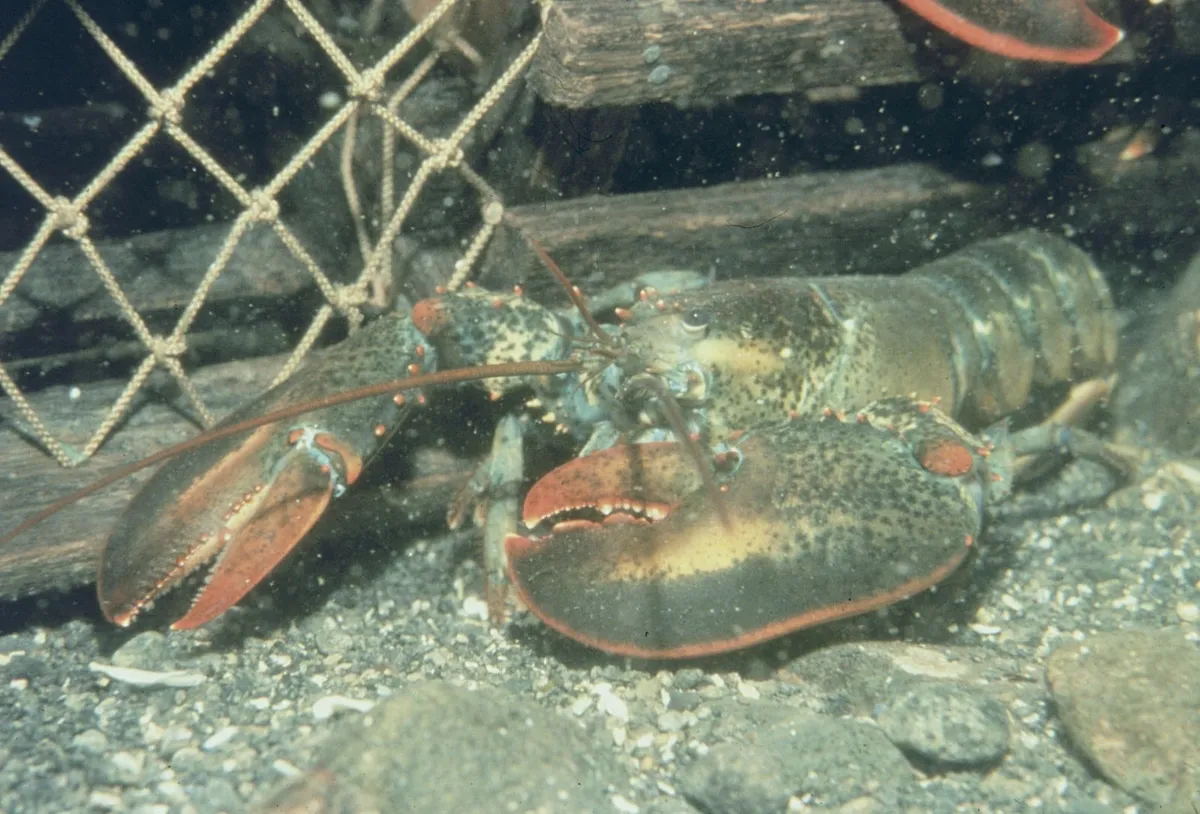
How long do lobsters live? The honest answer is that nobody knows exactly. Fisheries and Oceans Canada (DFO) says the maximum age of the American lobster is unknown but, based on growth information and long-term holding studies, is believed to be in the range of 50 years. A typical market-sized lobster from Nova Scotia is far younger: roughly 8 to 10 years old.
Lobster age is surprisingly hard to pin down, which is why you’ll see everything from “about 50” to “over 100” quoted online. Below is what the science actually supports, how researchers try to age a lobster, and why the “immortal lobster” story doesn’t hold up. For the bigger picture of the species, start with our guide to American lobster facts.
How long do lobsters live? The short answer
| Question | Best available answer | Source |
|---|---|---|
| Maximum lifespan | Unknown; believed to be in the range of 50 years | DFO |
| Could some reach 100? | Possibly, but never confirmed | NOAA Fisheries; biologist Jelle Atema (2011) |
| Age at Nova Scotia legal size (82.5 mm carapace) | About 8 to 10 years | DFO |
| Age at legal size in warmer U.S. waters | About 5 to 8 years | NOAA Fisheries |
The 2022 DFO management plan for Lobster Fishing Areas 27 to 38 puts it plainly: “The maximum age of lobsters is unknown.” NOAA Fisheries is a little bolder, saying scientists believe some lobsters may reach about 100 years, while noting that age is hard to determine because moulting leaves no record of it. Treat 50 as a reasonable working figure and 100 as an educated maybe.
Are lobsters immortal?
No. The “immortal lobster” idea is one of the internet’s most durable myths, and it grew from a real but narrow finding.
In 1998, a team led by Klapper reported high telomerase activity in every lobster organ they tested. Telomerase is the enzyme that rebuilds telomeres, the protective caps on the ends of chromosomes that shorten as many cells divide. The authors noted that lobsters grow throughout their lives and that senescence (biological ageing) happens slowly in them, and they linked lobster longevity to this telomerase activity.
That is a long way from immortality. A 2008 study in Experimental Biology and Medicine by Elmore and colleagues found significant telomerase in both long- and short-lived aquatic species, including sea urchins, sea stars and green crabs, and suggested the enzyme may matter more for tissue renewal and regeneration than for lifespan itself. Lobsters regrow lost claws and legs, so that fits.
Lobsters also clearly die. DFO’s science advisers list a long roster of predators, from cunners and sculpins that eat young lobsters to cod, wolffish, skates and striped bass that take larger ones. Disease is another risk: shell disease has killed many lobsters in southern New England, although DFO reports it has been rare in the Canadian Gulf of Maine. And then there’s fishing.
So the fair summary is this: lobsters age slowly and keep growing, but they are not immortal.
Why is it so hard to tell how old a lobster is?
Fish carry ear stones with yearly rings, and clams lay down bands in their shells. Lobsters, by contrast, shed their entire exoskeleton each time they moult, so for decades scientists assumed every hard part that could record age was thrown away with the old shell.
Researchers have tried three main approaches.
Size-based estimates
The standard method is to work backwards from size and known growth rates. University of Maine researcher Rick Wahle has called size “a rough determination,” because ocean conditions affect growth rates. Two lobsters of the same size can be years apart in age if one grew up in warmer water.
Lipofuscin, the “age pigment”
Lipofuscin is a pigment that accumulates in tissue with age. DFO’s 2013 research document on southwest Nova Scotia lobster notes that a study of European lobster suggested animals of about 85 mm carapace length could include up to seven different year classes. But the rate of accumulation is affected by water temperature, which makes the method hard to apply to wild lobsters with unknown temperature histories.
Gastric mill band counts
The most promising lead came from the Maritimes. In 2012, Raouf Kilada of the University of New Brunswick and colleagues reported growth bands in the eyestalk and in the gastric mill, the tooth-like grinding structure in a lobster’s stomach, that appear to form once a year. DFO’s 2013 assessment of LFAs 34 to 38 described it as a potential method for directly ageing lobsters.
The work is painstaking. The bands sit in small plate-like structures called ossicles, which are embedded in epoxy, cut into 150-micron sections and counted under a microscope. In 2017, University of Maine researchers said their preliminary data suggested the bands are annual.
There is a catch. If bands were laid down with each moult rather than each year, counts would be misleading in adult lobsters, which moult less than once a year. And a 2018 study in the Journal of Crustacean Biology found that European green crabs lose all their gastric mill ossicles when they moult, raising “further doubts” about the method for crustaceans in general. For now, band counts are a research tool, not a proven way to age a lobster.
How old is a lobster on your plate?
Here’s where the numbers get useful. DFO estimates that lobsters in the Maritimes take approximately 8 to 10 years to reach the 82.5 mm carapace length minimum legal size used in most Nova Scotia fishing areas. At that size they weigh about 0.45 kg (1 lb) and generally moult once a year.
| Lobster | Approximate weight | How often it moults | Rough age |
|---|---|---|---|
| Just legal (82.5 mm carapace) | 0.45 kg (1 lb) | About once a year | 8 to 10 years |
| Larger lobster | 1.4 kg (3 lb) | Every 2 to 3 years | Older, but highly variable |
| Record-sized giant | 20 kg (44 lb) | Less often still (not well measured) | Unknown; likely decades |
Weights and moult frequency from DFO. Ages beyond legal size are not well measured.
So a one-pound lobster in your pot is likely somewhere around a decade old. Our guide to how the minimum size and other rules work explains why that size limit exists, and you can see how lobsters reach the wharf in how lobsters are caught in Nova Scotia.
How fast do Nova Scotia lobsters grow?
Temperature drives everything. Lobsters grow faster in warmer water, which is why the U.S. figure of 5 to 8 years to legal size is shorter than DFO’s 8 to 10 years for the Maritimes. In 2011, the Christian Science Monitor, citing the Gulf of Maine Research Institute, reported that lobsters raised in 70°F (21°C) water can reach one pound in less than two years, about three times faster than in the cold Atlantic.
Within Nova Scotia, growth varies too. DFO notes that lobsters mature at smaller sizes where summers are warm (the southern Gulf of St. Lawrence) and at larger sizes in cooler water such as the Bay of Fundy. If you’re curious how these regions are divided for management, see our explainer on Nova Scotia’s lobster fishing areas.
Each moult adds a predictable chunk. DFO reports a mean growth increment of 12 to 16 percent per moult for males and immature females. Mature females grow by a shrinking percentage as they get bigger, because more of their energy goes into producing eggs.
How old are the giant lobsters?
The largest lobster on record, a 20 kg (44 lb) animal caught off Nova Scotia, almost certainly lived for decades, but nobody could prove its age. Atema told the Christian Science Monitor that 20- to 40-pound lobsters “could easily be more than 50 years old,” and that a healthy, protected lobster “can potentially get to be 100 years old. Whether they actually do, we don’t know.”
You’ll often see a specific age attached to a big lobster in the news, such as “100 years old.” Those figures are guesses from size, not measurements.
Why lobster age matters
Age isn’t just trivia. DFO notes that uncertainty around natural mortality, the share of lobsters that die each year from causes other than fishing, comes partly from the lack of an accurate ageing method. Without good ages, scientists lean on catch rates and size data to judge the health of each stock.
Age also explains why some Nova Scotia fishing areas protect big females. Very large lobsters produce far more eggs relative to their size, and some can spawn twice without moulting in between. DFO’s management plan for LFAs 27 to 38 includes a 135 mm maximum size for females in LFA 30 and a closed window of 114 to 124 mm for females in LFA 31A. Those older, larger animals are worth more in the water than on a plate.
If you’re buying, none of this changes how you choose a good lobster, but it might change how you see it. Our guide to buying live lobster in Nova Scotia covers the practical side, and you’ll find more biology articles on our lobster biology topic page.
Frequently asked questions
How long do lobsters live in the wild?
Nobody knows for certain because lobsters cannot yet be aged reliably. Fisheries and Oceans Canada says the maximum age is believed to be in the range of 50 years, based on growth data and long-term holding studies. Some scientists think a lobster kept safe could reach 100, but that has never been confirmed.
Are lobsters immortal?
No. Lobsters keep growing and moulting throughout life and show high telomerase activity in their organs, which led to the 'immortal lobster' idea. But lobsters still die from predators, disease, fishing and other causes, and later research found similar telomerase activity in short-lived sea animals too.
How old is a lobster when it is caught in Nova Scotia?
DFO estimates that lobsters in the Maritimes take roughly 8 to 10 years to reach the 82.5 mm carapace length minimum legal size, when they weigh about 1 pound (0.45 kg). Most lobsters in the catch are close to that size.
How can you tell how old a lobster is?
You can't tell from the outside. Size gives only a rough estimate because growth depends on water temperature. Researchers are testing counts of growth bands in the eyestalk and the gastric mill (part of the stomach), but whether those bands form once a year in lobsters is still being checked.
Sources
We check facts against primary sources wherever possible. Season dates and regulations can change, so confirm with Fisheries and Oceans Canada before you rely on them.
- Lobster Fishing Areas 27 – 38: Integrated Fisheries Management Plan — Fisheries and Oceans Canada, 2022
- Assessment of lobster (Homarus americanus) off southwest Nova Scotia and in the Bay of Fundy (LFAs 34-38), Research Document 2013/078 — Fisheries and Oceans Canada, Canadian Science Advisory Secretariat, 2013
- Age of Lobsters — University of Maine School of Marine Sciences, 2017
- Longevity of lobsters is linked to ubiquitous telomerase expression (Klapper et al., FEBS Letters) — PubMed / U.S. National Library of Medicine, 1998
- Upregulation of Telomerase Function During Tissue Regeneration (Elmore et al.) — Experimental Biology and Medicine, 2008
- Evidence of complete gastric mill ossicle loss at ecdysis in the European green crab (Sheridan and O'Connor, Journal of Crustacean Biology) — Atlantic Technological University research portal, 2018
- How large can lobsters grow? Big! But no one knows how big. — The Christian Science Monitor, 2011-06-16
- American Lobster species profile — NOAA Fisheries
Image credits
- Header photo: Photo: Rick Wahle via Wikimedia Commons · CC BY 2.0 (cropped and resized)
lobster lifespanlobster ageHomarus americanustelomeraselobster biology