How Long to Boil Lobster: Cooking Time Chart by Weight
How long to boil lobster, by weight: a cooking time chart from 1 lb to 5 lb, when to start the clock, salt ratio, soft-shell adjustments and doneness checks.
By NovaShell Editorial Team · · 8 min read
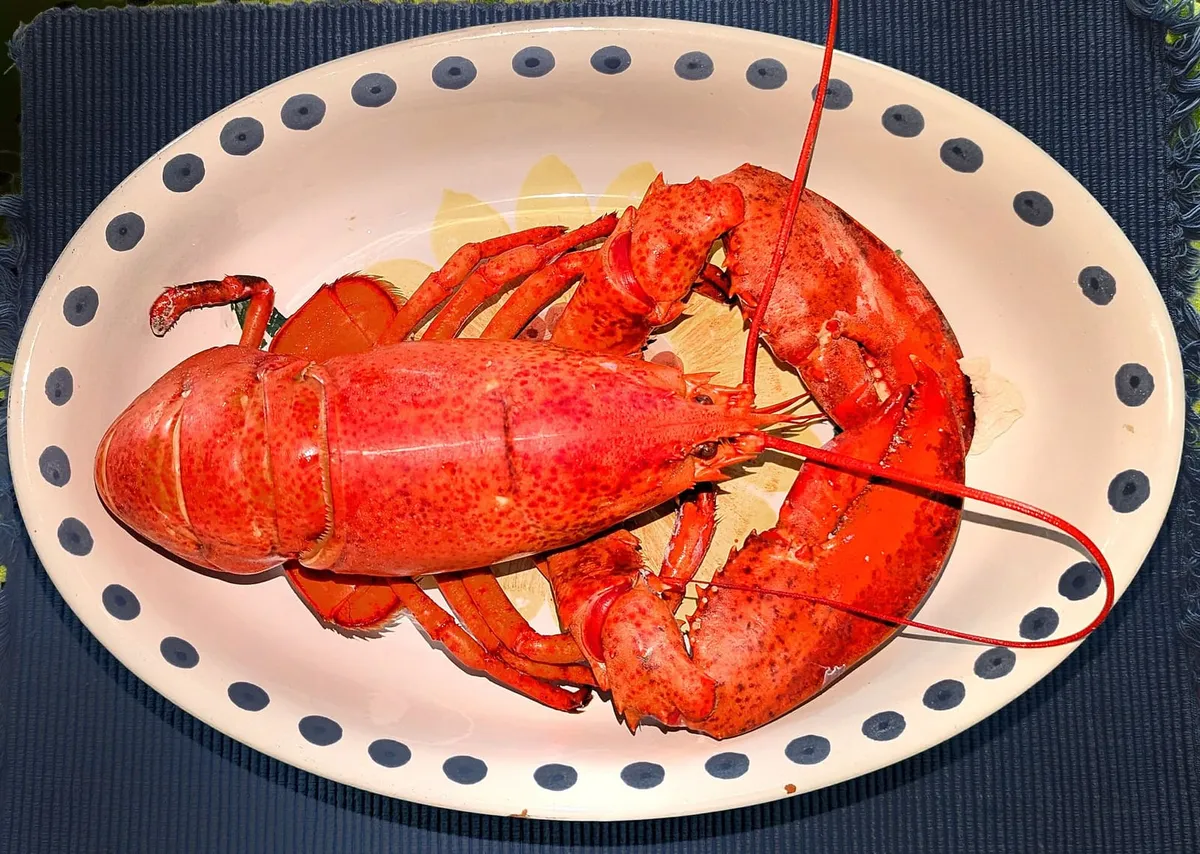
How long to boil lobster depends on its weight: about 8 minutes for a 1 lb (450 g) lobster, 11 to 12 minutes for 1½ lb and about 15 minutes for 2 lb. These times are for live lobsters dropped into a big pot of well-salted water at a rolling boil. They come from the Maine Lobster Marketing Collaborative’s boiling guide. Treat the chart as a starting point. Check one lobster before you pull the whole batch, because shell hardness, pot size and when you start the clock all shift the timing by a few minutes.
This guide covers the boiling method itself. For steaming, grilling and the other basics, start with our pillar guide, how to cook lobster the Nova Scotia way. If you haven’t bought your lobsters yet, how to buy live lobster in Nova Scotia explains what to look for at the wharf or the pound.
Lobster boiling time chart by weight
The chart below compares two widely used published references. The Maine Lobster guide cooks lobsters in a full pot of boiling water. The second column is the Maine Lobster Council chart reprinted in Sur La Table’s boiled lobster recipe, which cooks lobsters in only 1 to 2 inches (2.5–5 cm) of water. That’s really closer to steaming, and the same numbers appear on the Maine organization’s own steaming chart. It explains why those times run a few minutes longer.
| Lobster weight | Full pot of boiling water (Maine Lobster guide) | Shallow water, covered (Maine Lobster Council chart) |
|---|---|---|
| 1 lb (450 g) | 8 min | 10 min |
| 1¼ lb (570 g) | 9–10 min | 12 min |
| 1½ lb (680 g) | 11–12 min | 14 min |
| 1¾ lb (790 g) | 12–13 min | 16 min |
| 2 lb (900 g) | 15 min | 18 min |
| 2¼–2½ lb (1–1.1 kg) | 20 min (2¼ lb) | 22 min (2½ lb) |
| 3 lb (1.4 kg) | 25 min | 25–30 min |
| 5 lb (2.3 kg) | 35–40 min | 40–45 min |
Lobster cooking time per pound
If you want a rule of thumb rather than a chart, the Lobster Council of Canada gives one: cover the pot and simmer for 7 to 10 minutes for the first pound, plus 2 to 3 minutes for each additional pound. Add a little time when you’re cooking several lobsters at once. For a 2 lb lobster, that works out to 9 to 13 minutes. The Maine chart is more generous with big lobsters. Between 1 and 2 lb it adds roughly 3 to 4 minutes per extra half-pound, and the jumps get bigger above that. If your lobster falls between two rows, use the lower time and check for doneness.
How long to cook a 1 lb lobster
Boil a 1 lb lobster for about 8 minutes once it’s in the pot and covered. If the meat at the tail joint is still glassy, give it another minute or two. Charts that start timing later, or cook in shallow water, go as high as 10 minutes.
How long to boil a 2 lb lobster
A 2 lb lobster needs about 15 minutes in a full pot, or around 18 minutes using the shallow-water method. Larger lobsters have thick claws that finish last, so test the claw meat as well as the tail.
When to start the clock
This is the biggest reason charts disagree. The Maine Lobster guide says to add the lobsters to a rolling boil, cover the pot and start timing immediately. Clearwater, the seafood company that began as a Halifax lobster shop in 1976, takes the other approach: drop the lobsters in, let the water return to a boil, then start timing.
The two approaches can differ by several minutes, especially if you add a lot of cold lobster to a small pot. Our advice is to pick one method and use it every time. If you time from when the water returns to a boil, use the shorter end of the chart.
How much water and salt to use
You want enough water that the pot comes back to a boil quickly after the lobsters go in. The two references differ here too:
- Maine Lobster: about 3 quarts (2.8 L) of seawater or water for every 1½ to 2 lb of lobster, plus ¼ cup of sea salt per gallon (3.8 L) if you’re using fresh water.
- Clearwater: at least ½ gallon (2 L) of water per pound of lobster and ½ cup of sea salt per gallon, which works out to 2 tablespoons per litre.
On the coast, people often cook in clean seawater instead of salting tap water. Only use water you would be happy to swim in. A busy harbour isn’t the place to fill your pot. Either salt level works. The salt seasons the meat through the shell, so don’t skip it.
Step-by-step: how to boil lobster
- Keep the lobsters cold until cooking. Leave the bands on the claws. Cook them the day you buy them if you can.
- Fill a large pot with salted water (see above) and bring it to a full rolling boil over high heat. A canning pot or a big stockpot works well.
- Add the lobsters head first, one at a time. Clearwater recommends only cooking similarly sized lobsters together so they finish at the same time.
- Cover and time using the chart, starting the clock at the point you’ve chosen.
- Stir halfway through. The Maine guide suggests moving the lobsters around halfway so they cook evenly.
- Check doneness (see below) before you take the whole batch out.
- Lift out with tongs and rest about 5 minutes. The Maine guide says this lets the meat absorb the moisture in the shell. The Lobster Council of Canada notes that lobsters keep cooking after they come out of the pot. If you’re serving them hot, pull them just before they’re done. If they’re going into an ice bath to serve cold, cook them for the full time.
How to tell when lobster is done
A bright red shell is not enough on its own. The shell colours up before the thickest meat has finished cooking. Use one of these checks:
- Look at the meat. Crack the shell where the body (carapace) meets the tail. Cooked meat is white and opaque, not translucent. The U.S. Food and Drug Administration describes cooked lobster flesh as “firm, pearly, and opaque.”
- Tug an antenna. A Maine lobsterman interviewed by Saveur says an antenna should pull away easily once the lobster is cooked. Treat this as a quick hint, not proof.
- Use a thermometer. Insert an instant-read thermometer into the thickest part of the tail from the underside.
Which temperature?
Published targets range from about 60°C to 82°C, so it helps to know where each number comes from:
| Source | Target | Notes |
|---|---|---|
| Health Canada | 74°C (165°F) | Listed for “shellfish and crustaceans,” including lobster |
| Clearwater | 82°C (180°F) | Measured in the thickest part of the body |
| U.S. FDA | 63°C (145°F) | General figure for “most seafood” |
| America’s Test Kitchen | 60°C (140°F) | Tail temperature, chosen for texture |
Many cooks pull lobster at around 60°C (140°F) because it stays tender. Health Canada’s 74°C (165°F) is the official Canadian food-safety benchmark, though. If you’re cooking for young children, older adults, pregnant guests or anyone with a weakened immune system, use the Health Canada figure.
Hard-shell vs soft-shell lobster: adjust the time
Lobsters grow by moulting. Just after a moult, the new shell is thin and the lobster carries extra water. America’s Test Kitchen notes that soft-shell lobsters are more common in summer and that lobsters are at their prime when their shells are fully hard. It suggests buying 1½ to 1¾ lb per person when you serve soft-shells, because they hold less meat.
Soft-shells also cook faster. The Maine lobsterman in Saveur gives about 12 minutes for soft-shell lobsters and 14 for hard-shell lobsters of the same size. As a rule of thumb, take a couple of minutes off the chart for soft-shell lobsters and check early. Most of the timing charts above were written with hard-shell lobsters in mind.
You can usually tell the difference by squeezing the body. A soft-shell flexes, while a hard-shell feels like a solid case. Ask your seller what they have, and check our Nova Scotia lobster season guide to see which fishing areas are landing lobster at the time of year you’re buying.
Cooking several lobsters in one pot
Boiling is the easiest way to cook for a crowd, but a crowded pot changes the timing:
- Don’t overload the pot. For steaming, the Maine guide says a 4- to 5-gallon (15–19 L) pot handles 6 to 8 lb of lobster. A boiling pot needs at least that much room, because each lobster has to stay under water.
- Expect the boil to stall. Every cold lobster you add cools the water down. That’s why Clearwater times from the return to a boil. If you’re adding lots of lobsters, use the “return to boil” method so the timing stays consistent.
- Group by size. Put same-sized lobsters in together. If you must mix sizes, add the biggest first and the smaller ones later so they finish together, and check each one.
- Work in batches if your pot can’t hold them all comfortably. A second round in the same water comes back to the boil faster.
Common boiling mistakes
- Overcooking “to be safe.” Lobster meat tightens and turns rubbery quickly. Check at the low end of the chart. If it’s not done, put it back for a minute or two.
- Timing by the biggest lobster for the whole pot. Smaller lobsters in the same pot will overcook.
- Unsalted water. It gives flat-tasting meat, and the salt in the shell can’t make up for it later.
- Cooking dead lobsters. Lobsters spoil quickly after death, and the FDA advises choosing only live ones that show leg movement. If one has died in your fridge, don’t cook it.
- Skipping the rest. Five minutes lets the meat settle and finish cooking gently.
What to do after boiling
Serve whole lobsters with melted butter and lemon, plus a bowl for shells. Our American lobster facts guide explains what’s going on inside the shell, from the tomalley to the crusher claw. If you’d rather leave the cooking to someone else, our where to eat lobster in Nova Scotia guide lists places to look, region by region. For every other method, browse all of our cooking and recipe guides.
Frequently asked questions
How long do you boil a 1 lb lobster?
About 8 minutes in a full pot of boiling salted water, according to the Maine Lobster Marketing Collaborative. The Lobster Council of Canada gives 7 to 10 minutes for the first pound. Check the meat where the tail meets the body: it should be white, not translucent.
How long do you boil a 2 lb lobster?
About 15 minutes in a full pot of boiling salted water. Charts that cook in only an inch or two of water, which is closer to steaming, give about 18 minutes.
Do you start timing lobster when the water returns to a boil?
Sources differ. Clearwater says to let the water return to a boil and then start timing; the Maine Lobster guide starts the clock as soon as the lid goes on. Either way, start checking for doneness at the low end of the chart.
How much salt do you put in water to boil lobster?
Clean seawater is traditional. With tap water, guidance ranges from about 1/4 cup of sea salt per gallon (Maine Lobster) to 1/2 cup per gallon, or 2 tablespoons per litre (Clearwater).
What internal temperature should cooked lobster reach?
Health Canada lists 74°C (165°F) as the safe internal temperature for shellfish and crustaceans, including lobster. Many recipes stop lower, around 60°C (140°F), for more tender meat, so know which standard you are following.
Sources
We check facts against primary sources wherever possible. Season dates and regulations can change, so confirm with Fisheries and Oceans Canada before you rely on them.
- How to Boil Lobster — Maine Lobster Marketing Collaborative (Lobster from Maine)
- Live Lobster: cooking instructions — Clearwater
- Safe internal cooking temperatures chart — Health Canada
- Selecting and Serving Fresh and Frozen Seafood Safely — U.S. Food and Drug Administration
- Boiled Lobster (with Maine Lobster Council cooking times) — Sur La Table
- Preparing Lobster — Lobster Council of Canada
- Steamed Whole Lobsters — America's Test Kitchen
- How To Cook a Lobster, According to a Maine Lobsterman — Saveur, 2022
Image credits
- Header photo: Photo: Daderot via Wikimedia Commons · CC0 1.0 (cropped and resized)
boilingcooking timeslive lobsterhard shellsoft shell