Nova Scotia Lobster Roll Recipe: The Classic Cold, Mayo-Dressed Roll
Make a Nova Scotia lobster roll at home: cold lobster, a light coat of mayo, optional celery and a toasted bun. Meat ratios, bun choices and make-ahead tips.
By NovaShell Editorial Team · · 6 min read
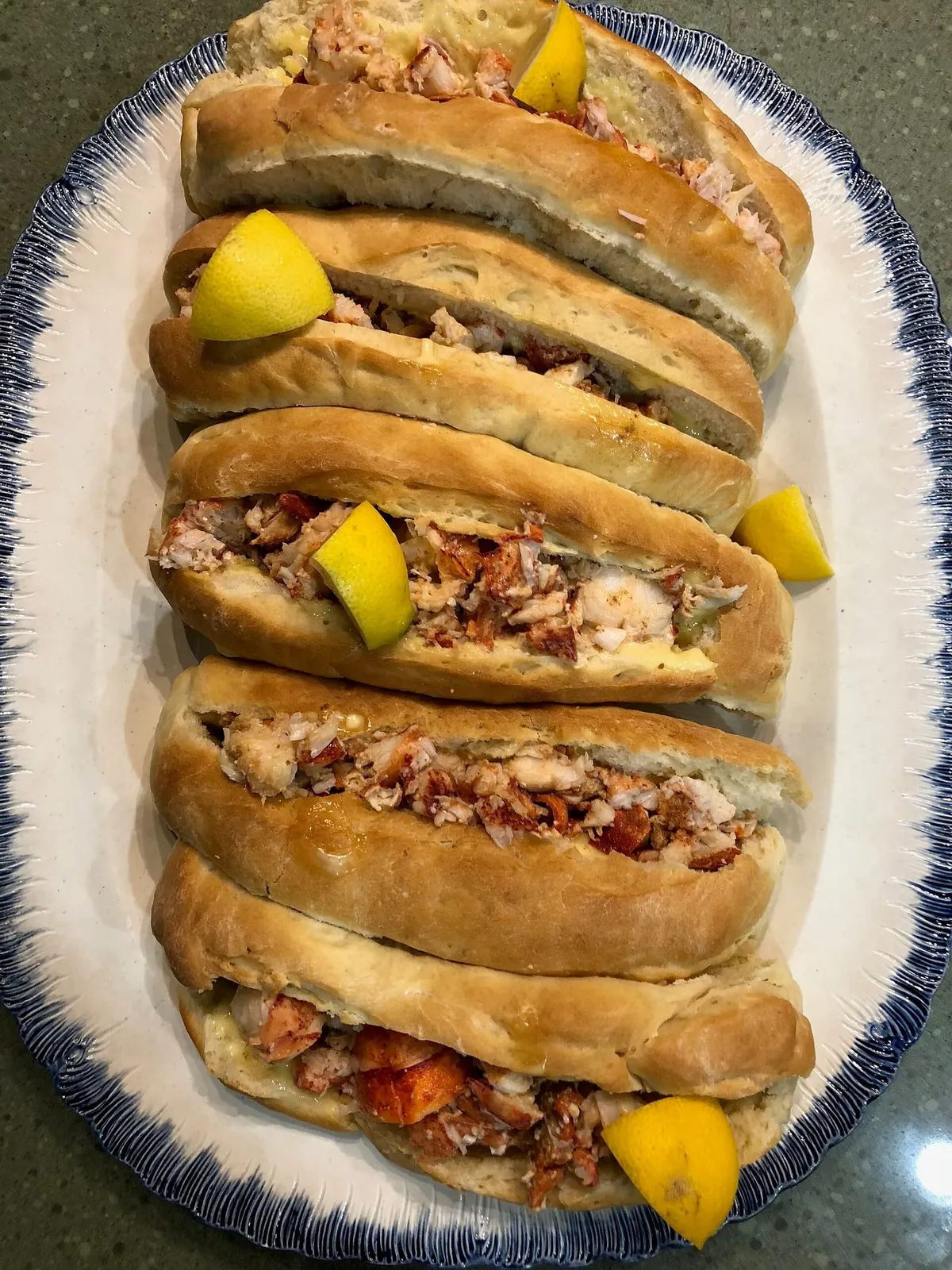
A Nova Scotia lobster roll is cold, chunky lobster meat in a light coat of mayonnaise, seasoned with little more than salt, pepper and maybe a squeeze of lemon, then piled into a toasted, buttered hot dog bun. Celery, green onion and a leaf of lettuce are common extras, not requirements. The whole trick is restraint: use a lot of lobster and very little else. The recipe card below makes four generous rolls from about three 1½ lb lobsters.
If you are starting from live lobsters, our pillar guide on how to cook lobster the Nova Scotia way covers the pot, the salt and the timing, and the lobster boiling time chart by weight gives exact minutes. Everything below assumes you have cooked, chilled meat ready to go.
What makes a Nova Scotia lobster roll different?
Ask around the province and you will hear the same description: cold lobster, mayo, a soft bun. Tourism Nova Scotia’s roundup of favourite Nova Scotia lobster rolls describes the traditional “local” roll at one Halifax shack as celery and mayo, and lists others dressed with mayo and a little salt, or “lightly dressed” with no extras at all. The same article calls the split-top hot dog bun the classic vessel, and recommends knuckle meat for its tenderness.
That puts the Nova Scotia roll in the same family as the cold, mayo-based roll associated with Maine. There is variety here too. The Tourism Nova Scotia list includes rolls with shallots, green onion and lettuce, one with spinach, and others built on lemon or roasted-garlic aioli and warm brioche, so do not let anyone tell you there is only one correct roll. What they share is that the lobster is the point.
Nova Scotia style vs Connecticut style
The warm, butter-dressed lobster roll is usually called Connecticut style. The Wikipedia entry on the lobster roll notes that the hot, buttered version is often traced to a restaurant called Perry’s in Milford, Connecticut, as early as 1929, though that origin story is disputed.
| Nova Scotia (cold) | Connecticut (warm) | |
|---|---|---|
| Temperature | Chilled meat in a warm, toasted bun | Warm meat in a warm bun |
| Dressing | Mayonnaise, lightly | Melted butter |
| Common extras | Celery, green onion, chives, lettuce, lemon | Lemon, sometimes a pinch of paprika or herbs |
| Best for | Picnics, hot days, make-ahead filling | Eating immediately, cooler evenings |
If you like both, do what at least one Halifax shack on the Tourism Nova Scotia list does and offer a “half and half.” For a warm roll, toss the meat in 2 to 3 tablespoons of melted butter over low heat just until it is warm through, then fill the toasted buns. Lobster that is already cooked only needs warming, not more cooking, or it turns tough.
How much lobster meat goes in a lobster roll?
This is where most homemade lobster sandwiches go wrong: too much filler, not enough lobster. Aim for 85 to 115 g (3 to 4 oz) of picked meat per roll. Restaurant rolls vary widely; one on the Tourism Nova Scotia list is described as holding about 7 oz.
To work out how many live lobsters to buy, the useful rule is that cooked meat is only about a fifth of a lobster’s live weight. The Lobster Council of Canada says a 1½ lb hard-shell lobster yields about 1⅓ cups of cooked meat. The Maine Lobster Marketing Collaborative, a U.S. industry body, puts the yield at 19 to 22 percent for hard-shell lobster and 16 to 18 percent for summer new-shell (soft-shell) lobster. That is why our guide to hard-shell vs soft-shell lobster matters here: for rolls, firm, full hard-shell lobsters give you more meat for your money.
| Rolls | Picked meat (about) | Live lobster to buy (about) |
|---|---|---|
| 2 | 225 g (½ lb) | 1 to 1.2 kg (2¼ to 2½ lb) |
| 4 | 450 g (1 lb) | 2 to 2.3 kg (4½ to 5 lb) |
| 8 | 900 g (2 lb) | 4 to 4.5 kg (9 to 10 lb) |
These are estimates. Yields change with shell condition, size and season, so buy a little extra if you are feeding a crowd. Our guide to buying live lobster in Nova Scotia explains what to look for at the wharf or the counter.
Which parts of the lobster to use
- Claws and knuckles: the sweetest, most tender meat and the best texture for a roll. Keep claw pieces large.
- Tail: firmer and meatier. Cut it into chunks about the size of the claw pieces so every bite is even.
- Legs and body meat: fine to add if you have the patience to pick them, but they shred, so mix them in sparingly.
- Tomalley and roe: leave them out of the roll. Health Canada advises that children not eat tomalley and that adults limit it to the amount from one cooked lobster per day, because it can carry paralytic shellfish toxins. The same notice says there are no health concerns with the meat itself.
If you have never taken a lobster apart, our step-by-step guide to eating a whole lobster walks through twisting off the claws, cracking the knuckles and pushing the tail meat out in one piece.
How to make a lobster roll: technique tips
The full method is in the recipe card below. These are the details that make the difference.
- Dry the meat. Cooked lobster holds water, especially if it was chilled in an ice bath or frozen. Blot it with paper towel before dressing, or the mayo thins out and the bun goes soggy.
- Dress lightly, then taste. Start with 3 tablespoons of mayonnaise per 450 g (1 lb) of meat. The filling should look glossy, not creamy. You can always add more.
- Cut celery very fine. If you use it, dice it to about the size of a grain of rice. It should add crunch, not compete.
- Use lemon sparingly. A teaspoon brightens the meat; a tablespoon makes it taste of lemon.
- Keep the filling cold and the bun warm. The contrast is part of the pleasure. Toast the buns in butter in a dry pan just before filling.
- Fill to overflowing. A roll should look like it has more lobster than bread.
Buns: top-split or regular?
A top-split (or “New England style”) hot dog bun has flat, crustless sides that toast evenly in butter, which is why Tourism Nova Scotia calls it the classic. They are not always easy to find in Canadian grocery stores. A regular side-split hot dog bun works fine: toast the cut faces instead, or brush the outside with butter and warm it in a pan. Soft brioche buns are a richer option, and several Nova Scotia restaurants use them.
Lettuce or no lettuce?
Purely personal. A leaf of soft lettuce between the bun and the filling acts as a barrier that keeps the bread from going soggy, which helps if the rolls will sit for a few minutes. Shredded iceberg adds crunch. Leave it out if you want nothing between you and the lobster.
Can you make lobster roll filling ahead?
You can pick and chill the meat a few hours ahead, and you can mix the dressing ahead, but keep them separate until shortly before serving. Health Canada’s safe food storage chart lists cooked shellfish at only 1 to 2 days in the fridge (at 4°C or colder). The Lobster Council of Canada is a little more generous, at up to three days for cooked lobster and four for meat out of the shell. We would stick to the shorter, government figure; either way, this is not a dish to make on Friday for Sunday. For a picnic or beach day, pack the filling in a sealed container in a cooler with ice packs and assemble the rolls on site.
If you buy frozen cooked lobster meat, thaw it overnight in the fridge, drain it, and squeeze it gently in paper towel before dressing.
Serving a Nova Scotia lobster roll
Keep the sides simple: kettle chips, fries, coleslaw or a green salad, plus lemon wedges. A crisp Nova Scotia white wine or a cold lager suits the sweetness of the meat.
If you would rather let someone else do the picking, our region-by-region guide to where to eat lobster in Nova Scotia points to the shacks, takeouts and restaurants worth the drive, and Tourism Nova Scotia’s list is a good starting point too. Many seasonal spots close for the winter, so call ahead. For more ways to use cooked lobster, browse our lobster cooking and recipes section, or start with the big-picture guide to Nova Scotia lobster.
Recipe
Nova Scotia Lobster Roll
- Serves
- 4 rolls
- Prep
- 20 min
- Cook
- 5 min
- Total
- 25 min
Ingredients
- 450 g (1 lb) cooked lobster meat, from about 3 lobsters of 1½ lb (680 g) each, well chilled
- 45 to 60 ml (3 to 4 tbsp) mayonnaise
- 1 stalk celery, very finely diced (optional)
- 1 green onion, thinly sliced, or 1 tbsp chopped chives (optional)
- 1 to 2 tsp fresh lemon juice
- Salt and freshly ground black pepper
- 4 hot dog buns, top-split if you can find them
- 2 tbsp soft butter, for toasting the buns
- 4 leaves soft lettuce, such as Boston or green leaf (optional)
- Lemon wedges and kettle chips or coleslaw, to serve
Method
- If starting with live lobsters, cook them, chill them in ice water, and pick out the tail, claw and knuckle meat. Discard the tomalley or keep it for another use; it does not go in the roll.
- Cut the meat into bite-sized chunks of about 1.5 to 2 cm. Leave the claw meat in larger pieces and keep the knuckle meat whole if it is small. Pat dry with paper towel.
- In a bowl, stir together 3 tbsp mayonnaise, the celery and green onion if using, 1 tsp lemon juice, a pinch of salt and a few grinds of pepper.
- Fold the lobster into the dressing gently until just coated. Taste, then add more mayo, lemon or salt only if needed. Refrigerate while you toast the buns.
- Butter the outside flat sides of top-split buns (or the cut sides of regular buns) and toast in a dry frying pan over medium heat for 1 to 2 minutes per side until golden.
- Line each warm bun with a lettuce leaf if you like, then pile in the cold lobster filling. Serve right away with lemon wedges and chips or coleslaw.
Frequently asked questions
What is in a Nova Scotia lobster roll?
Cold, cooked lobster meat lightly dressed with mayonnaise, usually with a little salt and pepper and sometimes finely diced celery, green onion or lettuce, served in a toasted hot dog bun. The lobster is the main ingredient; the dressing should only just coat it.
How much lobster do you need for one lobster roll?
Plan on 85 to 115 g (3 to 4 oz) of picked meat per roll. That works out to roughly one 1½ lb lobster for every one to two rolls, depending on how generous you want to be and how full the lobsters are.
What is the difference between a Nova Scotia and a Connecticut lobster roll?
A Nova Scotia roll is served cold and dressed with mayonnaise, much like the Maine style. A Connecticut roll is served warm, with the lobster tossed in melted butter instead of mayo.
Can I make lobster roll filling ahead of time?
Yes, but only by a few hours. Keep the picked meat and the dressing separate and cold, and mix them shortly before serving. Health Canada lists cooked shellfish at 1 to 2 days in the fridge, so use cooked lobster meat promptly.
Should I use frozen lobster meat for lobster rolls?
You can. Thaw it overnight in the fridge, drain it well and pat it dry before dressing it, because extra water makes the filling soggy and dilutes the mayo.
Sources
We check facts against primary sources wherever possible. Season dates and regulations can change, so confirm with Fisheries and Oceans Canada before you rely on them.
- 10 favourite Nova Scotia lobster rolls — Tourism Nova Scotia
- Lobster roll — Wikipedia
- Safe food storage — Health Canada
- Handling Lobster — Lobster Council of Canada
- Why Make It Maine? Questions to Ask Your Purveyor — Maine Lobster Marketing Collaborative
- Health Canada reminding Canadians to limit consumption of lobster tomalley — Health Canada, 2014
Image credits
- Header photo: Photo: Jessica Feinleib via Wikimedia Commons · CC BY-SA 4.0 (cropped and resized)
lobster rollrecipesmayonnaisepicnic foodsummer