Berried Lobsters: Why Egg-Bearing Females Go Back in the Water
A berried lobster is a female carrying eggs under her tail, and Canadian law says she goes back. Egg counts, the year-long brood and the anti-scrubbing rule.
By NovaShell Editorial Team · · 6 min read
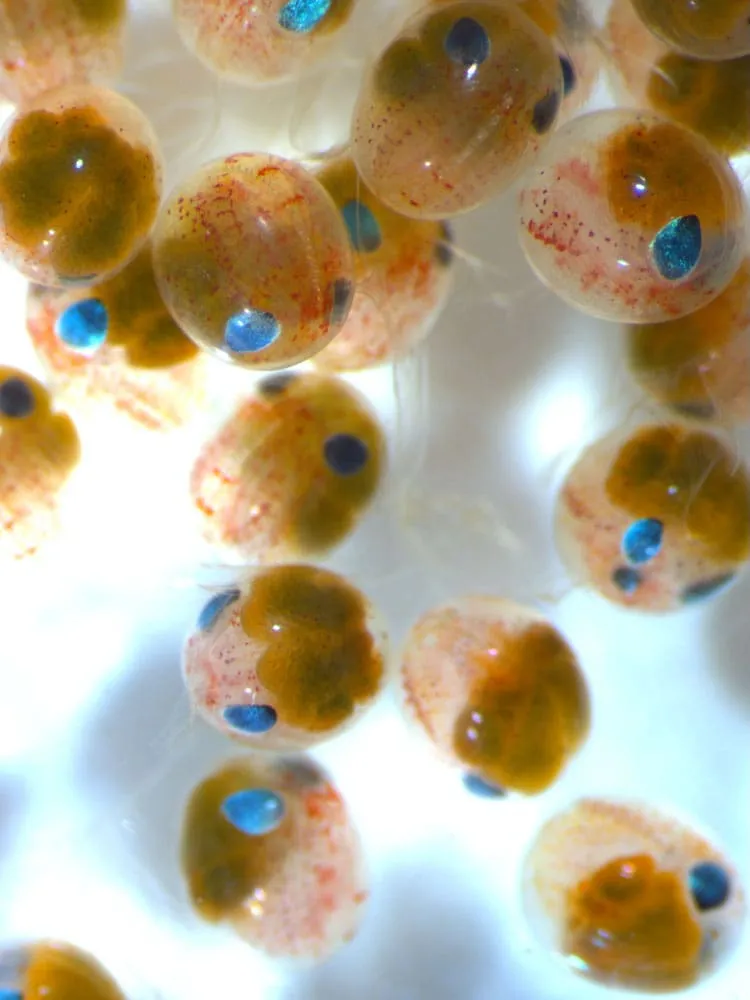
A berried lobster is a female carrying eggs glued to the swimmerets under her tail, and in Canada she has to go back in the water. The Atlantic Fishery Regulations ban anyone from buying, selling or possessing “any female lobster with eggs attached.” A single female can carry anywhere from about 5,000 to more than 100,000 eggs for close to a year. Scraping the eggs off to sell her is a separate offence.
The rule is one of the oldest in the fishery and one of the few that applies the same way everywhere: every Lobster Fishing Area, every season. It sits alongside size limits and v-notching in our guide to Nova Scotia lobster regulations. Here’s what a berried lobster is, how the brood develops, what the law says and why it matters.
What is a berried lobster?
“Berried” is the fishery’s word for egg-bearing. Instead of releasing her eggs into the water, a female lobster pushes them out under her tail, where they stick to the swimmerets (small paired paddles on the underside of the tail, also called pleopods). The packed mass of eggs looks a bit like a cluster of berries.
Fisheries and Oceans Canada’s (DFO) 1988 Underwater World profile of the lobster describes the start of a lobster’s life as “an egg, glued to the swimmerets on the underside of the female’s abdomen.” The photo at the top of this page shows eggs close up. The dark spots are the eyes of the developing larvae.
How does a female lobster get her eggs?
Lobster reproduction runs on a slow timetable:
- Mating after a moult. DFO’s 1988 profile says a female is sexually receptive for only a few days after moulting, while her shell is still soft. The male deposits sperm in a receptacle between her last two pairs of walking legs. For more on moulting, see our guide to lobster molting.
- Sperm storage. She can store that sperm for as long as a year until her eggs are ready.
- Extrusion. DFO’s 2022 management plan says females usually mate in late summer and extrude their eggs the following summer. The eggs are fertilized as they pass to the swimmerets.
- Brooding. “The eggs are then carried for 10-12 months and hatch the following July or August,” according to DFO. NOAA Fisheries gives a slightly shorter range of 9 to 11 months for US waters.
- Hatching. The larvae float near the surface for several weeks before settling to the bottom. DFO’s 1988 profile estimated that only about 1% of floating larvae may settle successfully.
DFO says females usually produce eggs every second year. Large females, over about 120 mm carapace length in Bay of Fundy lab studies, can spawn twice without moulting in between, using sperm saved from one mating.
How many eggs does a lobster carry?
Egg numbers rise steeply with size:
| Female size | Approximate eggs per brood | Source |
|---|---|---|
| Large “canner,” 78 mm carapace length | About 7,500 | DFO, 1988 |
| Typical large Bay of Fundy breeder | About 30,000 | DFO, 1988 |
| “Jumbo,” over 125 mm carapace length | More than 40,000 | DFO, 1988 |
| Full range, all sizes | 5,000 to more than 100,000 | NOAA Fisheries |
That steep curve is why managers care so much about big females. A 78 mm female sits just under the 82.5 mm minimum that applies in most of Nova Scotia. Our article on the lobster minimum legal size explains how size limits, female windows and maximum sizes try to keep more of these big breeders in the water.
The berried female lobster law in Canada
Section 59 of the federal Atlantic Fishery Regulations, 1985 covers egg-bearing females in two parts:
- 59(3): “No person shall buy, sell or have in their possession any female lobster with eggs attached.”
- 59(4): No person shall buy, sell or possess “(a) any female lobster from which eggs have been washed or removed in whole or in part; or (b) any female lobster that has egg cement or glue on its swimmerets.”
The rule applies to everyone along the chain: the fisher on deck, the buyer at the wharf, the pound holding lobsters for market, and the shop or restaurant. Protection for egg-bearing females is old. DFO’s 2022 plan says the first regulations restricting “soft shell lobsters and egg bearing females” date to 1873.
Why is scrubbing an offence?
Paragraph 59(4) exists because of “scrubbing”: washing or scraping the eggs off a berried female so she can be passed off as an ordinary market lobster. The ban on egg cement or glue on the swimmerets closes the loophole: a female doesn’t need eggs on her to be protected, because traces of the cement that held them are enough. DFO lists “the removal of eggs from egg bearing female lobsters” among its enforcement concerns in the inshore fishery.
What are the penalties?
The regulations don’t set their own fines. They fall under the general penalty section of the Fisheries Act. Under section 78, a contravention can bring:
- On summary conviction: a fine of up to $100,000 for a first offence. For a repeat offence, up to $100,000, up to one year in prison, or both.
- On indictment: a fine of up to $500,000 for a first offence. For a repeat offence, up to $500,000, up to two years in prison, or both.
A real Nova Scotia case shows how this works in practice. In October 2022, CBC News reported that Atlantic ChiCan, a large lobster pound on Cape Sable Island, pleaded guilty in Shelburne provincial court after fishery officers found three crates holding 132 egg-bearing females in January 2019. The lobsters had been in storage for a week, and inspectors had warned the company about the same problem in 2017. On the berried lobster charge, the company was fined $20,000 and ordered to pay another $50,000 into a federal environmental damages fund. A separate $5,000 fine covered undersized lobsters found at the plant. The report noted that egg-bearing females found in shipments are supposed to be returned to the water within a day.
How to tell a male lobster from a female
Since the law protects only egg-bearing females, sorting starts with telling the sexes apart. Flip the lobster over and look at the first pair of swimmerets, the ones closest to the walking legs. In a male they’re hard and stiff. In a female they’re soft and feathery, like the swimmerets further down the tail. Scientists use the same check: a 2021 study of more than 270,000 lobsters sampled in LFAs 33 and 34 recorded sex “by examining the first set of pleopods” (Koepper et al., Scientific Reports).
A few other clues:
- The seminal receptacle. Females have the sperm receptacle between the last pairs of walking legs, which DFO’s 1988 profile describes.
- Eggs. If the eggs are there, there’s no question. She goes back.
That same study found a slight male majority overall in sampled catches (about 52% males). Among the largest lobsters in deep water, though, females far outnumbered males.
Does releasing berried females actually help?
It’s a cornerstone measure, but it has a known limit. DFO’s 1988 profile pointed out that the law protects only females carrying eggs on the outside. Females that are about to extrude eggs, or between broods, get no protection from this rule. Fishery managers have filled that gap with other tools:
- V-notching marks a released berried female so she stays protected in later years. See what v-notching is.
- Female windows and maximum sizes protect large females whether or not they’re carrying eggs that day.
- Season timing can be set to avoid the period when egg-bearing females are most often caught. DFO’s 2026 notice for LFAs 27 to 32 introduced a five-year pilot shifting season dates, “intended to reduce the handling of egg-bearing or recently moulted lobster at the end of the season.”
DFO’s 2022 plan calls the release of undersized, berried and v-notched females “an important conservation measure in the fishery” and notes that released lobsters “are generally expected to survive.”
What about roe?
If you’ve cooked a female and found bright red roe inside, you haven’t broken any rules. Roe is made of eggs that are still inside the body, and the ban covers eggs attached under the tail. Our guide to lobster tomalley and roe explains what that red stuff is and whether to eat it. For more on the animal itself, see American lobster facts, or browse all our rules and sustainability articles.
Frequently asked questions
What is a berried lobster?
A berried lobster is a female carrying fertilized eggs glued to the swimmerets under her tail. The clusters of eggs look a little like berries, which is where the name comes from. In Canada it is illegal to buy, sell or possess one.
How long does a female lobster carry her eggs?
Fisheries and Oceans Canada says eggs are carried for 10 to 12 months and hatch the following July or August. NOAA gives 9 to 11 months. Water temperature affects how fast the eggs develop.
How many eggs does a lobster carry?
NOAA says 5,000 to more than 100,000, depending on the female's size. A 1988 DFO publication gave about 7,500 eggs for a 78 mm female, around 30,000 for typical large Bay of Fundy breeders, and more than 40,000 for females over 125 mm.
Is it illegal to scrub eggs off a lobster?
Yes. The Atlantic Fishery Regulations ban buying, selling or possessing any female lobster whose eggs have been washed or removed in whole or in part, or that has egg cement or glue on her swimmerets.
Is lobster roe from a cooked female legal?
Yes. Roe in a cooked female comes from eggs still inside her body, which the law does not cover. The ban applies to females with eggs attached under the tail.
Sources
We check facts against primary sources wherever possible. Season dates and regulations can change, so confirm with Fisheries and Oceans Canada before you rely on them.
- Atlantic Fishery Regulations, 1985 (SOR/86-21), section 59 — Justice Laws Website, Government of Canada, current to 2026-09-21
- Fisheries Act (R.S.C., 1985, c. F-14), section 78 — Justice Laws Website, Government of Canada
- Lobster Fishing Areas 27–38: Integrated Fisheries Management Plan — Fisheries and Oceans Canada, 2022
- 2026 Lobster Fishing Areas 27-32 (Maritimes Region) — Fisheries and Oceans Canada, 2026
- The Lobster (Underwater World series, no. 18) — Fisheries and Oceans Canada, 1988
- American Lobster species profile — NOAA Fisheries, 2026
- N.S. lobster pound guilty of 'egregious' handling of egg-bearing female lobsters — CBC News, 2022-10-28
- Spatial and temporal patterns in the sex ratio of American lobsters in southwestern Nova Scotia, Canada (Koepper et al., Scientific Reports) — PubMed Central, 2021
Image credits
- Header photo: Photo: National Marine Sanctuaries via Wikimedia Commons · Public domain (cropped and resized)
berried lobsteregg-bearing femaleslobster eggsFisheries Actconservation