Tomalley and Roe: Can You Eat the Green and Red Stuff in a Lobster?
Lobster tomalley is the green digestive gland; roe is the red coral. What each one is, Health Canada's tomalley limit, and how cooks use them.
By NovaShell Editorial Team · · 8 min read
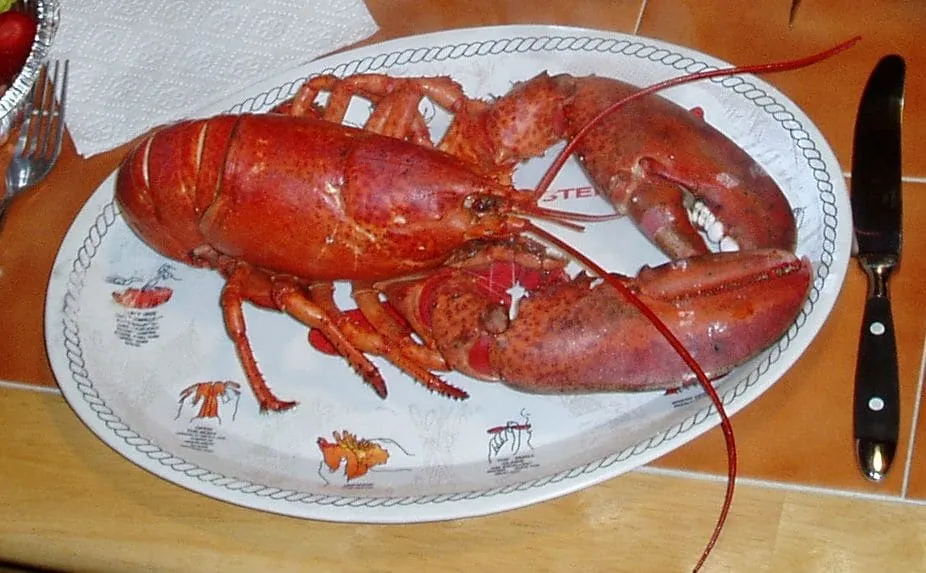
Lobster tomalley is the soft green paste in a lobster’s body, and you can eat it, in moderation. It is the organ that does the work of a liver and pancreas. Health Canada advises that children not eat tomalley and that adults limit themselves to the tomalley from one cooked lobster a day, because a small number of lobsters can carry a natural algal toxin in that organ. The red stuff, called roe or coral, is the female’s unlaid eggs, and Health Canada’s advice doesn’t cover it.
Crack open a whole lobster at a Nova Scotia kitchen table and you’ll find more than claw and tail meat: green paste, red or black beads, white jelly. Here’s what each one is, what Canadian food-safety agencies actually say about them, and how cooks use them. If you’re new to tackling a whole lobster, our step-by-step guide on how to eat a lobster shows where each part sits, and how to cook lobster the Nova Scotia way covers the pot.
What’s what inside a cooked lobster
| What you see | What it is | Edible? |
|---|---|---|
| Soft green or grey-green paste in the body | Tomalley, the hepatopancreas (digestive gland) | Yes, in moderation (Health Canada limit applies) |
| Black-green beads (raw) or bright red beads (cooked) along the tail and body | Roe, also called coral: the female’s unlaid eggs | Yes |
| White, jelly-like or curd-like material | Cooked hemolymph, the lobster’s blood | Yes |
| Hard sac just behind the eyes | Stomach | No, discard |
| Feathery grey fronds against the sides of the body | Gills | No, discard |
| Dark thread down the centre of the tail | Intestine | Remove it |
The Lobster Council of Canada’s guide to preparing lobster says to discard the stomach sac, the gills and the intestine. It treats the tomalley and roe as worth keeping.
What is lobster tomalley?
Lobster tomalley is the lobster’s hepatopancreas. Health Canada describes it as “the soft, green substance found in the body cavity of the lobster” that “functions as the liver and pancreas.” In a cooked lobster it sits inside the body shell (the carapace), behind the head, and it has the texture of a soft pâté.
Because the tomalley is part of the digestive system, it’s also where things the lobster has eaten can build up. Health Canada’s 2008 advisory called it the lobster’s natural filter and noted that it “can accumulate contaminants found in the environment.” That’s the reason for the advice below.
Tomalley tastes rich and intensely of lobster, which is why some people eat it on bread or crackers and others stir it into sauces. Plenty of people scrape it into the shell pile without a second thought. Both are reasonable choices.
Is tomalley safe to eat? Health Canada’s advice
Health Canada’s current recommendation, last repeated in a June 2014 public reminder, is:
- Children: should not eat lobster tomalley.
- Adults: no more than the tomalley from one cooked lobster per day.
- Lobster meat: no restrictions.
- Canned tomalley: the advice doesn’t apply, because “the risk is controlled during processing.”
The worry is paralytic shellfish poison (PSP). As Health Canada’s 2013 reminder explains, PSP toxins are made by certain microscopic marine algae in coastal waters, and a very small number of lobsters may have them in the tomalley. The toxin “is normally not detected in lobster meat.” Health Canada also notes there have been no confirmed cases of paralytic shellfish poisoning from eating lobster tomalley.
The advice has tightened over time. The 2008 advisory allowed adults the tomalley of up to two lobsters a day and children up to one. By the 2013 and 2014 reminders, that had become one lobster’s worth for adults and none for children.
How does the toxin get into a lobster?
Lobsters don’t filter seawater the way clams and mussels do. The Canadian Food Inspection Agency (CFIA) explains that lobsters, crabs and whelks “can accumulate marine biotoxins by feeding on bivalve shellfish.” A lobster that has been eating toxic mussels or clams can concentrate those toxins in its digestive gland.
Doesn’t cooking kill it?
No. The CFIA is blunt: “The toxins that cause PSP are not destroyed by cooking,” and “properly cooked shellfish can still be toxic.” Boiling or steaming your lobster to a safe internal temperature protects you from bacteria, not from algal toxins. That’s why the advice is about how much tomalley you eat, not how long you cook it. For safe timings, see our lobster boiling time chart.
What are the symptoms of paralytic shellfish poisoning?
According to Health Canada, mild exposure can cause “a tingling sensation or numbness of the lips.” Larger exposures can spread those sensations to the arms and legs and bring headache, dizziness and nausea. In rare, severe cases PSP can cause muscle paralysis, trouble breathing, choking and death. The CFIA says symptoms can begin within a few minutes and up to 10 hours after eating, and there is no known cure. If you notice tingling or numbness after eating tomalley, get medical help right away.
Why tomalley matters to Nova Scotia’s lobster trade
The tomalley question isn’t just a kitchen debate. Fisheries and Oceans Canada’s management plan for Lobster Fishing Areas 27 to 38 records that in July 2008, after testing U.S. lobster samples, the U.S. Food and Drug Administration advised the public against eating lobster hepatopancreas from the East Coast, including Canada, because of elevated PSP levels.
Japan then began mandatory testing of the hepatopancreas in lobster shipments from Canada. Testing slowed the release of product, and shipments that tested positive were refused. Canada and Japan worked out a certification process: exporters test their own shipments and obtain export certificates through the CFIA, with random shipments still subject to testing in Japan. Because live lobster is shipped whole, tomalley and all, that small gland became a trade issue. You’ll find more on the wider industry in our Nova Scotia lobster guide.
What is lobster roe (coral)?
Lobster roe is the mass of developing eggs inside a female lobster. In a raw lobster it looks, in the Lobster Council of Canada’s words, like “a shining green-black substance,” and it “turns brilliant red when cooked.” Once cooked, cooks call it coral because of that colour. It runs along the top of the tail meat and up into the body.
So when someone asks about the green stuff in lobster, there are two possible answers. In a cooked lobster, green is almost always the tomalley. In a raw or undercooked female, dark green-black roe is the other candidate. If the beads are still black once the lobster is cooked, the roe hasn’t reached a high enough temperature, and that section needs more time.
Why there’s roe in a legally caught lobster
Canada protects egg-bearing females. Section 59 of the Atlantic Fishery Regulations, 1985 says no one may buy, sell or possess “any female lobster with eggs attached,” and the rule also covers females whose eggs have been washed or scraped off. Those eggs are carried on the outside, under the tail. The roe you find in a cooked lobster is different: it’s eggs still inside the female’s body, before she has laid them. Fishers can legally keep a female that has internal roe, provided she meets the size and other rules for that area. Our Nova Scotia lobster regulations explainer covers those rules.
Health Canada’s tomalley advice doesn’t mention roe, and the Lobster Council calls it “also delicious.”
Lobster roe vs lobster coral
They’re the same thing. “Roe” is the general word for fish and shellfish eggs, and “coral” is the kitchen name for cooked lobster roe because of its colour. You won’t find roe in every lobster: only females have it, and only some of them at any given time.
How do cooks use tomalley and roe?
The Lobster Council of Canada’s advice is simple: if you plan to use the tomalley in a sauce, remove “the soft green-gray, or creamy organ” before cooking a split lobster; otherwise it can stay in place under the broiler. Roe “can be removed for a sauce or left in place.” Common uses:
- Straight up. Spread tomalley on a cracker or a slice of bread at the table, or eat the coral with the tail meat. Keep the adult limit of one lobster’s worth a day in mind.
- Compound butter. Mash the tomalley or cooked coral into soft butter with a little lemon and salt, then spoon it over grilled or broiled lobster.
- Finishing a sauce. Work the coral or tomalley into soft butter and whisk it into a pan sauce at the very end, off the boil. It thickens the sauce slightly and deepens its colour and flavour.
- Dressing for lobster salad. A little coral mixed into mayonnaise turns it pink and adds flavour to a Nova Scotia lobster roll.
Two practical notes. First, take the tomalley out before you make stock or bisque from the shells if you’d rather not have it in a dish where you can’t tell how much each person gets. Second, don’t serve tomalley to children, and count it as part of the adult daily limit if you’ve already eaten some at the table.
What’s the white stuff in cooked lobster?
That white, jelly-like or curd-like material clinging to the meat or the inside of the shell is cooked hemolymph, the lobster’s blood. It solidifies when heated, much as egg white sets in a pan. Food Republic’s explainer points out that it doesn’t mean your lobster is past its prime and is as safe to eat as the blood of any other healthy animal. Rinse it off if you don’t like the look of it.
If your lobster seemed unusually watery as well, it may have moulted recently; our guide to hard-shell vs soft-shell lobster explains the difference.
The short version for your next lobster supper
- Green paste: tomalley. Fine for adults in moderation (one lobster’s worth a day); not for children.
- Red beads: roe, or coral. Eat it, or save it for butter or sauce.
- Black beads: undercooked roe. Give the lobster a little more time.
- White jelly: cooked blood. Harmless.
- Meat: no tomalley-related restrictions at all.
For more ways to cook and serve lobster, browse our cooking and recipes topic page.
Frequently asked questions
What is the green stuff in a lobster?
The soft green paste in a cooked lobster's body is the tomalley, the organ that works as the lobster's liver and pancreas (scientists call it the hepatopancreas). In a raw female, dark green-black roe can also look like 'green stuff', but roe turns bright red when cooked.
Is lobster tomalley safe to eat?
In moderation, according to Health Canada. Because a very small number of lobsters can carry paralytic shellfish poison in the tomalley, Health Canada recommends that children not eat it and that adults limit themselves to the tomalley from one cooked lobster per day. There have been no confirmed cases of paralytic shellfish poisoning from lobster tomalley, and the advice does not apply to the meat.
Can you eat lobster roe?
Yes. Lobster roe, also called coral, is the unlaid eggs inside a female lobster. It is black-green when raw and turns bright red when cooked. Health Canada's tomalley advice does not mention roe, and the Lobster Council of Canada describes it as delicious, whether eaten as is or stirred into a sauce.
What is the white stuff on cooked lobster?
The white, jelly-like material on cooked lobster meat or inside the shell is the lobster's blood, called hemolymph, which sets when heated much like egg white. It does not mean the lobster is spoiled, and it is safe to eat or rinse away.
Does cooking destroy the toxins in tomalley?
No. The Canadian Food Inspection Agency says the toxins that cause paralytic shellfish poisoning are not destroyed by cooking, which is why Health Canada limits how much tomalley it advises eating rather than relying on cooking.
Sources
We check facts against primary sources wherever possible. Season dates and regulations can change, so confirm with Fisheries and Oceans Canada before you rely on them.
- Health Canada reminds Canadians about consumption of lobster tomalley — Health Canada (Recalls and Safety Alerts, archived), 2013-05-27
- Health Canada is reminding Canadians to limit consumption of lobster tomalley — Health Canada (Recalls and Safety Alerts, archived), 2014-06-03
- Health Canada advises Canadians to limit consumption of lobster tomalleys — Government of Canada news archive, 2008
- Natural toxins in fresh fish and shellfish — Canadian Food Inspection Agency, 2019
- Lobster Fishing Areas 27–38: Integrated Fisheries Management Plan (section 4.12.2, Paralytic shellfish poisoning) — Fisheries and Oceans Canada, 2019
- Preparing Lobster — Lobster Council of Canada
- Atlantic Fishery Regulations, 1985 (SOR/86-21), section 59 — Justice Laws Website, Government of Canada
- What Is The White Stuff On My Lobster? — Food Republic
Image credits
- Header photo: Photo: Muns via Wikimedia Commons · CC BY-SA 2.0 (cropped and resized)
tomalleylobster roelobster coralparalytic shellfish poisoningHealth Canadafood safety