Lobster Minimum Legal Size in Nova Scotia: How Carapace Length Is Measured
The lobster minimum size in Nova Scotia is 82.5 mm carapace length in most areas. How it's measured, every LFA's limit, and the female windows and maximums.
By NovaShell Editorial Team · · 7 min read
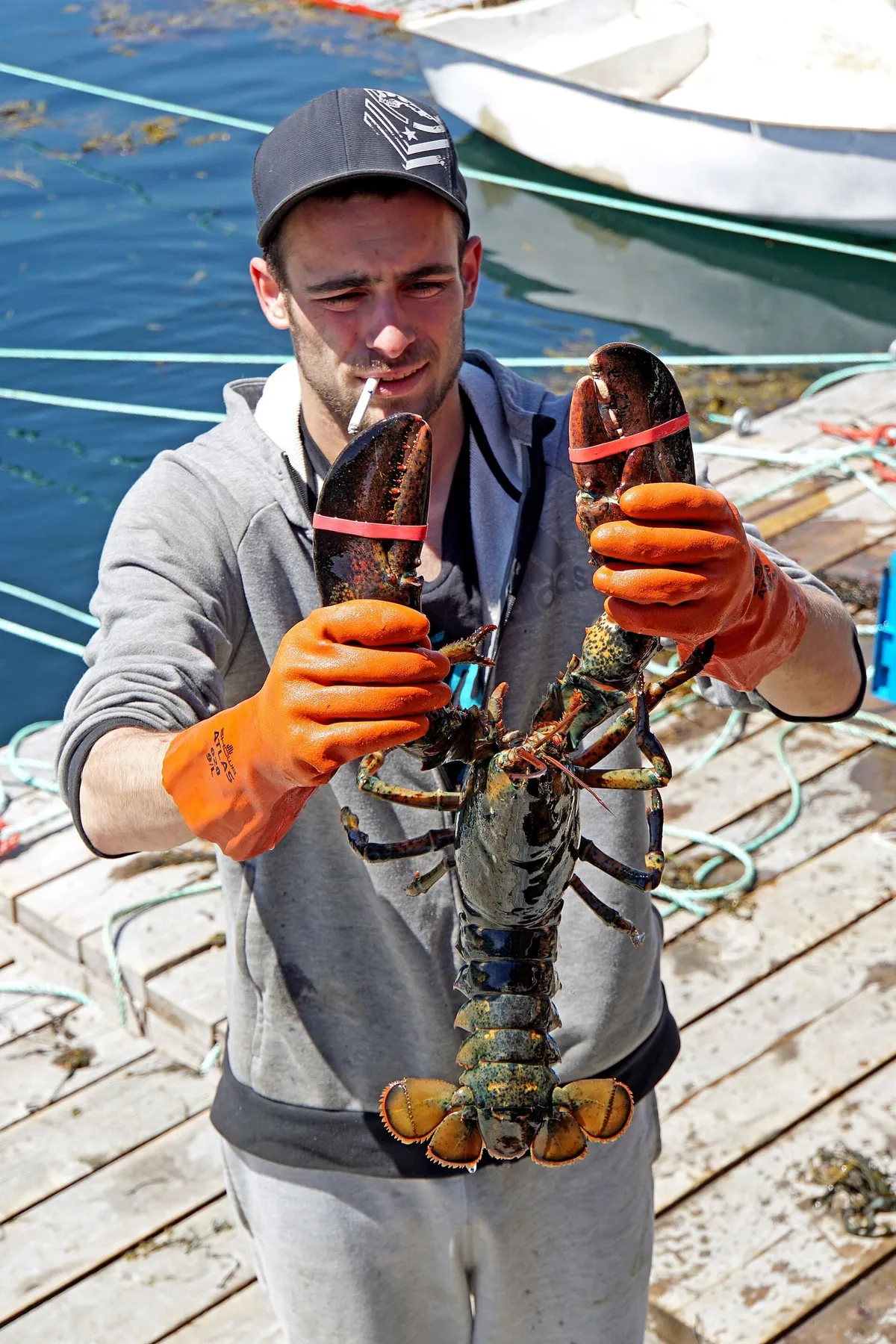
In most of Nova Scotia, a lobster must measure at least 82.5 mm (roughly 3¼ inches) along its carapace before it can be kept. Carapace length is measured from the back of the eye socket to the back edge of the body shell, never by claws or tail. A few areas use different numbers: 84 mm around the Bras d’Or Lake and Cape Breton’s northwest coast, and 76 to 81 mm in parts of the Northumberland Strait. Anything shorter goes back over the side.
Size limits are one of several conservation rules covered in our guide to Nova Scotia lobster regulations. Because limits are set fishing area by fishing area, it also helps to know your way around the Nova Scotia Lobster Fishing Areas (LFAs). This article explains how the measurement works, lists the 2026 lobster minimum size in Nova Scotia for every area, and covers the female windows and maximum sizes that some areas add on top.
How is lobster carapace length measured?
The definition comes straight from the federal Atlantic Fishery Regulations, 1985. For a lobster, “length” means “the distance from the rear of either eye socket to the rear end of the carapace, measured along a straight line parallel to the centre line of the carapace.”
In plain terms:
- Start point: the back rim of either eye socket, at the front of the head. Not the tip of the pointed rostrum between the eyes, and not the antennae.
- End point: the back edge of the carapace, the hard body shell where it meets the first segment of the tail.
- Line: straight, and parallel to the midline running down the lobster’s back. A gauge laid across the shell at an angle gives a false reading.
Claws, legs and tail don’t count. Two lobsters with the same carapace length can look very different in size if one has bigger claws, which is why weight is a poor stand-in for legal size.
Why not measure the whole lobster?
The carapace is rigid, so it gives the same reading whether the lobster is flapping its tail or curled up. The regulations also back this up in another way: inside a fishing area, nobody may possess “any claw, tail or meat that has been separated from the thorax or carapace of a lobster.” Lobsters are landed whole, so every one can still be measured at the wharf or by a fishery officer.
How a lobster gauge works
On the boat, nobody reaches for a ruler. Fishers use a lobster gauge: a flat, fixed-length piece of metal (many are brass) cut to the legal carapace length for their area. The routine is quick:
- Hold the lobster right side up with its back facing you.
- Seat one end of the gauge against the back of the eye socket.
- Lay the gauge flat along the midline of the shell.
- If the back edge of the carapace reaches past the other end of the gauge, the lobster is legal. If the gauge overhangs the shell, it’s short and goes back.
Where an area also has a female window or maximum size, the upper limits have to be checked on every female as well. Every lobster that comes up in a trap is sorted this way, along with checks for eggs and v-notches, before the keepers go into the crate. If you’ve never seen a trap hauled, our guide to how lobsters are caught in Nova Scotia walks through the whole sequence.
The traps help, too. Since the mid-to-late 1980s, Maritimes traps have had to carry escape vents in each parlour, and DFO’s 2022 integrated fisheries management plan says the vents exist “to minimize the capture of undersized lobsters.” Many short lobsters crawl out before the trap is ever hauled.
What is the lobster minimum size in Nova Scotia, by LFA?
The sizes below come from Fisheries and Oceans Canada’s (DFO) 2026 management notices for LFAs 27–32 and LFAs 33–38, the 2026 Gulf Region plan for LFAs 26A and 26B, and the 2025 LFA 25 plan. Imperial figures are our own conversions.
| LFA | Rough location | Minimum carapace length | Extra size rule |
|---|---|---|---|
| 25 (2025) | Northumberland Strait, western end | 79 mm (about 3⅛ in) | Females over 115 mm released |
| 26A-1 | Northumberland Strait | 76 mm (about 3 in) | Females 115–129 mm released |
| 26A-2 | Northumberland Strait | 78 mm | Females 115–129 mm released |
| 26A-3 | Northumberland Strait | 81 mm | Females 115–129 mm released |
| 26B South | Western Cape Breton | 82.5 mm | None |
| 26B North | Western Cape Breton (Chéticamp area) | 84 mm | None |
| 27 | Northern and eastern Cape Breton | 82.5 mm | None |
| 28 | Bras d’Or Lake | 84 mm (about 3⅓ in) | None |
| 29 | Southeastern Cape Breton, Isle Madame area | 84 mm | None |
| 30 | Southeastern Cape Breton | 82.5 mm | Females over 135 mm released |
| 31A | Guysborough County | 82.5 mm | Females 114–124 mm released |
| 31B, 32 | Eastern Shore | 82.5 mm | Mandatory v-notching |
| 33 | Halifax to Shelburne County | 82.5 mm | None |
| 34 | Southwest Nova Scotia | 82.5 mm | None |
| 35 | Upper Bay of Fundy | 82.5 mm | None |
Three things to keep in mind:
- The regulations and the rules in force don’t always match. Schedule XIV of the Atlantic Fishery Regulations still lists 81 mm for LFA 27 and 72 mm for LFA 26A, for example, but DFO can vary sizes by order and licence condition. Treat the yearly DFO notice as the current rule.
- There’s a national floor. Anywhere in Canada except Newfoundland and Labrador, it’s illegal to buy, sell or possess a lobster under 72 mm. That covers buyers, shops and restaurants, not just fishers.
- Sizes change. Check DFO’s notice for your area before each season. Season dates are covered in our Nova Scotia lobster season guide, and the Bay of Fundy’s split season in LFA 35.
Why do minimum sizes exist?
The idea is simple: let lobsters breed before they’re caught. A female that releases even one batch of eggs before she reaches a trap has added to the next generation.
Whether a given minimum actually achieves that depends on the water. Females mature at smaller sizes in warm-summer waters such as the Gulf of St. Lawrence and at larger sizes in cooler waters such as the Bay of Fundy, according to the 2022 DFO plan. That’s why one number can’t fit the whole province:
- Cape Breton. A 2011 DFO science assessment estimated the size at which half of females reach maturity at 71.5–75.8 mm carapace length at three sites in LFAs 27 and 29, and found 77–100% of females were mature at the minimum legal size.
- The South Shore. DFO’s 2020 assessment of LFA 33 put it bluntly: in LFAs 27–32 the minimum size sits above size at maturity, “in contrast to LFA 33 and other inshore fisheries where the median size in the catch is below SoM and a small proportion of females have had the opportunity to breed.”
Where a minimum alone can’t protect enough breeders, managers add other tools: windows, maximum sizes, v-notching, and the release of every egg-bearing female.
Raising the minimum: the LFA 27 example
Cape Breton’s LFA 27 shows what a bigger minimum can do. Its minimum went from 70 to 76 mm between 1998 and 2002, then from 76 to 81 mm between 2007 and 2009. The 2011 assessment found the increases led to more sublegal lobsters and more egg-bearing females in the catch, a larger median landed size and higher catch rates. A size class that used to be fished was now left in the water. LFA 27’s minimum is 82.5 mm in 2026.
It’s a trade-off. A higher minimum costs fishers part of their catch in the short term, in exchange for more spawning and bigger lobsters later. For a sense of how long that wait is: DFO says lobsters in the Maritimes generally take 8 to 10 years to reach 82.5 mm, when they weigh about a pound (0.45 kg). Our article on how long lobsters live looks at lobster age in more detail.
Maximum sizes and female windows
Some areas also protect large females, because big lobsters carry far more eggs. The LFA 33 assessment notes that “very large Lobsters have a much greater relative fecundity and are, thus, an important component to conservation.” There are two ways to do it:
- A maximum size releases every female above a set length. In 2026 that’s 135 mm in LFA 30. LFA 25 used 115 mm in 2025.
- A window protects females inside a band and lets larger ones be kept again. In 2026 that’s 114–124 mm in LFA 31A and 115–129 mm in all three parts of LFA 26A.
These rules apply to females only. A male of any size above the minimum can be kept.
What this means at the counter
If you buy lobster in Nova Scotia, the smallest you’ll see are near the minimum. They usually weigh around a pound and are sold in the trade as canners or chicks. Our guide to lobster sizes and grades explains the market names. A “jumbo” isn’t a separate kind of lobster, just one that kept growing and moulting for years after first reaching legal size. For the biology behind that growth, see our American lobster facts. More rules articles are collected under rules and sustainability.
Frequently asked questions
What is the minimum size for lobster in Nova Scotia?
In most Nova Scotia fishing areas the minimum legal size is 82.5 mm carapace length, roughly 3¼ inches. LFAs 28 and 29 (Bras d'Or Lake and southeastern Cape Breton) and 26B North use 84 mm, while the Northumberland Strait areas are lower: 76 to 81 mm in LFA 26A and 79 mm in LFA 25 (2025).
How do you measure a lobster's carapace?
Under the Atlantic Fishery Regulations, length is measured from the rear of either eye socket to the rear end of the carapace (the body shell), along a straight line parallel to the centre line of the shell. Claws and tail are not part of the measurement.
Is there a maximum size for lobster in Nova Scotia?
In some areas, for females only. In 2026 LFA 30 does not allow females over 135 mm to be kept, LFA 31A protects females from 114 to 124 mm, and LFA 26A protects females from 115 to 129 mm. LFA 25 had a 115 mm female maximum in 2025.
How many years does it take a lobster to reach legal size?
Fisheries and Oceans Canada says lobsters in the Maritimes generally take 8 to 10 years to reach 82.5 mm carapace length, when they weigh about 1 pound (0.45 kg).
Sources
We check facts against primary sources wherever possible. Season dates and regulations can change, so confirm with Fisheries and Oceans Canada before you rely on them.
- Atlantic Fishery Regulations, 1985 (SOR/86-21), sections 2, 57, 59 and Schedule XIV — Justice Laws Website, Government of Canada, current to 2026-09-21
- 2026 Lobster Fishing Areas 27-32 (Maritimes Region) — Fisheries and Oceans Canada, 2026
- 2026 Lobster Fishing Areas 33-38 (Maritimes Region) — Fisheries and Oceans Canada, 2026
- 2026 Southern Gulf of St. Lawrence Lobster Conservation Harvesting Plan for LFAs 23, 24, 26A and 26B — Fisheries and Oceans Canada, Gulf Region, 2026
- 2025 Lobster Conservation Harvesting Plan for Lobster Fishing Area 25 — Fisheries and Oceans Canada, Gulf Region, 2025
- Lobster Fishing Areas 27–38: Integrated Fisheries Management Plan — Fisheries and Oceans Canada, 2022
- Assessment of Lobster off the Atlantic Coast of Nova Scotia (LFAs 27-33), Science Advisory Report 2011/064 — Fisheries and Oceans Canada, Canadian Science Advisory Secretariat, 2011
- Assessment of Lobster (Homarus americanus) in Lobster Fishing Area 33 for 2018, Science Advisory Report 2020/002 — Fisheries and Oceans Canada, Canadian Science Advisory Secretariat, 2020
Image credits
- Header photo: Photo: Dennis G. Jarvis via Wikimedia Commons · CC BY-SA 2.0 (cropped and resized)
minimum legal sizecarapace lengthlobster gaugeLFA rulesconservation