The Cape Islander Boat: Nova Scotia's Iconic Lobster Boat
The Cape Islander boat was born in Clark's Harbour around 1905. Its history, the Ephraim Atkinson story, design features and how today's lobster boats evolved.
By NovaShell Editorial Team · · 6 min read
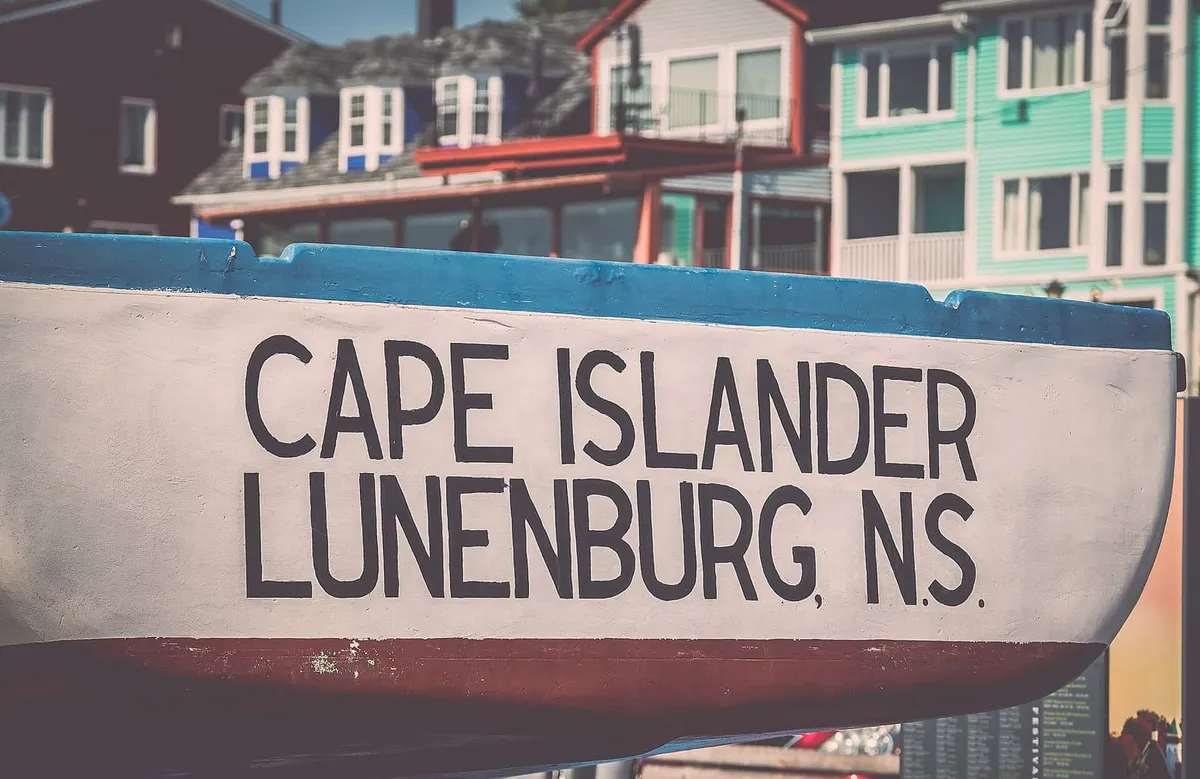
The Cape Islander boat is the workhorse of Nova Scotia’s inshore lobster fishery: a stable, broad-decked motor boat with a high bow that sweeps down to a long, low working deck. It was first built in Clark’s Harbour on Cape Sable Island, Shelburne County, around 1905, and the design is most often credited to local builder Ephraim Atkinson. Today’s fibreglass lobster boats are wider and longer, but you can still see the original Cape Island boat in their lines.
This article covers where the Cape Islander came from, what makes the design work and how the modern Nova Scotia lobster boat grew out of it. For the bigger picture of the fishery these boats serve, start with our complete guide to Nova Scotia lobster.
Where did the Cape Islander come from?
Cape Sable Island, just off Barrington Passage, is the southernmost part of Nova Scotia. Its main town, Clark’s Harbour, calls itself “the home of the world famous ‘Cape Islander’.” The Canadian Encyclopedia agrees, describing the town as “the birthplace of the famed Cape Island boat,” a style “developed in the early 20th century.”
The local sources don’t agree on the exact year:
| Source | What it says |
|---|---|
| Town of Clark’s Harbour | “First built in Clark’s Harbour around the year of 1905” |
| Municipality of Barrington | “First built by Ephraim Atkinson at Clark’s Harbour in 1907” |
| The Canadian Encyclopedia | “Developed in the early 20th century” |
So the honest answer is “between about 1905 and 1907.” Either way, the boat was born in the same corner of Shelburne County that now bills itself as the lobster capital; our guide to Barrington, the Lobster Capital of Canada tells that side of the story.
Ephraim Atkinson and the rival claim
Ephraim Atkinson, a Clark’s Harbour builder, is the name most often attached to the first Cape Islander. The Wikipedia summary, which draws on a Canadian Museum of History exhibit, notes that two families claim the invention. The other claim is for William A. Kenney, another Clark’s Harbour boatbuilder said to have built an all-wood Cape Islander in 1905. The same summary says the Atkinson family has kept building boats ever since.
Whoever built the first one, the Cape Islander was an inshore motor fishing boat from the start, shaped for the rough water off Nova Scotia’s southern tip. Clark’s Harbour’s own account adds a bit of folklore: “Stories tell that it’s design was inspired from watching a seagull sitting in the water.”
What makes a Cape Islander? Lobster boat design features
The Cape Islander’s look is easy to spot at any Nova Scotia wharf. The sources describe it consistently:
- High bow. Clark’s Harbour notes “distinctly high bows.” Wikipedia describes the boat as “famous for its large step up to the bow.”
- Long, broad, open working deck. The Canadian Encyclopedia describes “a long, broad, open workspace, low to the sea,” with room for traps, crates and bait.
- Flat run aft. A single keel with a flat bottom toward the stern, more rounded toward the bow.
- Shallow draft. Barrington’s page says it “draws little water, sitting right on top of the surface.”
- Stability. The design is “a standard for small boats that require high stability and efficiency in the North Atlantic,” according to the Municipality of Barrington.
The first boats were open. Over time a covered wheelhouse, known locally as the cuddy, appeared up front, and today’s larger boats add bunks and a galley below. Clark’s Harbour notes that modern boats can stay at sea “for many days,” with a bunkhouse and an eat-in kitchen below deck.
| Feature | Early Cape Island boat | Modern Cape Islander-style lobster boat |
|---|---|---|
| Material | Wood | Mostly fibreglass |
| Length | About 20–22 ft | Mainly about 30–50 ft |
| Shelter | Open boat | Wheelhouse, often with bunks and galley |
| Hauling | By hand, later mechanical haulers | Hydraulic trap hauler |
| Typical job | Inshore lobster and fishing | Lobster above all, plus other inshore fisheries |
From wood to fibreglass: how the Nova Scotia lobster boat evolved
Clark’s Harbour dates a turning point to 1971, when “the first fibreglass fishing boat was constructed” there. From then on, the town says, most boats were fibreglass, built “in various lengths and very wide, to carry more lobster traps.” The hull model, it adds, is still the same as the first one.
DFO interviews with lobster fishers on Nova Scotia’s outer coast show how the fleet changed in just 15 years. In Research Document 2002/022, scientists compared boats in LFA 33 (Halifax to Shelburne County) in 1983 and 1998:
| LFA 33 boats surveyed | 1983 | 1998 |
|---|---|---|
| Average length | 29.5 ft | 36 ft |
| Wooden hull | 89% | 13% |
| Fibreglass hull | 11% | 79% |
| Diesel engine | 19% | 77% |
| Hydraulic trap hauler | 56% | 100% |
| Radar | 48% | 94% |
The authors noted that “the majority were built from fiberglass and powered by diesel engines,” and that most boats had been built after the poor landings of the early 1980s.
How big are Nova Scotia lobster boats today?
Cape Islanders “of various sizes (typically 12–15 m)” are found all along the province’s Atlantic coast, according to The Canadian Encyclopedia. Clark’s Harbour says they are built mainly from 30 to 50 feet. The Municipality of Barrington describes a typical one as 11.5 m (38 ft) long with a 3.5 m (12 ft) beam.
Regulation shapes those numbers. Fisheries and Oceans Canada (DFO) says the inshore lobster fishery is prosecuted “almost entirely by vessels less than 13.7m (45’) length overall,” that LFAs 33 and 34 have a maximum vessel length of 15.24 m (50 ft), and that vessels up to 19.8 m (65 ft) may be used in the other Maritimes Region areas. Within those limits, extra capacity comes from beam: Clark’s Harbour describes modern boats as “very wide, to carry more lobster traps.” See our guide to Nova Scotia’s lobster fishing areas for where each rule applies.
For how traps are set and hauled from the deck, read how lobsters are caught, and for the gear itself, our anatomy of a lobster trap.
Variations around the province
The Cape Islander isn’t one fixed design. The Wikipedia summary notes regional variations, such as flared bow lines in the Northumberland Strait area and smaller boats on the Eastern Shore. It also describes the Cape Islander as closely related to the Maine lobster boat, and says it is sometimes called a “Novi” boat. The boats themselves are long-lived: Clark’s Harbour says it is “not uncommon for these boats to be used for up to twenty years.”
Where to see Cape Islanders
You’ll see Cape Islanders at almost any working wharf in Nova Scotia, but a few places put them centre stage:
- Cape Sable Island and Clark’s Harbour. The birthplace of the design, reached by a causeway. Barrington’s history page says construction began on August 29, 1948, and the finished 3,100-foot causeway cost about $600,000. Clark’s Harbour still lists boatbuilders on its website; call ahead if you hope to see a yard at work.
- Lunenburg’s waterfront. The photo at the top of this page, of a small boat lettered “Cape Islander, Lunenburg N.S.,” was taken in Lunenburg.
- Lobster boat races. The Pictou Lobster Carnival, held in July, lists lobster boat races and modified boat races among its events. Check the carnival’s current schedule before you go.
- On the water during the season. Spring is the time in most areas; along the South Shore and Southwest the boats fish from late November to the end of May. Our Nova Scotia lobster season guide has the dates.
For more on the people and gear behind the catch, browse the lobster fishing industry hub.
Frequently asked questions
Who invented the Cape Islander boat?
The design is most often credited to Ephraim Atkinson of Clark's Harbour on Cape Sable Island. A rival claim credits another Clark's Harbour builder, William A. Kenney. Local sources date the first boat to between about 1905 and 1907.
Why is it called a Cape Islander?
It is named for Cape Sable Island in Shelburne County, the southernmost part of Nova Scotia, where the design originated. Locals call it a Cape Island boat or a Cape Islander.
How long is a Cape Islander?
The first ones were wooden boats of about 20 to 22 feet. Today they are built mainly from about 30 to 50 feet. The Municipality of Barrington describes a typical Cape Islander as 11.5 m (38 ft) long with a 3.5 m (12 ft) beam.
Are Cape Islanders still built of wood?
Rarely. Clark's Harbour dates its first fibreglass fishing boat to 1971, and most Cape Islanders since have been fibreglass. DFO interviews found that by 1998, 79% of the LFA 33 boats surveyed were fibreglass, compared with 11% in 1983.
Sources
We check facts against primary sources wherever possible. Season dates and regulations can change, so confirm with Fisheries and Oceans Canada before you rely on them.
- Boat Building — Town of Clark's Harbour
- The Cape Island Boat — Town of Clark's Harbour
- Cape Sable Island — Municipality of the District of Barrington
- Clark's Harbour — The Canadian Encyclopedia, 2015
- Cape Islander — Wikipedia
- Lobster Fishing Effort on the Outer Coast of Nova Scotia, 1983 Versus 1998 (Research Document 2002/022) — Fisheries and Oceans Canada, Canadian Science Advisory Secretariat, 2002
- Lobster Fishing Areas 27–38: Integrated Fisheries Management Plan — Fisheries and Oceans Canada, 2022
- Pictou Lobster Carnival — Coastal Nova Scotia
Image credits
- Header photo: Photo: Tony Webster via Wikimedia Commons · CC BY-SA 2.0 (cropped and resized)
Cape IslanderCape Sable IslandClark's Harbourlobster boatsboatbuildingShelburne County