Where Nova Scotia Lobster Goes: Exports to the U.S., China and Beyond
Nova Scotia lobster exports hit $1.3 billion in 2024. See where the lobster goes, live vs processed, how it flies out of Halifax, and how tariffs hit the trade.
By NovaShell Editorial Team · · 8 min read
Nova Scotia lobster exports were worth $1.3 billion in 2024, which made lobster the province’s most valuable seafood export. Most of it leaves the province alive: $1.03 billion went out live and $277 million as frozen or processed product. The United States is the biggest customer and China comes second, with South Korea, Japan and Europe well behind.
Below is where the lobster goes, how it gets there, and how tariffs have shaken the trade since 2025. For background on the fishery that supplies these exports, start with our complete guide to Nova Scotia lobster. For more on the business side, browse the lobster fishing industry hub.
Nova Scotia lobster exports at a glance
These are the latest full-year numbers from provincial and federal sources:
| Measure | Figure | Year | Source |
|---|---|---|---|
| Nova Scotia lobster exports | $1.3 billion | 2024 | NS Dept. of Fisheries and Aquaculture |
| Live lobster share | $1.03 billion | 2024 | NS Dept. of Fisheries and Aquaculture |
| Frozen, cooked and processed lobster | $277 million | 2024 | NS Dept. of Fisheries and Aquaculture |
| All Nova Scotia seafood exports | $2.4 billion (29% of Canada’s total) | 2024 | NS Dept. of Fisheries and Aquaculture |
| Canada’s lobster exports | 79,380 tonnes, about $3.01 billion | 2025 | DFO |
| Canada’s lobster exports | 80,798 tonnes, about $2.97 billion | 2024 | DFO |
The provincial figures come from the Nova Scotia seafood export snapshot for 2024. That snapshot bills the province as “Canada’s #1 Seafood Exporter.” Lobster brought in more than every other species combined. Crab came next at $220 million and scallops at $208 million.
Nationally, Fisheries and Oceans Canada’s 2025 trade fast facts put lobster at about $3.01 billion of Canada’s $8.47 billion in seafood exports. That makes it the country’s top seafood export. Canada also imported 15,371 tonnes of lobster in 2025. Statistics Canada counts the 2024 trade slightly differently, at 80,365 tonnes and $2.9 billion. By that count, Nova Scotia shipped about 45% of Canada’s lobster exports by value.
What are the main lobster export markets?
The province doesn’t publish lobster-only figures by country, but its 2024 seafood totals show the pattern. Lobster is more than half of them.
| Destination (all Nova Scotia seafood, 2024) | Export value |
|---|---|
| United States | $1.23 billion |
| China | $615 million |
| South Korea | $61.4 million |
| Japan | $59 million |
| Netherlands | $58.5 million |
| France | $49 million |
| Belgium | $43.4 million |
| Hong Kong | $39.3 million |
| Spain | $32 million |
| United Kingdom | $25 million |
By region, 52% of Nova Scotia’s seafood exports went to the U.S. in 2024. Another 36% ($842 million) went to the Indo-Pacific and 10% ($241 million) to the European Union.
For lobster alone, the national numbers tell a similar story. According to Statistics Canada data reported by The Canadian Press in January 2026, the U.S. bought $1.9 billion of Canadian lobster in 2024 and China bought $535 million. Global News put China’s 2024 lobster purchases at $569 million, which made lobster the top Canadian seafood product sold there. The gap probably comes from how each outlet grouped product codes, so treat China as “roughly half a billion dollars a year” before the tariff.
The United States: neighbour, customer and processor
The U.S. takes both live lobster and most of Canada’s processed lobster. DFO’s Integrated Fisheries Management Plan for LFAs 27–38 shows how the trade has shifted. In 2016, a record year, the U.S. accounted for 71.4% of Canada’s lobster export value, Asia for 19.9% and the EU for 9.0%. From 2000 to 2016 the U.S. averaged about 85% of the market for Canadian frozen and processed lobster.
The trade runs both ways. Canadian processors buy American lobster to keep plants busy. From 2012 to 2016, Canada imported just over 30,500 tonnes of U.S. lobster a year on average. Exporters also point out that a good deal of Canadian lobster is shipped onward through the U.S., so some lobster counted as a U.S. sale ends up in other countries.
China and the rest of Asia
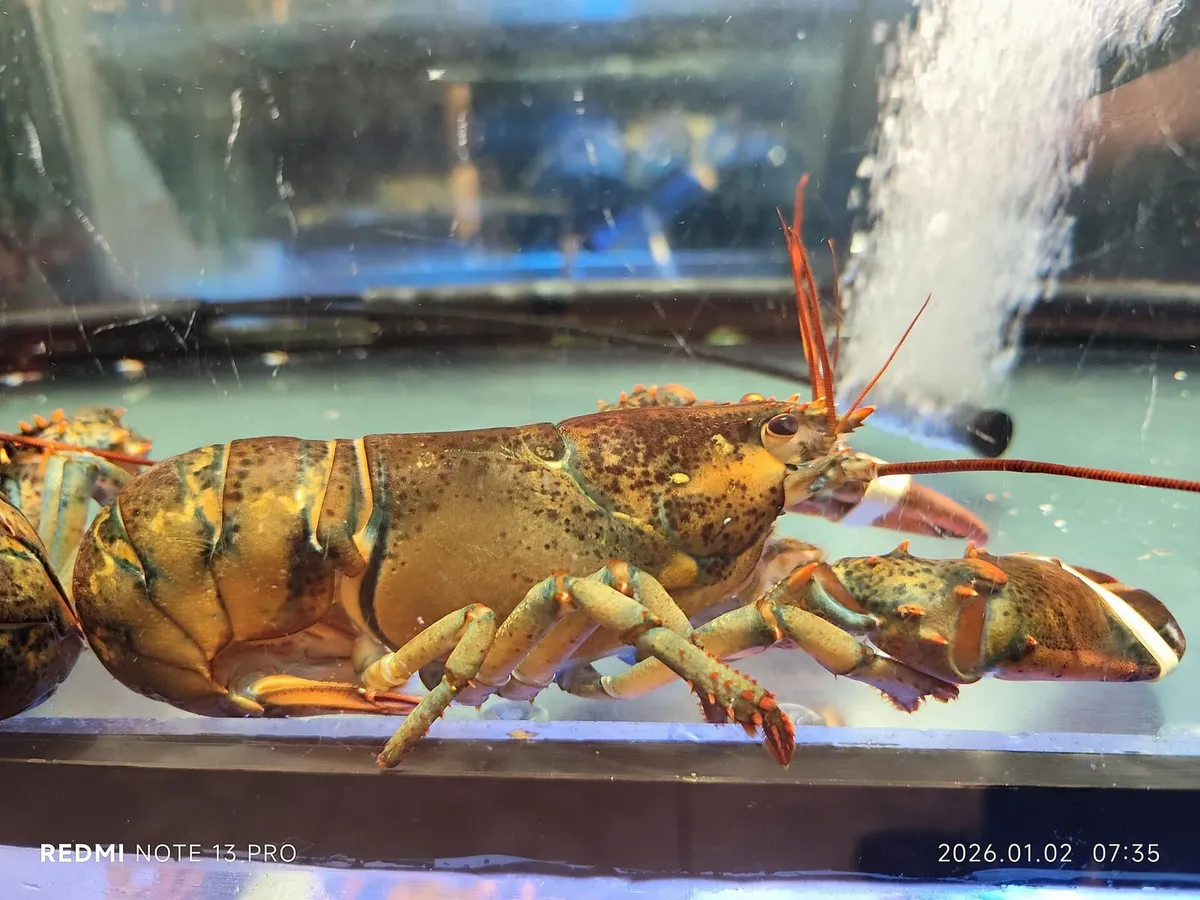
Live lobster sales to Asia took off in the 2010s. Canadian live lobster exports to China and Hong Kong rose from about $10 million in 2009 to $167 million in 2016, according to the DFO plan. South Korea climbed from around $12 million in 2012 to $43 million in 2016. Much of that lobster ends up in restaurant tanks like the one pictured above, so it has to arrive strong after a long flight. That is one reason shell condition, explained in hard-shell vs soft-shell lobster, matters so much to exporters.
Europe
The EU is a smaller but steady market. Europe accounted for about 9% of Canada’s live lobster export value in 2016. Since January 2010, the EU has required a government-validated catch certificate showing that seafood, live lobster included, doesn’t come from illegal, unreported or unregulated fishing.
Live vs processed: two different businesses
Nova Scotia’s inshore catch mostly goes to the live market, the DFO plan notes. That fits the provincial numbers, where live lobster made up nearly four-fifths of 2024 lobster export value.
Nationally the balance has swung over time. In the early 2000s, Canada’s lobster export value was split roughly 50:50 between live and frozen or processed product. By 2016, frozen and processed forms (whole cooked frozen lobster, tails, meat and similar products) had grown to 61%.
| Live lobster | Frozen and processed | |
|---|---|---|
| Nova Scotia exports, 2024 | $1.03 billion | $277 million |
| What buyers want | Hard-shell, lively, graded by size | Steady volume and meat yield |
| Typical route | Truck to the U.S., air freight to Asia and Europe | Truck or container, mostly to the U.S. |
| Main risk | Losses in transit, price swings | Inventory and currency risk |
Live lobster is sold by grade, from canners and chicks up to jumbos. Our guide to lobster sizes and grades explains the trade names. Keeping lobster alive and strong between the trap and the airport is a skill in its own right. The same principles apply at home in how to store live lobster.
How live lobster leaves Nova Scotia: Halifax Stanfield
Lobster for the U.S. mostly travels by refrigerated truck. Lobster bound for Asia and Europe usually flies out of Halifax Stanfield International Airport, where live lobster is by far the largest export.
- In 2021, Halifax Stanfield shipped 15,765 tonnes of live lobster worth about $293 million to Asian and European markets, STAT Times reported.
- That year the airport handled 34,769 tonnes of cargo in all, carried by 12 carriers.
- Live lobster was the airport’s top export by value, well ahead of medical equipment and aerospace parts.
We could not find more recent airport figures for lobster when we checked in October 2026.
Tariffs and trade disputes since 2025
China’s 25% tariff (March 2025 to February 2026)
In March 2025 China put a 25% tariff on Canadian lobster, crab and other seafood, in retaliation for Canadian tariffs on Chinese goods that included a 100% tariff on Chinese electric vehicles. Once China’s value-added tax is added, the total premium reached roughly 41% before freight, The Canadian Press reported.
The hit to live lobster export China sales was immediate:
- Stewart Lamont of Tangier Lobster Company on the Eastern Shore told Global News that live lobster sales to China fell at least 30% after March 2025.
- Statistics Canada data showed China bought $11.8 million in live lobster in October 2025, down about 31% from $17.1 million a year earlier.
- Exporters looked elsewhere. The Lobster Council of Canada reported that exports to markets other than the U.S. and China rose about 43% in October 2025.
The tariff also weighed on prices at the wharf. The Canadian Press reported shore prices of about $8 a pound in southwest Nova Scotia in December 2025, rising to around $10 by January 2026. For how shore prices are set, see lobster prices in Nova Scotia.
The 2026 suspension
On January 16, 2026, Canada and China reached a preliminary agreement-in-principle. Under it, China removed its tariffs on Canadian lobster and crab from March 1 until the end of 2026, according to DFO’s 2026 briefing on tariffs. DFO says lobster and crab made up 59% of the value of Canada’s seafood exports to China from January to September 2025. About 29% of that trade, including geoduck and sea cucumber, still faces tariffs.
The suspension is temporary. As of this writing, it is not clear what happens to the lobster tariff after December 31, 2026. Exporters are watching for an announcement.
The U.S. and CUSMA
Canadian lobster has stayed tariff-free in the U.S. through the trade tensions of 2025 and 2026. DFO says Canadian fish and seafood that meets the Canada-U.S.-Mexico Agreement (CUSMA) rules of origin “continue[s] to remain U.S. tariff-free.” In practice, that means lobster harvested in Canadian waters.
The bigger question is the 2026 CUSMA joint review. In March 2026, the U.S. Trade Representative signalled a tougher stance and said the U.S. would renew the agreement only if its concerns were addressed. Nova Scotia, which ships about 45% of Canada’s lobster exports and sends more than half its seafood to the U.S., has the most at stake.
Europe and CETA
The Canada-EU Comprehensive Economic and Trade Agreement (CETA) took effect provisionally on September 21, 2017. It removed the EU’s 8% tariff on Canadian live lobster, giving Canadian exporters an edge over U.S. lobster in European markets, Eurofish reported.
Other things that shape the export trade
- Seasons. Canada’s lobster fishing areas open at different times of year, so exporters can ship most months. Southwest Nova Scotia’s LFAs 33 and 34 supply the winter market from late November, while the Gulf and Cape Breton areas fish in spring. See the Nova Scotia lobster season dates and the guide to lobster fishing areas.
- Food safety certificates. Japan tests lobster tomalley for paralytic shellfish poison. Canada and Japan agreed a system where exporters test their own shipments and get export certificates through the Canadian Food Inspection Agency, the DFO plan explains.
- Currency. A weaker Canadian dollar makes Canadian lobster cheaper for U.S. buyers. DFO’s plan links the strong landed prices after 2014-15 partly to the dollar’s fall against the U.S. dollar.
- Sustainability claims. Buyers in Europe and North America increasingly ask for proof of sustainable fishing. Nova Scotia’s inshore lobster fishery has been certified by the Marine Stewardship Council since 2015.
What it means for Nova Scotia
Nova Scotia exports well over a billion dollars of lobster a year, and nearly all of it starts at small wharves between Cape Breton and Yarmouth. Because so little is eaten at home, a trade dispute in Beijing or Washington soon shows up in the price crews get at the wharf. The 2025 China tariff proved the point, and it is why exporters spent 2025 and 2026 chasing buyers in South Korea, Japan, Europe and other markets.
Frequently asked questions
How much lobster does Nova Scotia export?
Nova Scotia exported $1.3 billion worth of lobster in 2024, according to the provincial Department of Fisheries and Aquaculture. About $1.03 billion of that was live lobster and $277 million was frozen, cooked or processed product.
Where does most Nova Scotia lobster go?
The United States is the biggest buyer by far, followed by China. In 2024, 52% of all Nova Scotia seafood exports went to the U.S. and 36% to the Indo-Pacific region, with the European Union taking about 10%.
Is there a tariff on Canadian lobster going to the U.S.?
Not as of mid-2026. Fisheries and Oceans Canada says Canadian fish and seafood that meets CUSMA rules of origin remains U.S. tariff-free, although the 2026 CUSMA review adds uncertainty.
Did China put a tariff on Canadian lobster?
Yes. China added a 25% tariff on Canadian lobster in March 2025. Under a January 2026 preliminary agreement, China removed that tariff on lobster and crab from March 1 until the end of 2026.
Sources
We check facts against primary sources wherever possible. Season dates and regulations can change, so confirm with Fisheries and Oceans Canada before you rely on them.
- Nova Scotia: Canada's #1 Seafood Exporter – Export Performance (2024) — Nova Scotia Department of Fisheries and Aquaculture / Invest Nova Scotia, 2025
- Canada's fisheries fast facts 2025 — Fisheries and Oceans Canada, 2026
- C5 – United States and Chinese Tariffs on Canada's Fish and Seafood Sector (2026 transition binder) — Fisheries and Oceans Canada, 2026
- Lobster Fishing Areas 27–38: Integrated Fisheries Management Plan (Exports and Market access) — Fisheries and Oceans Canada, 2022
- N.S. lobster exports tick up outside U.S., China, as tariffs soften demand — The Canadian Press via The Globe and Mail, 2026-01-11
- Nova Scotia lobster industry surprised, elated by suspension of Chinese tariff — Global News, 2026-01-16
- Halifax cargo activity increased 5% in 2021 — STAT Times, 2022-04-07
- New EU-Canada trade agreement comes into force — Eurofish Magazine, 2017-12-12
Image credits
- Header photo: Photo: WenlAA LUwuasmn HOO26 via Wikimedia Commons · CC0 1.0 (cropped and resized)
lobster exportsChina tariffCUSMACETAHalifax Stanfieldseafood trade