Barrington: Why It's Called the Lobster Capital of Canada
Why Barrington calls itself the lobster capital of Canada: LFA 34's catch, Cape Sable Island and the Cape Island boat, 19 working wharves and tips for visiting.
By NovaShell Editorial Team · · 7 min read
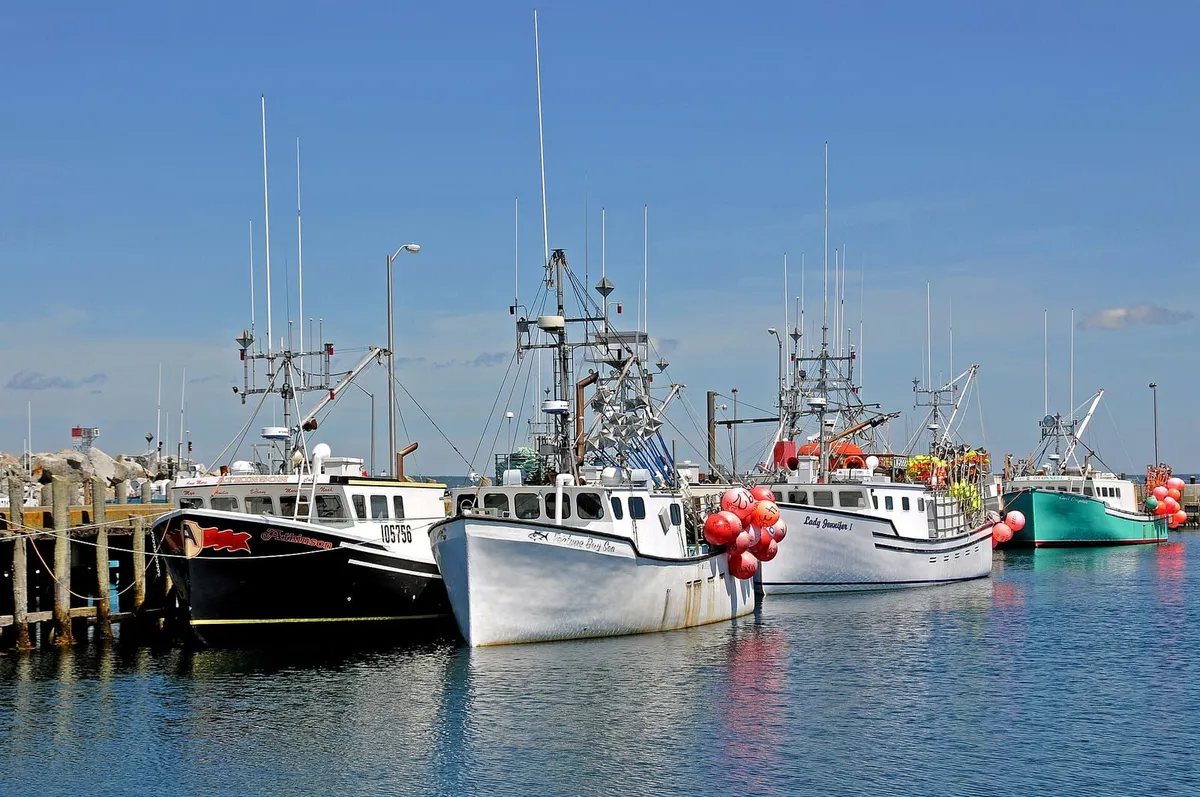
The Municipality of the District of Barrington, in Shelburne County at the southern tip of Nova Scotia, calls itself the Lobster Capital of Canada. The claim rests on the water around it. Barrington lies in Lobster Fishing Area (LFA) 34, which Fisheries and Oceans Canada (DFO) says has the highest lobster landings in Canada. It is also home to Cape Sable Island, birthplace of the Cape Island lobster boat. It’s a promotional title, not an official designation. But stand on any of its 19 working wharves in December and it’s hard to argue with.
This guide explains where the “lobster capital of Canada” claim comes from, what you’ll find on Cape Sable Island and around Barrington Passage, and how to visit. For background on the fishery itself, see our Nova Scotia lobster guide and the explainer on Nova Scotia’s lobster fishing areas.
Why is Barrington called the lobster capital of Canada?
The municipality’s own lobster page says Shelburne County is home to the “Lobster Capital of Canada”. It calls the county’s lobster grounds among the richest in the world, and says the fishery has been the economic backbone of its communities since the mid-1800s. The banner across the municipality’s website reads simply “Lobster Capital of Canada.”
The numbers behind it are big, though the most-quoted one is shaky.
- LFA 34 leads the country. A 2023 DFO science report describes LFA 34 as the area “with the highest Lobster landings in Canada.” It also names LFA 34 and Downeast Maine as the two biggest lobster fisheries in the Northwest Atlantic.
- Recent catches. Local radio station QCCR, citing preliminary DFO figures, reported that LFA 34 landed more than 14,400 tonnes worth about $360 million in the 2024–25 season. It also reported 978 vessels in LFA 34, each licence limited to 375 traps.
- The “40 per cent” figure. Tourism Nova Scotia says about 40 per cent of the country’s lobster harvest comes from the area each year. An older federal news release on the municipality’s site says more than 38 per cent of Canadian lobster is landed in LFA 34. We couldn’t match either figure to current DFO data, so treat it as a local claim rather than a statistic.
Barrington isn’t the only contender for a lobster crown. CTV Atlantic reported in 2018 that both Barrington and Shediac, New Brunswick, lay claim to the title. Shediac’s version is “Lobster Capital of the World.” The two titles cover different ground, so both towns get to keep their signs.
Where Barrington fits in the lobster map
The municipality says it lies within LFA 34. That area wraps around the southwestern end of the province through Yarmouth County. Its boats fish the winter-spring season that opens on Dumping Day in late November and, in the municipality’s words, runs to the last week of May. That’s why the busiest time on Barrington’s wharves is late fall and winter, not summer. Our guide to Nova Scotia lobster season dates has the full calendar. Every LFA 34 licence also comes with a trap limit and a minimum legal size; our guide to Nova Scotia lobster regulations explains both.
Cape Sable Island and the Cape Island boat
Cape Sable Island, “Cape Island” to locals, is the heart of Barrington’s fishing identity. According to the municipality, the Cape Island boat was first built by Ephraim Atkinson at Clark’s Harbour in 1907. Its hull has stayed basically the same since, though boats have been modified for modern fishing. A typical Cape Islander is about 11.5 metres (38 feet) long with a 3.5-metre (12-foot) beam, and is used mainly in the lobster fishery. The municipality calls the design a standard for small, highly stable boats in the North Atlantic. Our guide to how lobsters are caught in Nova Scotia explains what these boats do once the traps go over the side.
The causeway and Barrington Passage
The island hasn’t always been an easy drive. Before 1949, the ferry Joseph Howe, built in Shelburne in 1938, carried people between Cape Sable Island and Barrington Passage. The municipality’s history of the crossing goes like this:
| Year | Milestone |
|---|---|
| 1945 | Provincial surveys for a causeway begin |
| 1946 | Premier Angus L. Macdonald announces $400,000 for construction |
| August 29, 1948 | The first load of rock is dumped |
| April 29, 1949 | The fill reaches the North East Point shore |
| May 1, 1949 | The 3,100-foot (about 945 m) causeway opens, at a cost of about $600,000 |
Today Barrington Passage, at the mainland end of the causeway, is the area’s service centre. The causeway itself is where many visitors stop first.
Cape Sable and its lighthouse
Don’t confuse Cape Sable Island with Cape Sable, the small, low, sandy island off its southern tip. That island is uninhabited apart from sheep and the odd summer resident. Its lighthouse went up after the mail steamer Hungarian was wrecked on February 20, 1860, with more than 200 lives lost. The first light was completed in November 1861. Today’s tower stands 101 feet tall, making it the tallest lighthouse in Nova Scotia, and it was automated by the 1980s. The municipality says the annual Cape Days celebration includes boat rides out to the island.
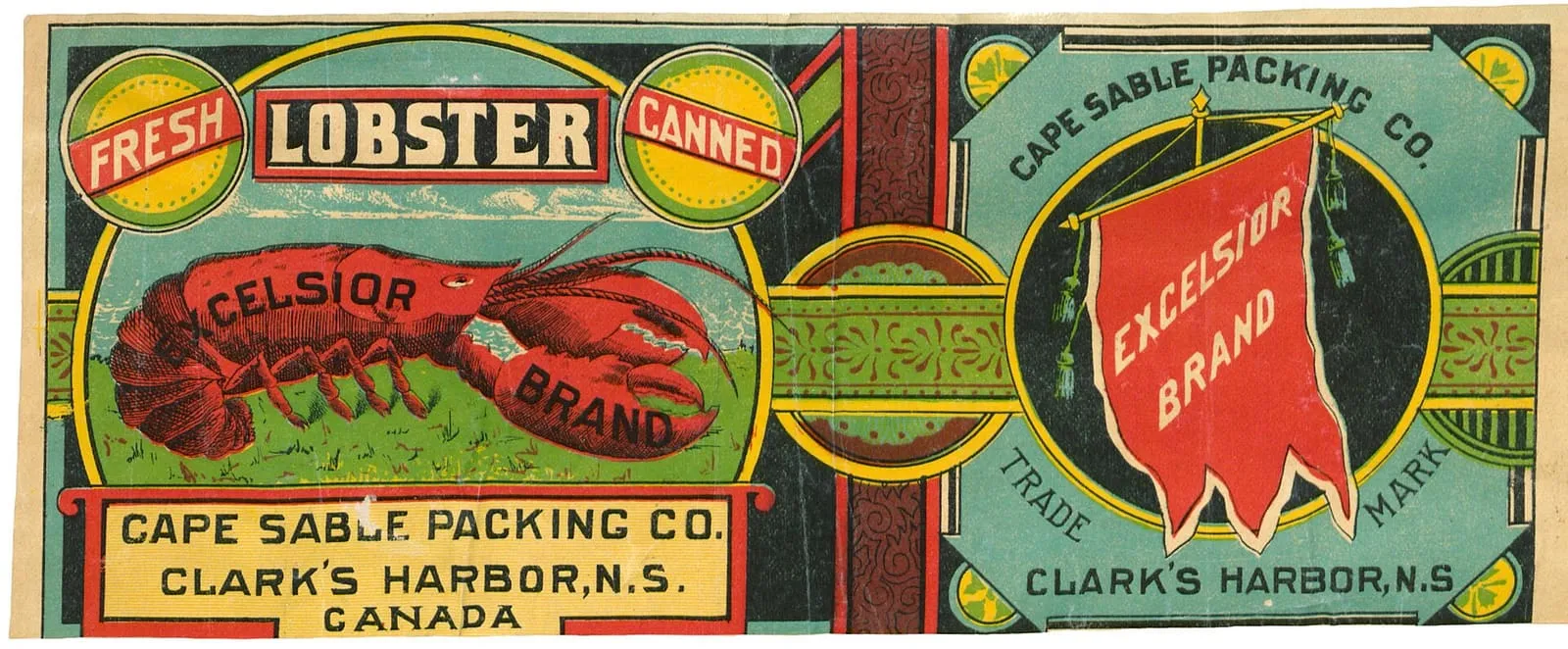
Photo: Nova Scotia Archives via Wikimedia Commons, public domain

Lobster here was once canned as well as shipped live. This label from Nova Scotia Archives’ collection, for the Cape Sable Packing Co.’s “Excelsior Brand,” gives the packer’s address as Clark’s Harbor. Our history of lobster in Nova Scotia explains how that canning era rose and fell.
Barrington’s wharves: where to see the fleet
The municipality lists 19 wharves in the municipality and the Town of Clark’s Harbour, including:
- Bear Point, Cape Negro and Clark’s Harbour
- Cripple Creek (Clam Point, Cape Sable Island)
- Ingomar (Black Point)
- Lower Wood’s Harbour, plus its Falls Point and Forbes Point wharves
- Newellton, Port La Tour and Upper Port La Tour
- Seal Island (Crowell’s Cove), far offshore
- Shag Harbour, plus Prospect Point
- Smithville, South Side, Stoney Island, Swims Point and West Head
These are working waterfronts, and the municipality asks visitors to remember that the wharves are busy with trucks and people. Park out of the way, stay off the boats unless invited, and pick your moment. The municipality says residents are usually willing to answer questions about their work. Pick a quiet moment, not the middle of unloading. Outside the LFA 34 season, in summer, the boats spend more time tied up, which makes for easy photos. For a sense of what all that gear looks like up close, see our lobster trap anatomy guide.
Things to do in Barrington and Shelburne County
Eat lobster, local style. The municipality says many county restaurants serve lobster, including traditional creamed lobster and lobster poutine. Our where to eat lobster in Nova Scotia guide covers the region. If you’d rather cook your own, buy from a local dealer and follow our guide to how to steam lobster.
Shelburne County Lobster Festival. The municipality says the county marks the end of the lobster season with a lobster festival on the first full weekend in June. Dates and events vary, so check local listings before you plan around it.
The lobster trap tree. Each winter, Tourism Nova Scotia says, a five-metre tree made from about 200 rectangular metal lobster traps goes up at the Cape Sable Island Causeway.
Lobster sculptures. The municipality’s lobster page also points visitors to its Canada 150 lobster sculptures, scattered around the area, and a downloadable Lobster Tales Lighthouse Trail.
Museums. The Barrington Woolen Mill is one of four sites in the Barrington Museum Complex, all within walking distance along the Barrington River. The water-powered mill operated in the late 1800s and early 1900s. Tourism Nova Scotia lists it as open June 1 to September 30, Monday to Saturday, 10 a.m. to 4:30 p.m. The listing also shows the Old Meeting House nearby on the same seasonal schedule. Hours change from year to year, so call ahead.
Visiting tips
- Summer is best for museums, beaches and festivals. Late November through winter is when you’ll see the fishery in action, though some tourist businesses close.
- The museum complex is on Highway 3 in Barrington. The Cape Sable Island causeway starts at Barrington Passage.
- Dumping Day, the late-November season opener, is a spectacle on every southwest Nova Scotia wharf. Watch from the shore and stay well clear of loaded boats.
- Remember that lobster season dates, festival dates and museum hours change. Check with the municipality (902-637-2015) or the business before you go.
For more Nova Scotia lobster culture, browse our travel, culture and history section.
Frequently asked questions
Which town is the lobster capital of Canada?
Barrington, in Shelburne County, Nova Scotia, uses the title 'Lobster Capital of Canada.' It is a promotional title rather than an official designation. Shediac, New Brunswick, calls itself the lobster capital of the world.
Is it true that 40 per cent of Canada's lobster comes from Barrington?
That figure comes from local and tourism promotion. The municipality has cited more than 38 per cent for LFA 34, and Tourism Nova Scotia cites about 40 per cent. We could not match either number to current DFO data. What DFO does confirm is that LFA 34, which includes Barrington, has the highest lobster landings of any fishing area in Canada.
When is lobster season in Barrington?
Barrington fishes the southwest Nova Scotia winter-spring season, which opens on Dumping Day in late November and runs to the end of May. The exact opening day depends on DFO and the weather.
Is Cape Sable Island an island?
Yes. Cape Sable Island, home to Clark's Harbour, has been joined to Barrington Passage on the mainland by a 3,100-foot causeway since May 1, 1949. Before that, a ferry made the crossing. The smaller, uninhabited Cape Sable, with Nova Scotia's tallest lighthouse, lies just off its southern tip.
Sources
We check facts against primary sources wherever possible. Season dates and regulations can change, so confirm with Fisheries and Oceans Canada before you rely on them.
- Lobster (Visiting Us) — Municipality of the District of Barrington
- Cape Sable Island Causeway / Cape Sable Island — Municipality of the District of Barrington
- Our Many Wharfs — Municipality of the District of Barrington
- Stock Status Update of Lobster in Lobster Fishing Areas 36 and 38 for 2023 (Science Response 2023/041) — Fisheries and Oceans Canada, 2023
- Good weather for Queens County lobster boats on Dumping Day — QCCR, 2025-11-24
- Nova Scotia's unique Christmas tree traditions — Tourism Nova Scotia
- Two Maritime towns vying to become the lobster capital of the world — CTV Atlantic, 2018-03-13
- Barrington Woolen Mill Museum — Tourism Nova Scotia
Image credits
- Header photo: Photo: Dennis G. Jarvis via Wikimedia Commons · CC BY-SA 2.0 (cropped and resized)
- Undated printed label for a can of Excelsior Brand lobster packed by the Cape Sable Packing Co. of Clark's Harbor, Nova Scotia, with a red lobster, a red pennant trademark and the words Fresh Lobster Canned: Photo: Nova Scotia Archives via Wikimedia Commons · Public domain (cropped and resized)
BarringtonShelburne CountyCape Sable IslandClark's HarbourBarrington PassageLFA 34Cape Islander