How to Store Live Lobster Before Cooking
How to store live lobster at home: fridge set-up, damp newspaper, why fresh water and ice melt kill lobsters, safe temperatures, how long they keep and coolers.
By NovaShell Editorial Team · · 7 min read
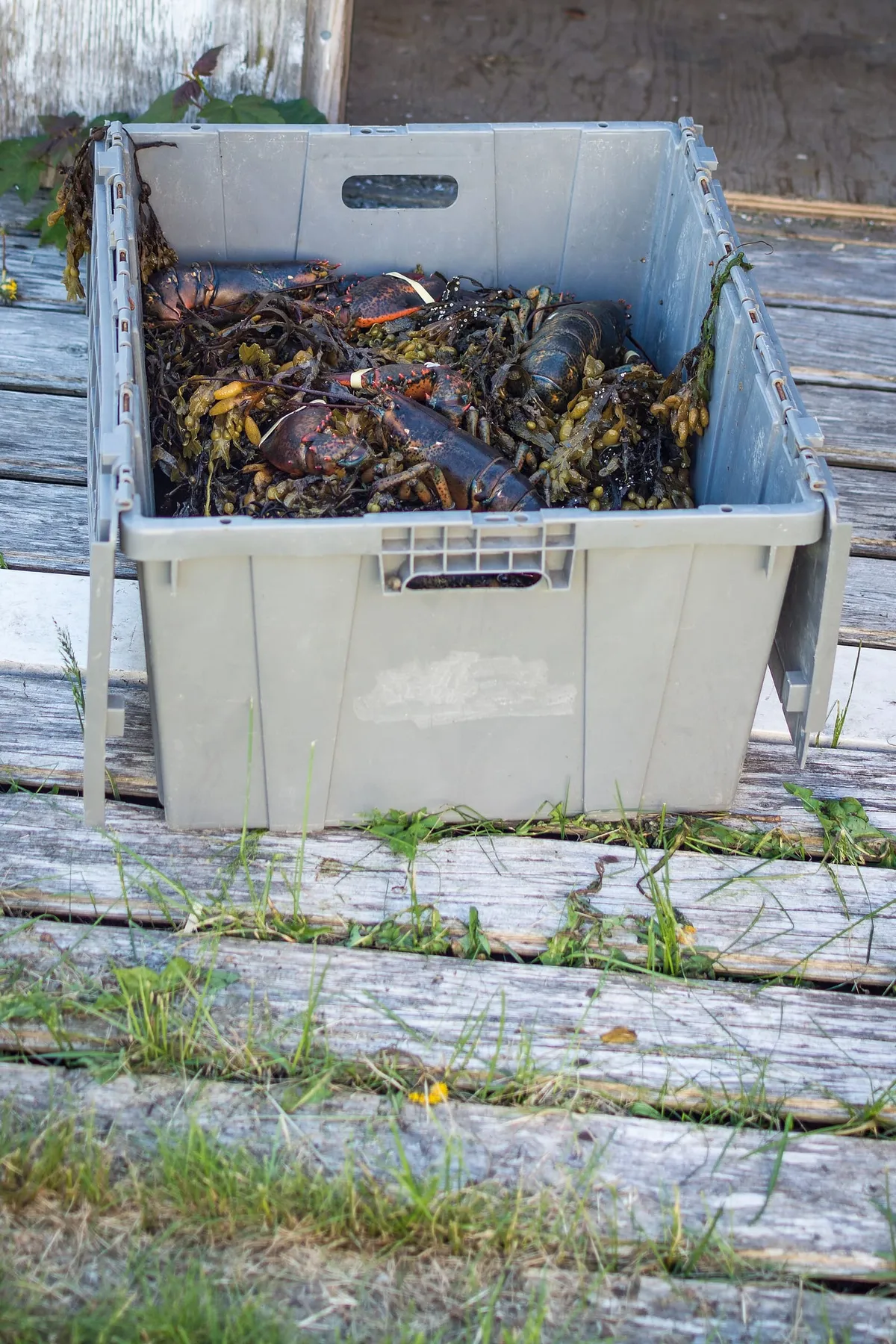
To store live lobster, put it in an open container in the coldest part of your fridge and cover it with damp newspaper or a damp towel. Keep it moist but not submerged, and never in fresh water or sitting in melting ice. Stored that way, live lobster keeps 36 to 40 hours out of water, according to the Lobster Council of Canada. It’s best to cook it the same day or the next.
Buying a day ahead is normal in Nova Scotia, whether you’re picking up lobsters from a wharf, a pound or a fish counter. Our pillar guide to buying live lobster in Nova Scotia covers the buying. This article covers the hours between bringing them home and dropping them in the pot.
Why storage matters: gills, cold and moisture
A lobster out of water is a sea animal holding its breath, and two things keep it going.
- Moist gills. Lobsters breathe through gills, and Fishermen’s Voice, reporting on handling advice from Maine’s Lobster Institute and the AVC Lobster Science Centre in Prince Edward Island, notes they have “twenty sets of feathery gills, which need constant bathing in well-oxygenated ocean water.” Out of the sea, damp gills can still take in some oxygen. Dry gills can’t.
- Cold. A cold lobster is a slow lobster, and a slow lobster uses less oxygen. In a 2007 study published in Comparative Biochemistry and Physiology, Lorenzon and colleagues note that American lobsters “can survive 2-3 days out of water if kept cool and humid.” In their transport trial, lobsters held at 15°C showed much greater stress, and slower recovery, than those at 6°C.
Everything below is about keeping lobsters cold, damp and breathing, without drowning, freezing or suffocating them.
How to store live lobster in the fridge, step by step
- Get them home cold. Ask the seller to pack them with damp newspaper or seaweed. In summer, bring a cooler (see below).
- Use an open container. A roasting pan, a cardboard box or a plastic tub with the lid off or cracked open. The Lobster Council says to use “an open container in a refrigerator.” Never use a sealed bag or a tight lid: lobsters need air.
- Cover with something damp. Wet some newspaper or a clean tea towel with cold water, wring it out and lay it over the lobsters. If they came in rockweed, leave it on and keep it damp.
- Put them in the coldest part of the fridge. That’s usually the back of the bottom shelf. Avoid the door, which warms up every time it opens.
- Leave the bands on. The claw bands protect you, and they stop the lobsters damaging each other.
- Check them once or twice. Re-dampen the covering if it has dried out. Look for the signs of weakening below.
- Cook them alive. When you’re ready, go straight from fridge to pot. Our pillar guide on how to cook lobster the Nova Scotia way and the lobster boiling time chart take it from there.
One more practical point: put the container on the bottom shelf, below ready-to-eat food. Health Canada’s safe food storage advice is to keep raw seafood on the bottom shelf so drips can’t reach other food.
What temperature should live lobster be stored at?
Cold, but above freezing.
| Setting | Temperature | Notes |
|---|---|---|
| Home fridge | 4°C (40°F) or lower | Health Canada’s recommended fridge setting |
| Export cold room, Halifax airport | About 4°C (39°F) | Gateway’s live-lobster warehouse, as described by Fishermen’s Voice in 2016 |
| Warm room or car | 15°C and up | Lorenzon et al. found much greater stress at 15°C than at 6°C |
| Freezer | −18°C (0°F) | Kills them. Only for cooked or properly prepared lobster |
A fridge thermometer costs a few dollars and tells you whether your fridge is cold enough. The U.S. Food and Drug Administration also recommends one for seafood storage.
Don’t let lobsters touch the back wall of a fridge that frosts up, and never “chill them down” in the freezer before cooking. A frozen lobster is a dead lobster.
How long can you store live lobster?
Sources differ, so here’s what each one says:
| Source | How long | Conditions |
|---|---|---|
| Lobster Council of Canada | 36 to 40 hours out of water | Cool, damp, open container in the fridge, gills kept moist with damp newspaper or towels |
| Lorenzon et al. (2007), scientific study | 2 to 3 days | “Kept cool and humid,” a statement about the species in commercial transport |
| Health Canada storage chart | 12 to 24 hours | Listed for “Shellfish – clams, crab, lobster etc.” in the fridge at 4°C or lower |
The Health Canada figure is a general food-storage guideline for shellfish, not a lobster-survival figure. Still, it’s the most cautious number from a Canadian government source.
Our advice: plan to cook live lobster on the day you buy it, or the next day. Overnight is fine. Two nights is pushing it, and every hour adds stress and costs a bit of meat quality. If plans change, it’s better to cook the lobsters on schedule and refrigerate the cooked meat. The Lobster Council says cooked lobster keeps up to three days in airtight containers, and picked meat up to four. Health Canada’s chart is shorter, at 1 to 2 days for cooked shellfish, so we’d go with that.
Weaker lobsters keep less well. A recently moulted, soft-shell lobster is more fragile in storage than a hard-shell one; see hard-shell vs soft-shell lobster. Small canners don’t have the reserves of a big lobster either; our guide to lobster sizes and grades explains the size names.
Can you put lobster in fresh water?
No. This is the most common way home cooks kill lobsters by accident. The Lobster Council of Canada is blunt: “As a saltwater creature, make sure lobsters are not exposed to fresh water of any kind, ice or otherwise.”
That rules out:
- a sink or bathtub of tap water;
- a bucket of melting ice;
- a cooler where ice has melted into a puddle around the lobsters;
- rinsing them under the tap and leaving them wet.
What about salt water? Pounds and dealers hold lobsters in cold seawater systems built to keep the water moving and full of oxygen. A bucket of still seawater at home soon runs short of oxygen and warms up, so a damp fridge is the better choice unless you have proper holding gear.
Signs your stored lobster is weakening
Check your lobsters before cooking. A healthy lobster that has spent a night in the fridge will be slower than it was in the tank, because it’s cold, but it should still react.
| Sign | What it means | What to do |
|---|---|---|
| Legs move, claws lift, tail curls under when picked up | Lively | Cook as planned |
| Slow but moves legs and tail when handled | Sluggish | Cook now; don’t hold it longer |
| Claws droop, legs barely twitch, tail hangs limp | Very weak or dying | Cook immediately or discard |
| No response at all, even after warming a minute | Probably dead | Discard |
This follows the Lobster Council’s rule: “Any sluggish lobster should be cooked immediately, and non-responsive lobsters that may be dead should be discarded.” The FDA puts it simply: live lobsters “should show some leg movement,” and lobsters “spoil rapidly after death,” so only live ones should be prepared.
Give a cold lobster a minute or two out of the fridge before you judge it. Cold slows everything, and a lobster that seems limp at first often perks up once handled.
Transporting live lobster in a cooler
For the drive home from a South Shore wharf or a Cape Breton pound, or a cottage weekend without a big fridge:
- Pre-chill the cooler with ice packs for half an hour.
- Use frozen gel packs or ice sealed in zip-top bags, never loose ice. You want cold without fresh meltwater.
- Add a buffer layer. Put several sheets of damp newspaper, or damp seaweed, between the ice packs and the lobsters so they don’t freeze where they touch.
- Lay the lobsters on top in a single layer if you can, and cover them with more damp newspaper.
- Leave the lid slightly open or open it every few hours on long trips, so they get some air.
- Keep the cooler in the shade and in the car, not the trunk on a hot day. Fishermen’s Voice reports harvesters’ experience that sun and wind dry lobsters out and cost them weight.
- Drain any meltwater that collects.
On arrival, move them to the fridge as above. Gentle handling helps too. The Lobster Institute’s advice in Fishermen’s Voice is to handle each lobster as you would an egg: no throwing or dropping.
Quick checklist
- Open container, coldest part of the fridge, at 4°C or lower
- Damp newspaper, towel or seaweed on top; re-wet as needed
- No fresh water, no loose ice, no sealed bags, no freezer
- Cook within about 24 hours; cook sluggish ones first; discard dead ones
For more on choosing, storing and planning, browse our buying and storing hub.
Frequently asked questions
How do you keep a lobster alive overnight?
Put it in an open container or a box in the coldest part of the fridge, covered with damp newspaper or damp towels so the gills stay moist. Don't seal it in, don't put it in fresh water and don't sit it on ice. Cook it the next day.
How long can live lobster stay in the fridge?
The Lobster Council of Canada says live lobster keeps 36 to 40 hours out of water in a cool, damp place such as an open container in the fridge. Health Canada's general chart lists shellfish such as lobster at 12 to 24 hours refrigerated, so cooking within a day is the safest plan.
Can you put lobster in fresh water?
No. Lobsters are saltwater animals, and the Lobster Council of Canada says they should not be exposed to fresh water of any kind, including melting ice. A tap-water bath will kill them.
What temperature should live lobster be stored at?
Cold but not freezing. A home fridge set at 4°C (40°F) or lower, as Health Canada recommends, works well. Research on lobster transport shows warmer storage causes far more stress, so keep them out of the door and away from warm spots.
Should live lobster be stored on ice?
Not directly. Melting ice is fresh water, which harms lobsters. In a cooler, use frozen gel packs or ice sealed in bags, with a layer of damp newspaper between the ice and the lobsters.
Sources
We check facts against primary sources wherever possible. Season dates and regulations can change, so confirm with Fisheries and Oceans Canada before you rely on them.
- Handling Lobster — Lobster Council of Canada
- Safe food storage — Health Canada
- Selecting and Serving Fresh and Frozen Seafood Safely — U.S. Food and Drug Administration
- Stress effect of different temperatures and air exposure during transport on physiological profiles in the American lobster Homarus americanus (Lorenzon, Giulianini, Martinis and Ferrero) — Comparative Biochemistry and Physiology Part A (record at University of Trieste), 2007
- Protecting Lobster from Ocean to Plate — Fishermen's Voice, 2010
- Gateway Ships 90 Tons of Lobster on One Plane — Fishermen's Voice, 2016
Image credits
- Header photo: Photo: Jeremy T. Hetzel via Wikimedia Commons · CC BY 2.0 (cropped and resized)
live lobsterstoragerefrigeratorfood safetycooler