Lobster Mac and Cheese Recipe with Nova Scotia Cheddar and Lobster Stock
A baked lobster mac and cheese made with lobster stock in the cheese sauce, sharp Nova Scotia cheddar and a crisp crumb top. Plus make-ahead and reheating tips.
By NovaShell Editorial Team · · 6 min read
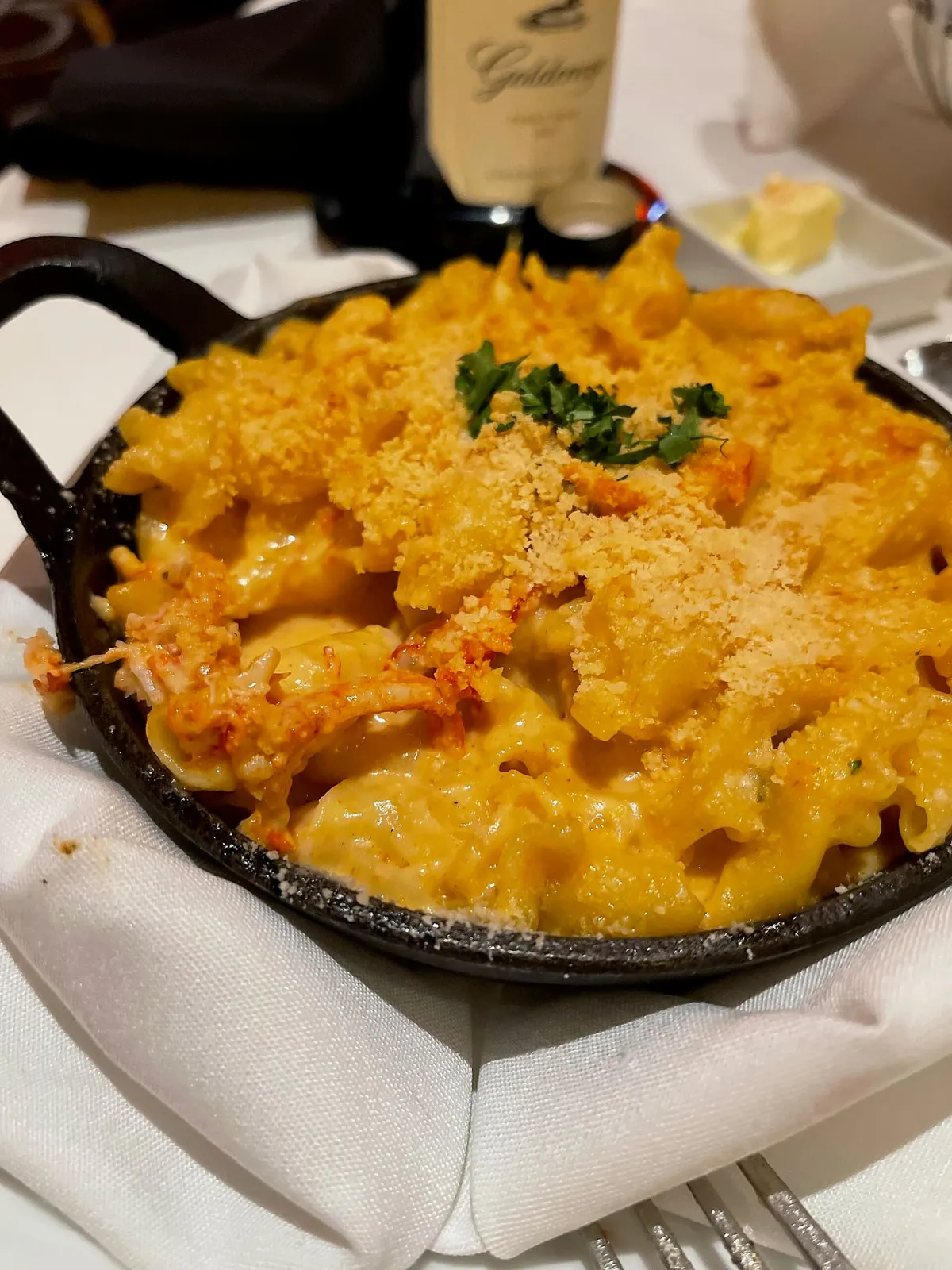
The best lobster mac and cheese is a baked one where the cheese sauce tastes of lobster too, not just the chunks folded through it. The trick is replacing some of the milk in the béchamel with lobster stock, then using a sharp aged cheddar that stands up to it, and folding in big pieces of lobster at the very end so they stay tender. The recipe card below makes six main-course servings from about two 1½ lb lobsters.
If you are starting with live lobsters, our pillar guide on how to cook lobster the Nova Scotia way covers the basics, and our steaming guide with a timing chart is a tidy method for lobsters headed into a casserole. Keep the shells: they make the stock for the sauce.
Why use lobster stock in the cheese sauce?
Most lobster mac n cheese recipes put lobster into an ordinary cheese sauce, and the result tastes like mac and cheese with lobster in it. A cup of lobster stock in the béchamel changes that. It gives the sauce a gentle sweetness and a faint shellfish depth that ties the dish together, and it keeps the sauce a little lighter than an all-cream version.
You do not need much stock, so a small batch from the shells of the two lobsters you are cooking is enough. Rinse the shells and bodies, pull off the feathery gills and the gritty stomach sac behind the eyes, then simmer the shells in about 1 L (4 cups) of water with a slice of onion and a bay leaf for 45 minutes to an hour, and strain. Leave the green tomalley out; Health Canada advises that children not eat it and that adults limit it to the amount from one cooked lobster per day, because it can carry paralytic shellfish toxins. The lobster meat itself is not a concern.
No shells handy? Use a light seafood stock, or replace the stock with more milk. The dish will still be very good, just milder.
Choosing cheese: a Nova Scotia cheddar suggestion
Cheese is where you can make this a Nova Scotia dish. Use two kinds:
| Role | Good choices | Why |
|---|---|---|
| Flavour | Old or extra-old cheddar | Sharp, savoury, holds its own against the sauce |
| Melt | Gruyère, Gouda, Havarti or a young cheddar | Smooth, stretchy, keeps the sauce silky |
| Topping | Parmesan in the crumbs | Salty crunch on top |
For the cheddar, look for one made in the province. One example is Knoydart Farm in Merigomish, on the Northumberland Shore. Its Tourism Nova Scotia listing describes a Double Gloucester-style cheddar sold plain, aged and in flavours, made from the farm’s own milk and sold at its cheese house, at the Antigonish farmers’ market and at select Sobeys locations and independent delis in the Maritimes. Choose the plain aged one here; flavoured cheddars (smoked, chili, garlic) can drown out the lobster. As always, call ahead before driving out to a farm shop.
If you want to explore further, Taste of Nova Scotia and Dairy Farmers of Nova Scotia launched the Nova Scotia Cheese Trail in August 2025, with seven cheesemakers and 14 stops in its first year. It is an easy way to find local cheese for this dish and taste it before you buy.
Havarti is another good melting partner. Tourism Nova Scotia’s lobster dining roundup features a Cape Breton restaurant in Pleasant Bay that serves its lobster mac n’ cheese with Havarti, proof that this dish has a place on Nova Scotia menus.
A few cheese tips that apply to any brand:
- Grate it yourself. Pre-shredded cheese is coated with anti-caking starch that can make the sauce gritty.
- Add cheese off the heat. Boiling a cheese sauce can make it split and turn oily.
How to keep the lobster tender in baked lobster macaroni
Lobster is already cooked when it goes in, so the oven’s only job is to heat it. A few rules:
- Undercook the pasta by 2 minutes. It finishes softening in the sauce as it bakes. Fully cooked pasta turns mushy.
- Cut the lobster large. Big pieces of claw and tail stay juicy; small shreds dry out and vanish.
- Fold the lobster in last, after the pasta, with a gentle hand.
- Bake hot and short. At 190°C (375°F), 20 to 25 minutes is enough for a 2 L dish to bubble at the edges. Individual dishes take 15 to 18 minutes.
- Hold back a few pieces. For a restaurant-style finish, warm a few claws in a little butter and set them on top just before serving.
Smaller, less expensive lobsters are perfect here since the meat gets cut up anyway. Our guide to lobster sizes and grades explains the names you will see at the counter, and our look at lobster prices in Nova Scotia explains why the per-pound price moves through the year.
Variations on lobster mac n cheese
Once you have the base down, it is easy to adjust:
- Leeks or shallots: Soften a thinly sliced leek or two shallots in the butter before adding the flour. They add sweetness that suits lobster well.
- Green peas: A cup of frozen peas folded in with the pasta adds colour and makes it feel more like a complete supper.
- Lobster butter topping: Warm the shells in the butter for the crumbs for 5 minutes, strain, and use that orange butter for the panko. It is extra work, but the top tastes of lobster.
- Scallops or shrimp: Stretch a single lobster by adding 225 g (½ lb) of raw bay scallops or peeled shrimp with the lobster. They cook through in the oven.
- Stovetop version: Skip the oven entirely. Make the sauce, stir in the pasta and lobster, heat gently until steaming and serve straight from the pot, topped with buttered toasted crumbs. Creamier, faster, and less crisp.
- A little heat: A spoonful of Dijon mustard or a dash of hot sauce in the sauce sharpens the cheddar without making it spicy.
Make-ahead lobster mac and cheese
This is a good dish for entertaining because most of the work can be done in advance.
- Up to a day ahead: Make the sauce, mix in the pasta and lobster, spread it in the dish, let it cool, cover tightly and refrigerate. Keep the crumb topping in a separate container. When ready, scatter on the topping and bake straight from the fridge, adding 10 to 15 minutes, until bubbling in the centre.
- Further ahead: Make and freeze the lobster stock, or cook and pick the lobster a day before and store the meat cold. Health Canada’s safe food storage chart lists cooked shellfish at 1 to 2 days in the fridge (4°C or colder) and 2 to 4 months in the freezer, so plan your timing around the lobster, not the pasta.
- Freezing the finished dish: Possible, but the sauce can turn grainy and the lobster firmer. If you must, freeze it unbaked and well wrapped, thaw overnight in the fridge, then bake.
Reheating leftovers
Refrigerate leftovers promptly in shallow containers and eat them within a day or two. Health Canada’s leftovers advice is to reheat to 74°C (165°F), checked with a food thermometer. For the best texture, add a splash of milk, cover with foil and warm in a 175°C (350°F) oven until hot through, then uncover for the last few minutes to re-crisp the top. Microwaving works for a single portion; stir halfway and add a spoonful of milk.
What to serve with lobster mac and cheese
It is rich, so keep the sides fresh: a green salad with a sharp vinaigrette, roasted broccoli, or a bowl of crisp coleslaw. For a full lobster spread, start with small cups of our Nova Scotia lobster chowder, or turn the leftover meat from a big lobster boil into classic Nova Scotia lobster rolls the next day. Browse more ideas in our lobster recipes section, or read up on the fishery itself in the complete guide to Nova Scotia lobster.
Recipe
Baked Lobster Mac and Cheese
- Serves
- 6 main-course servings (or 8 to 10 sides)
- Prep
- 30 min
- Cook
- 45 min
- Total
- 1 hr 15 min
Ingredients
- 350 to 450 g (¾ to 1 lb) cooked lobster meat, from about 2 lobsters of 1½ lb (680 g) each
- 340 g (12 oz) short pasta such as cavatappi, elbows or medium shells
- 5 tbsp butter, divided
- ⅓ cup (40 g) all-purpose flour
- 500 ml (2 cups) whole milk, warmed
- 250 ml (1 cup) lobster stock or seafood stock, warmed
- 1 tsp dry mustard powder
- Pinch each of cayenne and freshly grated nutmeg
- 250 g (about 2½ cups grated) old or extra-old cheddar, preferably Nova Scotia-made
- 100 g (about 1 cup grated) Gruyère or Gouda
- Salt and black pepper
- 1 cup panko breadcrumbs
- ¼ cup finely grated Parmesan
- 1 tbsp chopped chives or parsley, to finish
Method
- Heat the oven to 190°C (375°F) and butter a 2 L (8 x 8 inch or similar) baking dish or six individual ovenproof dishes.
- Cut the lobster meat into large bite-sized pieces, keeping claws in halves if they are big. Refrigerate until needed.
- Boil the pasta in well-salted water for 2 minutes less than the package says. Drain, rinse briefly with cold water to stop the cooking, and set aside.
- In a large saucepan, melt 3 tbsp butter over medium heat. Whisk in the flour and cook, whisking, for 2 minutes without letting it brown.
- Gradually whisk in the warm milk, then the warm lobster stock. Simmer gently, whisking often, for 5 to 7 minutes, until the sauce coats the back of a spoon. Stir in the mustard, cayenne and nutmeg.
- Take the pan off the heat. Add the cheddar and Gruyère or Gouda a handful at a time, stirring until smooth. Season with salt and pepper; the sauce should taste a little over-seasoned, since the pasta will absorb it.
- Fold in the pasta, then gently fold in the lobster. Spread the mixture in the prepared dish.
- Melt the remaining 2 tbsp butter and toss it with the panko and Parmesan. Scatter evenly over the top.
- Bake for 20 to 25 minutes, until the sauce is bubbling at the edges and the top is golden. For a deeper colour, broil for 1 to 2 minutes, watching closely. Rest for 5 minutes, sprinkle with chives and serve.
Frequently asked questions
What is the best cheese for lobster mac and cheese?
A sharp, aged cheddar for flavour plus a smooth melting cheese such as Gruyère or Gouda for texture. Avoid very strong blue or smoked cheeses, which hide the lobster.
How much lobster do you need for lobster mac and cheese?
About 350 to 450 g (¾ to 1 lb) of cooked meat for 340 g (12 oz) of dry pasta, which serves six. That is roughly two 1½ lb lobsters.
Can you make lobster mac and cheese ahead of time?
Yes. Assemble it without the crumb topping, cover and refrigerate for up to a day, then add the topping and bake, allowing 10 to 15 minutes extra. Health Canada lists cooked shellfish at 1 to 2 days in the fridge, so don't push it longer.
How do you keep lobster from getting rubbery in mac and cheese?
Use lobster that was cooked just through, cut it into large pieces, fold it in at the end, and bake only until the sauce bubbles. The meat only needs to heat through.
Can you freeze lobster mac and cheese?
You can, but the sauce may turn grainy and the lobster firmer. If you do, freeze it unbaked and well wrapped, thaw it in the fridge, and bake until it is 74°C (165°F) in the centre.
Sources
We check facts against primary sources wherever possible. Season dates and regulations can change, so confirm with Fisheries and Oceans Canada before you rely on them.
- Knoydart Farm — Tourism Nova Scotia
- Taste of Nova Scotia launches new culinary trail in partnership with Dairy Farmers of Nova Scotia: the Nova Scotia Cheese Trail — Taste of Nova Scotia, 2025
- How would you like your lobster served? — Tourism Nova Scotia
- Safe food storage — Health Canada
- Food safety tips for leftovers — Health Canada
- Health Canada reminding Canadians to limit consumption of lobster tomalley — Health Canada, 2014
Image credits
- Header photo: Photo: Sarah Stierch via Wikimedia Commons · CC BY 4.0 (cropped and resized)
mac and cheesepastabakedrecipescheddarcomfort food