The History of Lobster in Nova Scotia: From Poor Man's Food to Global Export
The history of lobster in Nova Scotia, from Mi'kmaw harvests and 'poor man's food' to the canning boom, the live trade and a $1.3 billion export fishery.
By NovaShell Editorial Team · · 8 min read
The history of lobster in Nova Scotia runs from Mi’kmaw harvests in shallow coves to a fishery whose lobster exports were worth about $1.3 billion in 2024. For most of the 1800s, lobster was plentiful, cheap and often looked down on. Canning turned it into an export from the mid-1800s, a live trade to the United States took off in the 1880s, and live lobster has been the backbone of the industry since the Second World War. The “delicacy” label came late, and in many coastal homes the old “poor man’s food” image hung on well into the 1900s.
This article walks through that story in order, with dates you can check. For how the fishery works today, start with our Nova Scotia lobster guide and the explainer on Nova Scotia’s lobster fishing areas.
Lobster history in Nova Scotia: a quick timeline
| When | What happened |
|---|---|
| Before European contact | Mi’kmaw harvesters take lobster (jakej) in spring and fall with traps and spears |
| 1597 | A single haul of a small dragnet in the harbour at Cibou (Sydney, Cape Breton) is said to have brought up 140 lobsters |
| About 1850 | Commercial lobster fishing begins in Canada, on a small scale |
| 1851 | Five small canneries are operating in western Nova Scotia |
| About 1870 | Official catch statistics begin and the fishery expands rapidly |
| 1873 | First federal rules restrict landing soft-shell and egg-bearing lobsters |
| 1879 | Closed seasons are introduced in the Bay of Fundy |
| 1880s | Live-lobster markets in the United States are developed |
| 1885–86 | Landings in the Maritimes and Quebec peak at nearly 100 million pounds |
| 1899 | Size limits are introduced |
| 1900 | More than 760 canneries are active in the Maritime Region |
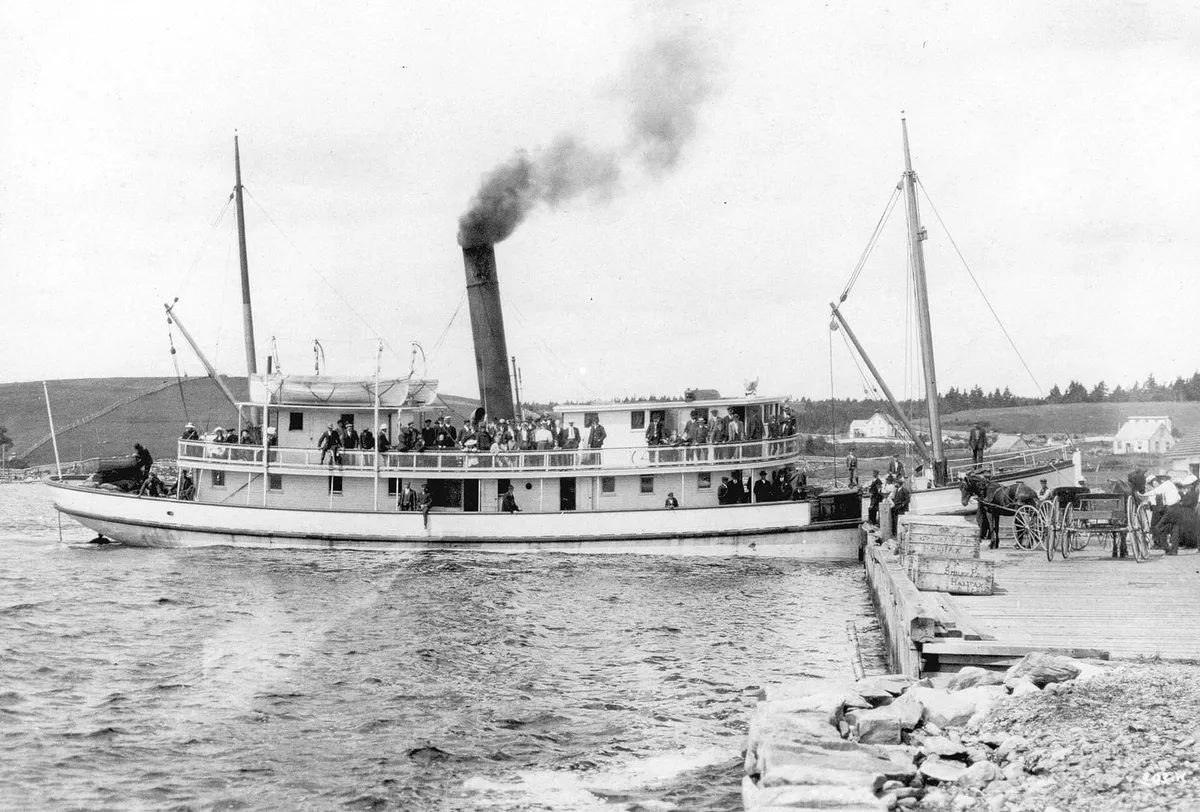
| About 1910 | Lobster crates travel by coastal steamer to Halifax, then by rail to Yarmouth and on to Boston |
| 1918 | Landings fall to a low of 26 million pounds |
| 1967–68 | Limited-entry licensing comes to the Maritimes |
| 2015–16 | Maritimes Region inshore landings reach a record 60,819 tonnes |
| 2024 | Nova Scotia exports $1.3 billion worth of lobster, $1.03 billion of it live |
Sources: DFO’s inshore lobster management plan, DFO’s 1988 Scotia-Fundy plan, the Fisheries Research Board’s 1954 review, Nova Scotia Archives and the province’s 2024 seafood snapshot, all listed below.
How did the Mi’kmaq fish for lobster?
Lobster was food long before it was a commodity. Fisheries and Oceans Canada (DFO) traces the inshore harvest back to pre-colonial times, when Indigenous harvesters took lobster, jakej, through the spring and fall using traps and spears.
A local-history project from River John, published by the Pictou-Antigonish Regional Library, records a different Mi’kmaw name, Wolum Keeh. It describes lobster as a source of food, fertilizer and ornamental material. It also describes fishers spearing lobsters in shallow water by torchlight on calm evenings. By day, they would spread oil on the surface to darken the water and toss out cod heads as bait. Those accounts come from oral and local tradition rather than archaeology, so read them as how the story has been handed down.
Just how plentiful were lobsters?
Early accounts describe a sea crowded with them. The River John history cites a 1597 report that one haul of a little dragnet at Cibou, now Sydney Harbour, brought up 140 lobsters. It also says that in storms lobsters washed up on shore.
The size of those early animals is better documented. When commercial fishing began, the grounds held large, old lobsters that had built up over many years. A 1954 Fisheries Research Board of Canada review notes that in 1873, lobsters along the New Brunswick shore of the Northumberland Strait averaged 2 to 3 pounds. Within about a decade, fishers across the Maritimes were alarmed at how small the catch had become. Today’s minimum legal size rules exist because of that early lesson.
Was lobster really “poor man’s food”?
That’s the most repeated line in lobster history, and in Nova Scotia it has real roots. The River John history says lobster was so abundant “that it was not a valued commodity and was considered a poor man’s food.” It adds that in the early 1900s, children who brought lobster sandwiches to school were seen as “the poor kids in town.”
Folklorist Diane Tye looked hard at these stories in a 2011 study of Maritime lobster narratives. She identifies two that almost every Maritimer has heard: farmers spreading lobsters on their fields as fertilizer, and families ashamed to be seen eating it. She quotes a memoir of a 1940s and 1950s Nova Scotia childhood: “We ate lobster because we were poor.” She also cautions that these stories are hard to document and probably happened less widely than their popularity suggests. Their staying power says as much about Maritime identity as about the menu.
Prices back up the low status. In the early years of Pictou County canning, packers paid fishers by count, not weight: 40 to 50 cents for a hundred lobsters regardless of size, according to the River John history. As late as 1953, the Fisheries Research Board called 30 cents a pound “unusually high” and used 10 cents a pound as a comparison price.
How canning turned lobster into an export
Lobster can’t be dried or salted like cod, so before canning it had to be eaten fresh and close to shore. DFO’s 1988 Scotia-Fundy management plan says that up to the mid-1800s lobsters were eaten locally and export markets were “nominal.” It continues:
- by 1851, five small canneries were operating in western Nova Scotia;
- the first large cannery was built in 1869;
- by 1900, more than 760 canneries were active in the Maritime Region, most shipping their product to the United Kingdom.
Sources disagree about the very first cannery. The 1988 plan names 1834 in New Brunswick, Tye cites a historian who dates lobster canning in Saint John to about 1840, and DFO’s current plan says “1884,” which can’t be the first given everything above. The safe summary is that canning spread through the Maritimes from the mid-1800s and boomed in the 1870s and 1880s.
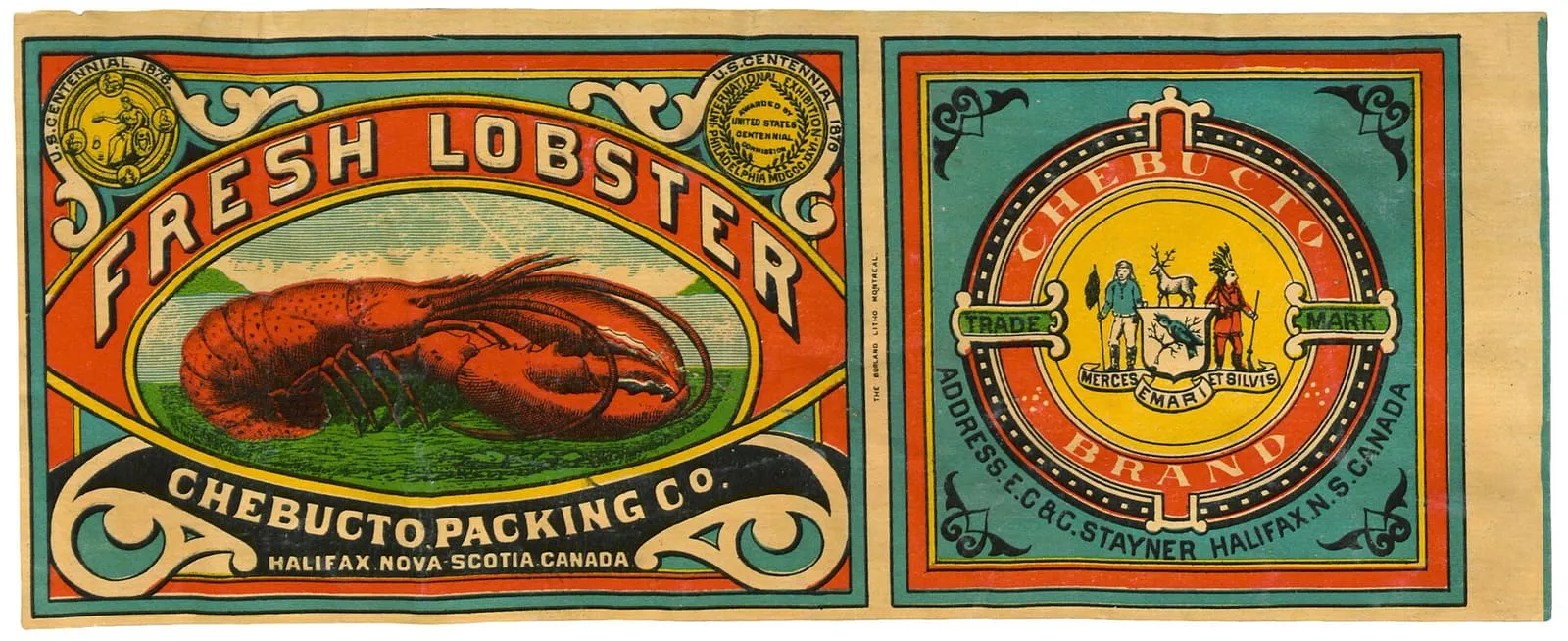
Photo: Nova Scotia Archives via Wikimedia Commons, public domain

Early processing was rough. On the North Shore, the River John history says, families boiled lobsters on the kitchen stove, picked the meat, packed it into one-pound cans and soldered them shut. The spoilage rate was high, and the joke was that lobster was “green in the sea, red in the pot and black in the can.” Boston’s Shedd & Knox built a lobster factory on Pictou Island in the 1870s, and others followed.
The boom was fast and it cost the stocks. The Fisheries Research Board says Canadian lobster fishing started about 1850 and stayed small for 20 years, then grew rapidly from about 1870. Landings in the Maritimes and Quebec hit nearly 100 million pounds in 1885 and 1886, then fell for 30 years to a low of 26 million pounds in 1918. Ottawa responded with the first rules on soft-shell and egg-bearing lobsters in 1873, Bay of Fundy seasons from 1879, and size limits from 1899. DFO notes that enforcement stayed patchy for decades. Our guide to Nova Scotia lobster regulations picks up the story from there. The canning trade also left a word behind: small lobsters are still called “canners,” as our guide to lobster sizes and grades explains.
The live trade: steamers, rail and Boston
The 1988 plan says live-lobster markets in the United States were “developed and secured” during the 1880s. That shift away from canned lobster, together with a shrinking British market, led to the decline of the canneries.
Getting a live lobster from a Nova Scotia cove to a Boston restaurant took planning. The hero photo above, held by Nova Scotia Archives, shows the 211-ton steamer Dufferin at Port Dufferin on the Eastern Shore around 1910. Smiley & Company’s lobster crates wait on the wharf. The steamer carried lobsters to Halifax each spring. There, the crates were sunk overnight in the harbour to keep the animals alive, then sent by rail to Yarmouth and on to Boston.
Keeping lobsters alive in transit, rather than cooking and canning them, is still the core of the business. Our guide on how to buy live lobster explains what that means for shoppers today.
When did lobster become a delicacy?
There’s no single date, because lobster became a luxury in different places at different times.
- In export markets, lobster was a valued product from the late 1800s, as canned lobster sold in Britain and live lobster in US cities.
- In Nova Scotia itself, the cheap image lasted much longer. Tye quotes a 1947 lobster buyer who didn’t eat lobster himself, because it was for “fancy eating places.” She links the change in local status to the move to baited traps and the growth of the live market in the 1950s.
- In the industry’s own terms, DFO says live lobster has been the mainstay of the fishery since the Second World War.
The fair answer is that lobster became a delicacy as the live trade grew. Prices then rose to match demand from distant restaurants rather than what a coastal family would pay.
Limited entry and the modern export boom
The modern fishery took shape in the late 1960s. DFO brought in limited-entry licensing in 1967 and extended it across the rest of the Maritimes in 1968. Trap limits followed, according to the 1988 plan. Inshore landings in DFO’s Maritimes Region climbed from just under 15,000 tonnes in 1995–96 to a record 60,819 tonnes in 2015–16.
Most of that catch now leaves the province. In 2024, Nova Scotia exported $1.3 billion worth of lobster, according to the province’s seafood snapshot, and $1.03 billion of that was live. Much of the live catch flies out of Halifax. In 2019, Air Cargo Week reported Halifax Stanfield’s live-lobster exports at C$215.7 million and 11,495 tonnes a year. A century ago, coastal steamers and trains carried Nova Scotia lobsters to Boston. Today many of them fly.
To see how lobster is caught today, read how lobsters are caught in Nova Scotia. To taste the end result, see our region-by-region guide to eating lobster. More stories like this one are collected under travel, culture and history.
Frequently asked questions
Was lobster really considered poor man's food in Nova Scotia?
Yes, as a widely shared tradition. Local histories describe lobster as so plentiful in the 1800s that it had little value, and a memoir of a 1940s and 1950s Nova Scotia childhood says, 'We ate lobster because we were poor.' Folklorist Diane Tye notes these stories are hard to document in detail, so treat the most dramatic versions as folklore.
When did lobster become a delicacy?
Gradually. Canned and live lobster sold well in British and American cities from the late 1800s, but in Nova Scotia itself the 'poor food' image lingered into the mid-1900s. Live lobster has been the mainstay of the industry since the Second World War, and that live trade is what made lobster an expensive restaurant dish.
When did lobster canning start in Nova Scotia?
In the mid-1800s. A DFO history says five small canneries were operating in western Nova Scotia by 1851, and the industry boomed in the 1870s and 1880s. By 1900 there were more than 760 canneries in the Maritime Region. Sources disagree on which cannery was the very first.
How did the Mi'kmaq catch lobster?
DFO's management plan says Indigenous harvesters took lobster (jakej) in spring and fall using traps and spears. Local histories also describe spearing lobsters in shallow water, sometimes by torchlight.
Sources
We check facts against primary sources wherever possible. Season dates and regulations can change, so confirm with Fisheries and Oceans Canada before you rely on them.
- Integrated Fisheries Management Plan: Inshore Lobster, LFAs 27–38 (Maritimes Region) — Fisheries and Oceans Canada, 2019
- 1988 Inshore Lobster Fishery Management Plan, Scotia-Fundy Region (Historical Overview) — Fisheries and Oceans Canada, 1988
- The Lobster Fishery of the Southern Gulf of St. Lawrence (General Series Circular No. 24) — Fisheries Research Board of Canada (D. G. Wilder), 1954
- Lobster Tales: Narratives of Food, Past, and Place in Maritime Canada — Diane Tye, Cuizine: The Journal of Canadian Food Cultures, 2011
- The American Lobster: History of Lobster Fishing and Processing — Pictou-Antigonish Regional Library / River John Community Access Program, 2002
- Steamer Dufferin at the Government Wharf, Port Dufferin, ca. 1910 — Nova Scotia Archives
- Nova Scotia Seafood Snapshot: Export Performance (2024) — Nova Scotia Department of Fisheries and Aquaculture, 2026
- Live lobster is catch of the cargo at Halifax Stanfield — Air Cargo Week, 2019-03-21
Image credits
- Header photo: Photo: Unknown photographer (Library and Archives Canada PA-020753, via Nova Scotia Archives) via Wikimedia Commons · Public domain (cropped and resized)
- Undated printed label for a can of Fresh Lobster from the Chebucto Packing Co. of Halifax, Nova Scotia, showing a red lobster in an oval frame and the Chebucto Brand trademark seal: Photo: Nova Scotia Archives via Wikimedia Commons · Public domain (cropped and resized)
historyMi'kmaqcanninglive lobster tradeHalifaxYarmouthexports